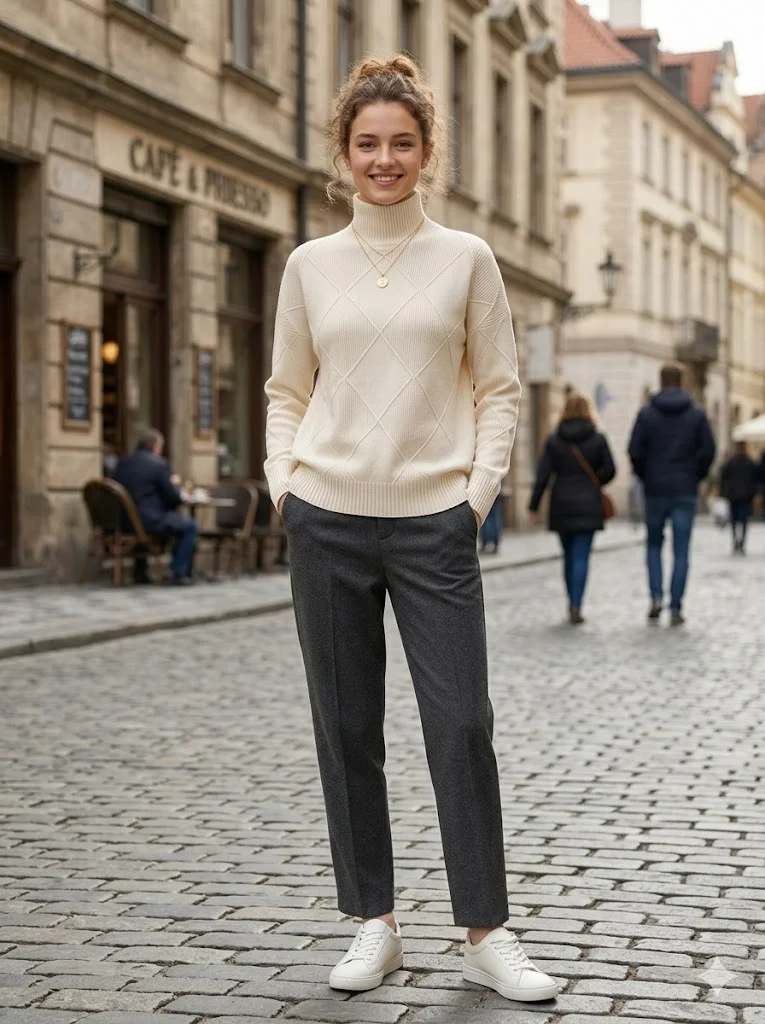
One of the best-selling women's sweaters on Amazon right now is a fine-gauge 100% cotton V-neck or crewneck pullover retailing at $20–30. It has thousands of reviews, sells year-round, and is reordered in multiple colourways by brands at every scale. The formula is not complicated — but getting the manufacturing right is what separates the listings that hold their BSR from the ones that spike and fade.
This article breaks down the product from a factory perspective: what specification drives the sales figures, what buyers get wrong when sourcing it, and how to manufacture your own private label version from 300 pcs MOQ at our factory in Dalang, Dongguan.
What the product actually is
The top-performing products in this category share a tight specification range. Understanding exactly what is selling helps you brief a factory accurately rather than guessing from a photo.
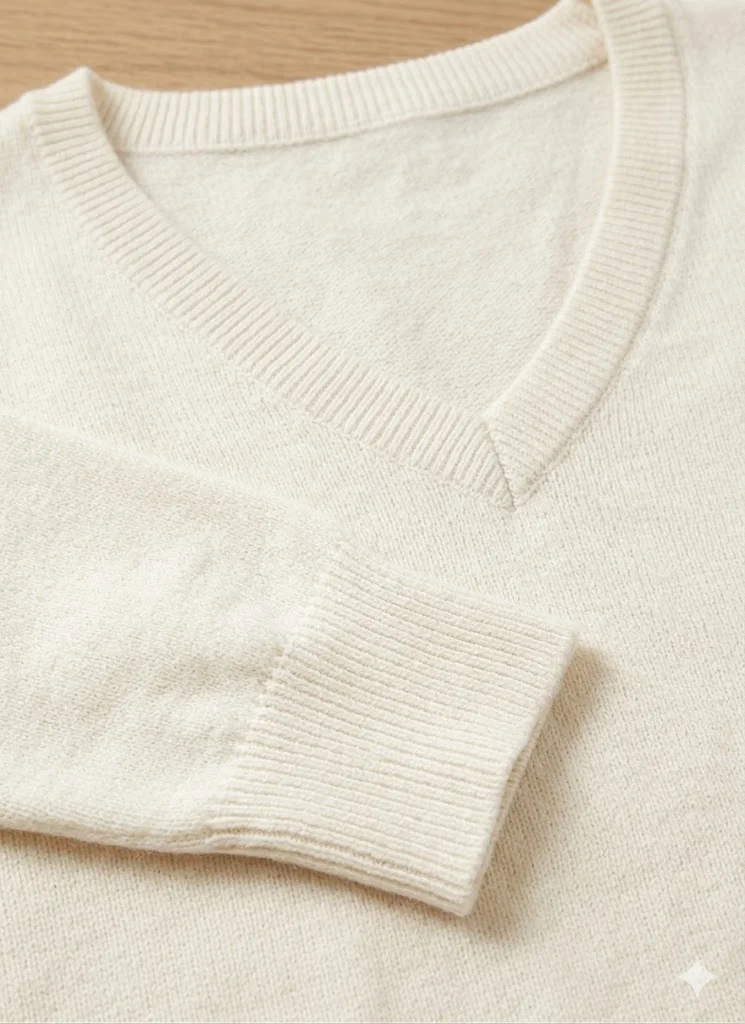
The gauge is the critical detail most buyers overlook. A fine-gauge knit (9G–12G) in 100% cotton produces a smooth, almost silk-like hand that photographs well, packs flat, and does not feel heavy on the body. This is what buyers mean when they describe the fabric as "feels like silk" or "lightweight but not cheap." A heavier gauge in the same fibre will feel and look completely different — and will not get those reviews.
Why this product consistently sells
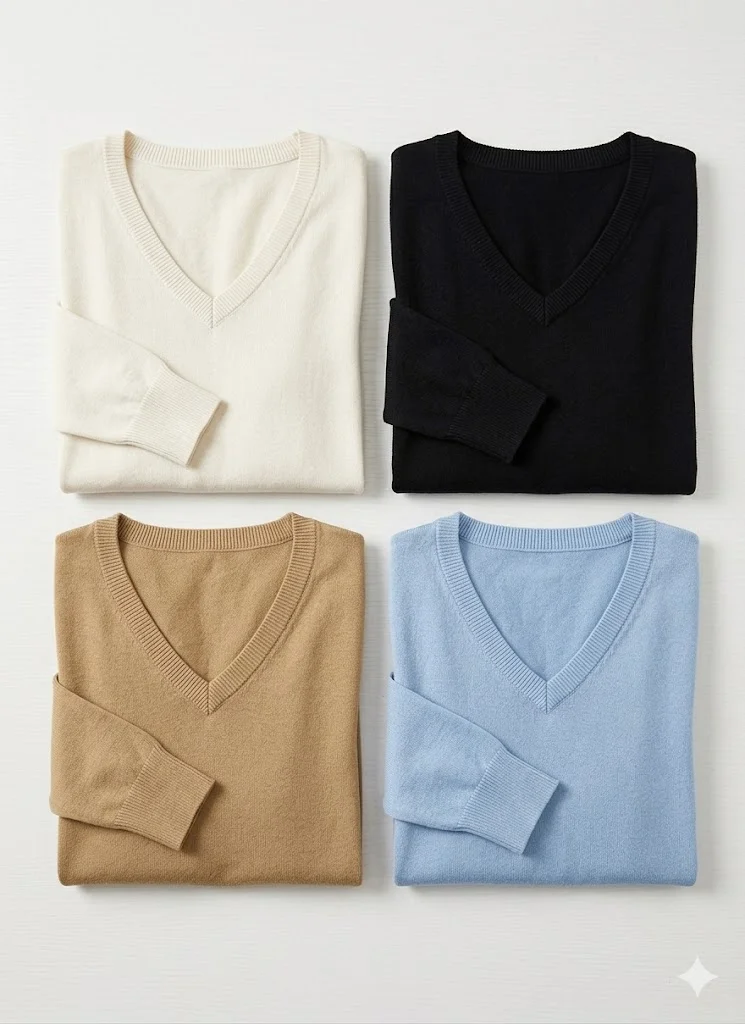
The category leaders in women's cotton sweaters on Amazon share four characteristics that explain their sustained BSR performance:
Season-neutral use case
Fine cotton does not overheat in spring or autumn and layers under coats in winter. The buyer does not need to think about when to wear it — which reduces hesitation at the point of purchase.
Styling versatility
Clean V-neck or crewneck with no branding works with office trousers, jeans, or skirts without any styling effort. This drives positive reviews from buyers who describe it as an "everyday essential."
Machine washability
100% cotton at this gauge is typically machine washable — a critical filter for mass-market buyers who will not hand-wash. Competing merino or cashmere styles lose this audience entirely.
Low return rate from accurate fit
Regular fit with consistent sizing generates fewer size-related returns than oversized or slim-fit claims. Consistent sizing is a manufacturing QC issue as much as a design one.
The price point also matters. At $20–30, the product sits above cheap acrylic alternatives (which customers can feel are synthetic) but below premium merino. The 100% cotton label justifies the price premium over acrylic without requiring the care label complexity of wool. For a full comparison of how yarn choice affects retail positioning, read our acrylic vs wool buyer's guide.
What brands get wrong when sourcing this product
This is a simple garment. That simplicity is exactly why it gets mismanaged.
- Wrong gauge. Requesting "100% cotton fine sweater" without specifying gauge produces wildly different samples across factories. A 7G cotton sweater and a 12G cotton sweater look nothing alike. Specify the gauge before sampling.
- Wrong yarn count. "100% cotton" covers yarn counts from 2/20Nm (heavy) to 2/40Nm (very fine). The best-selling products use a yarn count in the 2/32Nm–2/36Nm range, which produces the smooth, lightweight hand buyers describe positively. Request the yarn count, not just the fibre content.
- Ignoring colour lot consistency. This category sells in 15–20+ colourways. Colour consistency across dye lots is critical for maintaining review scores when buyers reorder. Cotton takes dye differently from acrylic — plan for physical swatch approval on every new colour.
- Skipping wash testing. Cotton can shrink if the finishing process does not include pre-washing or proper tension control. A garment that loses 3cm in body length after one wash generates negative reviews immediately. Request a wash test result before approving the sample for bulk.
How to manufacture your own version
The standard specification for a private label version of this product is straightforward to brief:
- Fibre: 100% combed cotton (combed cotton has a smoother hand and pills less than standard cotton)
- Gauge: 10G or 12G
- Yarn count: 2/32Nm–2/36Nm
- Construction: Fully fashioned, regular fit, hip length
- Neckline: V-neck or crew — both from the same base pattern with a neckline swap, which reduces your development cost if you want both
- Rib detail: 1×1 rib at cuffs and hem, matching yarn
- Certification: OEKO-TEX STANDARD 100 available on request — increasingly important for Amazon listings and EU retail
At Lin Sweater Factory, we produce this specification from 300 pcs per colour. First sample is typically ready in 7–10 working days. If you want both V-neck and crewneck, the second neckline version samples in 3–5 days once the base pattern is approved — not from scratch.
For an accurate quote, we need: your target colour count, size range (XS–XL or XS–XXL), any label or certification requirements, and your target retail price point. The last item helps us advise on yarn grade — a product targeting $25 retail uses a different yarn than one targeting $45.
What this costs to manufacture
At 300 pcs per colour in 100% combed cotton, fine gauge, the ex-factory price range at Dalang is approximately:
- Standard combed cotton, 10G: $8–12 per piece
- Higher-grade combed cotton (2/36Nm+), 12G: $11–16 per piece
- With OEKO-TEX certified yarn: add approximately $1.50–2.50 per piece
At a retail price of $25–30, a $10–12 ex-factory cost leaves reasonable margin after freight, duty, and Amazon FBA fees. At $12–15 ex-factory, the retail price needs to be $35+ to work commercially. Our full manufacturing cost breakdown is in the sweater manufacturing cost guide.
If you are building a multi-colourway range and want to understand how to plan colour and size splits across a low MOQ order, our guide on splitting colours and sizes in a low MOQ order covers that in detail.
OEKO-TEX certification — worth the premium for Amazon
The top-selling products in this category increasingly carry OEKO-TEX STANDARD 100 certification. For Amazon listings, this badge appears on the product page as a sustainability feature — which filters positively for buyers who use Amazon's sustainability filter. For EU retail, similar certification is becoming a baseline requirement rather than a differentiator.
At Lin Sweater Factory, we can source OEKO-TEX certified cotton yarn for this specification. The certification applies to the yarn, not the finished garment — so you would need to work with a certification body for the garment-level certificate if your retail partner or platform requires it. We can advise on the process and connect you with the relevant bodies on request.
Want to manufacture your own version?
Send us your target colour count, size range and retail price point. We will reply with a yarn recommendation, gauge spec and indicative quote within 24 hours.