This is the question every buyer eventually asks — and the one most factories are reluctant to answer directly. Price lists get sent, quotes arrive, but the breakdown behind the number is rarely explained. After 26 years of manufacturing knitwear in Dalang, Dongguan, we have decided to answer it properly.
This guide breaks down the cost of a sweater into its actual components, explains what drives each one, and gives you realistic price ranges for different product types. The numbers are honest. Some buyers will find them higher than expected; others will find them lower. What matters is that you understand what you are paying for — and what it means when a quote comes in suspiciously cheap.
The quick answer — price ranges by product type
Before we get into the breakdown, here is a realistic overview of what different sweater categories cost to manufacture at direct factory pricing, based on typical yarn choices and standard construction:
· 7G–12G gauge
· No complex pattern
· Suitable for: e-commerce, fast fashion, promotional
· Jacquard or cable structure
· 5G–10G gauge
· Suitable for: branded retail, boutiques
· Intarsia or fully fashioned
· 12G–16G fine gauge
· Suitable for: luxury brands, department stores
These ranges assume a minimum order of 300 pieces per style. Smaller quantities raise the cost; larger quantities lower it. We will come back to this point.
Breaking down the cost — what you are actually paying for
Every sweater price is built from five components. Understanding each one makes you a better buyer — you can negotiate intelligently, spot where corners are being cut, and make better decisions about where to compromise and where not to.
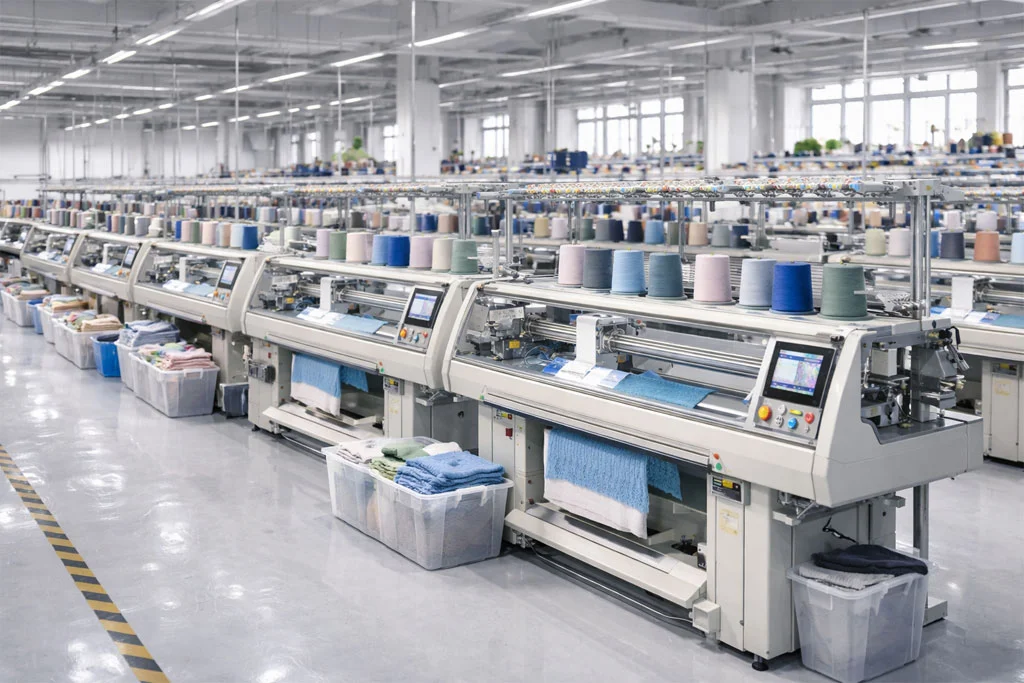
1. Yarn — 40 to 65% of total cost
Yarn is the dominant cost in any knitwear order. It is also the component where the biggest quality differences hide. A sweater made from 100% Grade A cashmere and a sweater made from an acrylic-cashmere blend can look almost identical on a hanger — but the yarn costs are separated by a factor of ten or more.
Here are realistic yarn costs per kilogram in 2026, at standard production quantities:
| Yarn Type | Cost per kg (approx.) | Typical use |
|---|---|---|
| Acrylic | $2–$4/kg | Entry-level, promotional, fast fashion |
| Cotton / Cotton-acrylic blend | $3–$6/kg | Spring/summer knitwear, basics |
| Wool-acrylic blend (30–50% wool) | $6–$12/kg | Mid-range winter knitwear |
| 100% Merino wool | $18–$35/kg | Premium retail, sportswear, base layers |
| Cashmere blend (10–30% cashmere) | $15–$28/kg | Accessible luxury, mid-market brands |
| Pure cashmere Grade B | $65–$90/kg | Luxury retail, department stores |
| Pure cashmere Grade A | $90–$130/kg | Premium luxury, flagship collections |
| Prices vary with raw material markets. Cashmere in particular fluctuates significantly year to year. Read our cashmere grades guide for a full explanation of A/B/C grading. | ||
A typical women's crew neck sweater uses approximately 300–450 grams of yarn. A chunky men's jumper might use 600–800 grams. This gives you a rough way to estimate yarn cost per piece: multiply the yarn price per kg by the weight in grams, divide by 1,000.
A 400g merino sweater at $25/kg yarn cost = approximately $10 in yarn alone — before a single machine runs.
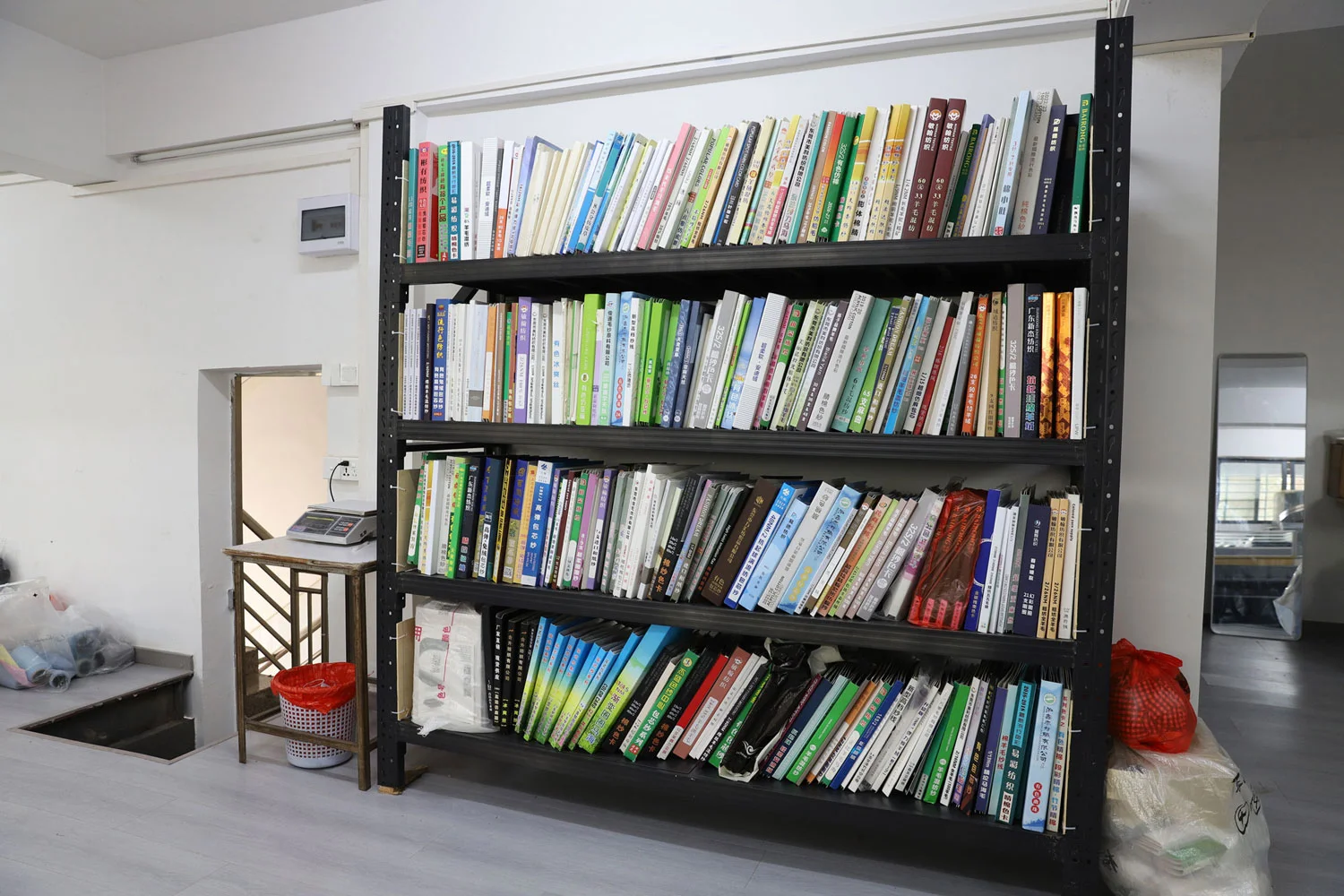
2. Knitting machine time — 15 to 30% of total cost
After yarn, machine time is the second-largest cost. A flat-knitting machine operator runs the machine, monitors for defects, and changes the programme between styles. This labour and machine depreciation cost is typically charged per piece, and it varies significantly based on the complexity of the knit structure.
As a rough guide: a plain acrylic crew neck at 12G might cost $1.50–$2.50 in knitting time. A complex jacquard pattern in 5G wool might cost $4–$7 per piece in machine time alone. Understanding gauge numbers helps you predict this cost component before you even request a quote.
3. Linking and finishing labour — 10 to 20% of total cost
Once the panels come off the knitting machine, they need to be joined (linked), steam-pressed, and finished. This is entirely manual work, and the quality of this stage determines how the finished garment looks and feels. It is also the stage where the biggest quality shortcuts get taken in low-cost factories.
Linking requires skilled, experienced operators. A poorly linked seam is visible, uncomfortable, and structurally weak. You can see what this looks like in our factory tour — every seam is placed stitch by stitch. There is no faster way to do it correctly.
Finishing costs include steam-setting (which stabilises dimensions and prevents later shrinkage), hand-trimming loose ends, and any hand-finishing details. This is typically $0.80–$2.50 per piece depending on the complexity of the garment.
4. Trims, labels, and packaging — $0.50 to $3.00 per piece
Every garment needs at minimum: a brand woven label, a care label, a size label, and some form of packaging. If you are doing private label, you also need hang tags. These costs add up, and they are frequently underestimated by buyers placing first orders.
| Item | Typical cost | Notes |
|---|---|---|
| Woven brand label | $0.05–$0.15 each | Minimum order typically 500–1,000 pcs |
| Care / size label | $0.03–$0.08 each | Printed or woven |
| Hang tag | $0.05–$0.25 each | Depends on material and printing |
| Polybag per piece | $0.05–$0.12 each | Standard individual packing |
| Export carton | $0.30–$0.80 per garment | Shared across pieces per carton |
| These costs are small per piece but they matter. A complete private label package — woven label, hang tag, size label, care label, polybag — typically adds $0.40–$0.70 per garment. | ||
5. Factory overhead and margin — 10 to 20% of total cost
No factory operates at zero margin. Rent, utilities, management, quality control staff, sampling costs, and the factory's profit are all built into the final price. This is entirely normal and legitimate. A factory quoting at or below their actual production cost is either miscalculating or planning to compensate elsewhere — usually in yarn quality or in cutting corners on the stages you cannot easily see.
Direct factory pricing (like ours) means this margin is the factory's margin only. A trading company adds their own layer on top. Understanding whether you are buying from a factory or a middleman is one of the most important factory vetting steps a buyer can take.
Real cost examples — three common orders
Abstract percentages are hard to use. Here are three realistic example calculations based on actual production in Dalang:
Example A — Basic acrylic crew neck, 200 pcs, single colour, 12G
| Component | Cost per piece |
|---|---|
| Yarn (350g acrylic @ $3/kg) | $1.05 |
| Knitting machine time | $1.80 |
| Linking + finishing labour | $1.20 |
| Trims + packaging | $0.55 |
| Factory overhead + margin | $1.40 |
| Ex-factory total | ~$6.00 |
Example B — Merino wool crew neck, 300 pcs, 2-colour stripe, 7G
| Component | Cost per piece |
|---|---|
| Yarn (400g 100% merino @ $25/kg) | $10.00 |
| Knitting machine time | $3.20 |
| Linking + finishing labour | $1.80 |
| Trims + packaging | $0.70 |
| Factory overhead + margin | $3.30 |
| Ex-factory total | ~$19.00 |
Example C — Pure cashmere cardigan Grade B, 300 pcs, plain, 12G
| Component | Cost per piece |
|---|---|
| Yarn (380g cashmere Grade B @ $75/kg) | $28.50 |
| Knitting machine time | $4.50 |
| Linking + finishing labour | $3.00 |
| Trims + packaging | $1.20 |
| Factory overhead + margin (small qty premium) | $7.80 |
| Ex-factory total | ~$45.00 |
Why manufacturing in Dalang is more cost-efficient

The cost advantages of manufacturing in Dalang, Dongguan are not just about low labour costs. They come from the concentration of the entire supply chain in one location.
Dalang is home to over 6,000 knitwear-related businesses — yarn suppliers, machine manufacturers, trim suppliers, packaging companies, and logistics providers — all within a few kilometres of each other. When our factory needs a specific yarn, we can source it the same day. When a machine part breaks, a technician is an hour away. When a trim supplier is needed, we walk to the next street.

This concentration reduces cost and lead time in ways that are invisible in a quote but significant in practice. A factory in a less developed production cluster faces longer yarn sourcing lead times, higher logistics costs, and slower problem resolution when issues arise in production. These inefficiencies do not appear as a line item — they appear as delayed deliveries and quality inconsistencies.
The five biggest factors that move the price
When a quote looks too cheap — what it usually means
This is the most important section for buyers who have received a very low quote and are wondering whether to take it.
Manufacturing costs have a floor. Below a certain price, it is mathematically impossible to use the yarn specified, pay workers fairly, and run a proper QC process. When a quote comes in well below what the cost analysis suggests it should be, one of a small number of things is happening:
- Yarn substitution: The quote is based on a different (cheaper) yarn than agreed. This is the most common cause of quality disappointment. The sweater you approved in sample was made with one yarn; the bulk was made with another. Read about how to prevent this in our guide to why knitwear orders go wrong.
- Skipped QC: The factory has quoted without building in the cost of a proper quality control process. This does not show in the price — it shows in the delivery.
- Outsourced production: The factory has quoted at their cost, planning to outsource your order to a cheaper third-party workshop. You lose all visibility and control over quality the moment this happens.
- Optimistic quoting: The factory has given a low number to win the business, intending to negotiate on price or quality later — after you have paid a deposit.
What about sampling costs?
Most factories charge a sample fee — typically $30–$80 per style — which covers the pattern master's time, the yarn for sampling, and the knitting and finishing of 1–2 physical samples. This is legitimate and reasonable. Pattern development takes skilled time, and that time has to be paid for.
Some factories waive sample fees for confirmed bulk orders above a certain value. Others charge the sample fee upfront and deduct it from the bulk order payment once confirmed. Both arrangements are common and acceptable.
What is not acceptable: a factory that charges a very high "sample fee" (above $150–$200 per style) for a standard knitwear style, or one that cannot produce a sample within 10–14 days. Delays at the sampling stage are often a signal of deeper problems — read our guide on why sampling takes longer than expected for the full picture.
How to get an accurate quote
A vague brief produces a vague quote that is useless for planning. The more specific your request, the more accurate — and the more comparable — your quotes will be across different factories.
For an accurate quote, provide:
- Style reference: A photo, sketch, or sample garment. Any reference is better than none.
- Yarn specification: Fibre type, weight, and colour. Or your target retail price, which lets us recommend the appropriate yarn.
- Gauge: If known. If not, describe the weight and hand feel you want.
- Quantity: How many pieces per style. This is the single most important variable for pricing.
- Size breakdown: Across the order quantity — e.g. 10 XS, 20 S, 30 M, 30 L, 10 XL.
- Required delivery date: So we can confirm production availability.
With this information, we can return a full itemised quote — yarn, knitting, linking, finishing, trims, and packaging broken out as separate line items — within 24 hours. No obligation until you approve your sample.
Ready for a real quote?
Send us your brief — style, yarn, quantity, delivery date. We reply with a full itemised breakdown within 24 hours. Direct factory pricing, no trading company margin.