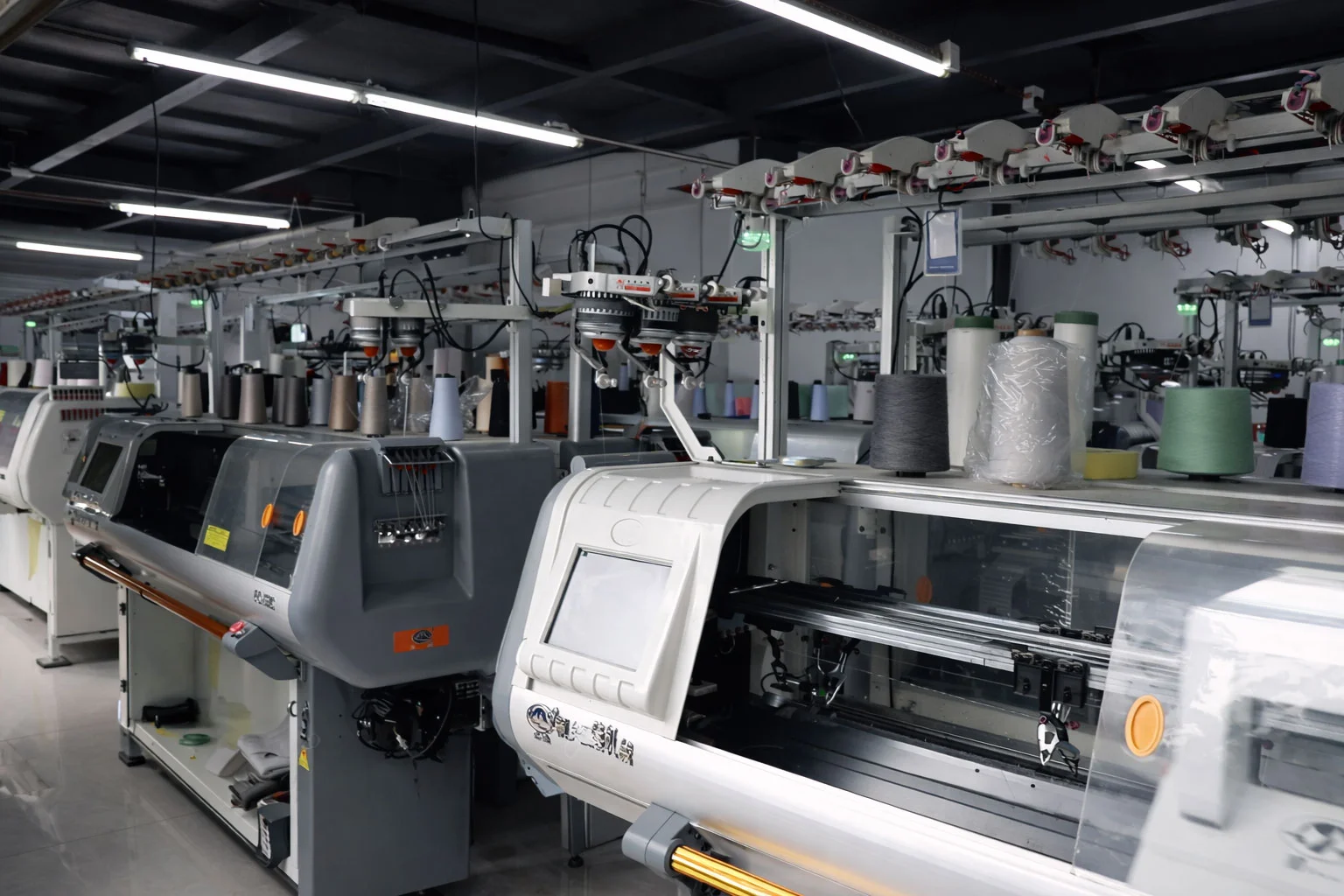
Dalang Town, Dongguan, Guangdong Province — a place most people have never heard of, yet responsible for a significant share of the knitwear worn across Europe, North America, and Japan. Over 6,000 knitwear businesses are concentrated here. Lin Sweater Factory has been one of them since 2000, founded by Lin Qihui who entered the industry in 1996.
We rarely show buyers what happens inside. This article changes that. What follows is a photo tour through every stage of knitwear production at our factory — the spaces, the people, and the processes that turn a design brief into a finished garment.
01 — The production floor: where every sweater begins
The production floor is the heart of the factory. This is where flat-knitting machines run continuously during production season, translating digital programmes into physical fabric panels. Our machines cover the full gauge range — from 3G chunky knits for heavy winter pieces to 14G fine-gauge for lightweight spring knitwear.
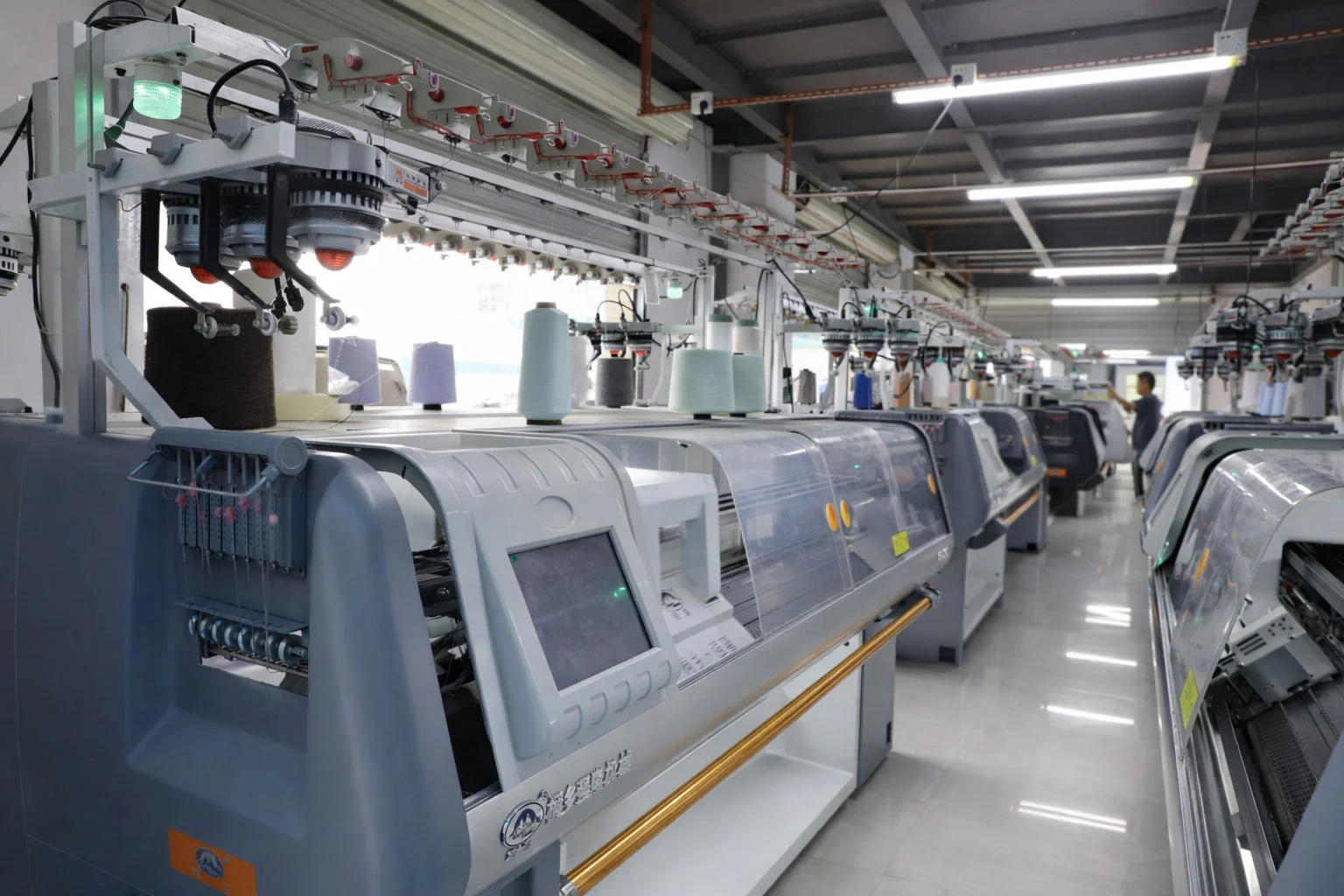
Unlike woven fabrics, knitwear panels are shaped directly on the machine — less cutting waste, better structural integrity. Getting this stage right determines everything that follows. Our pattern masters programme every style in-house before it reaches the production floor. We do not outsource this step.
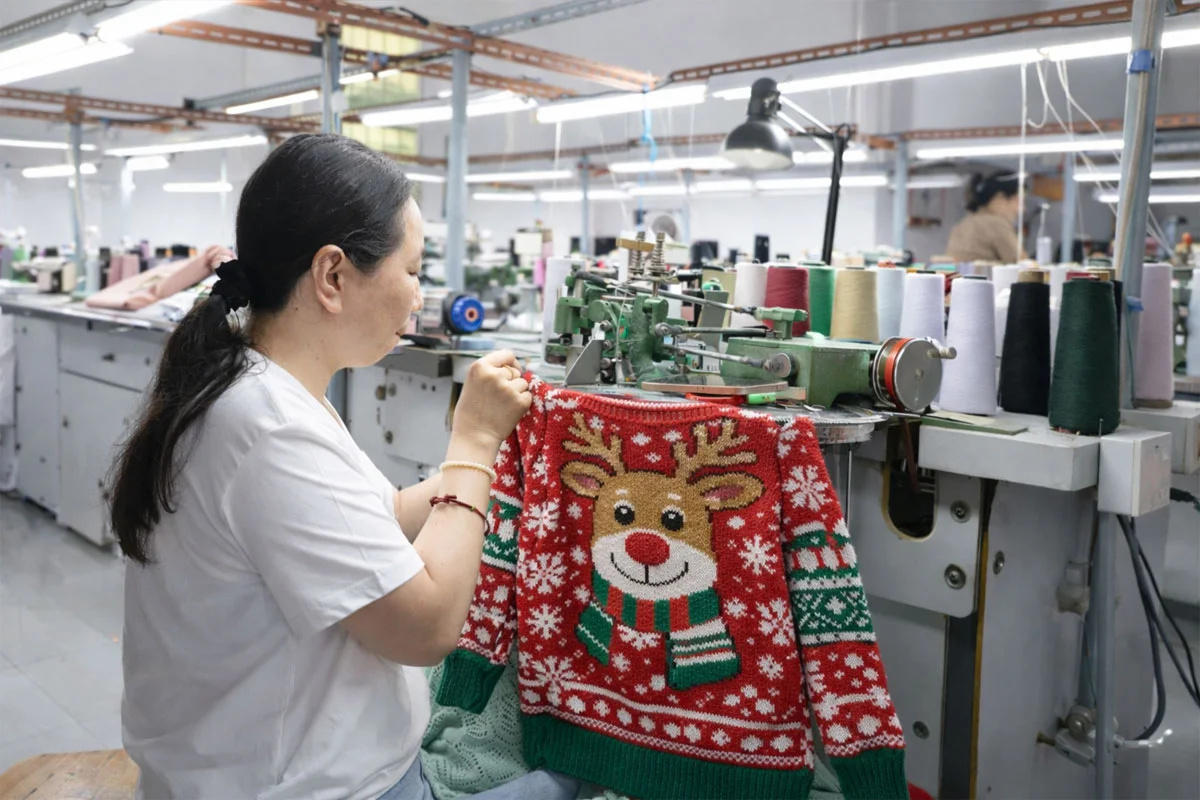
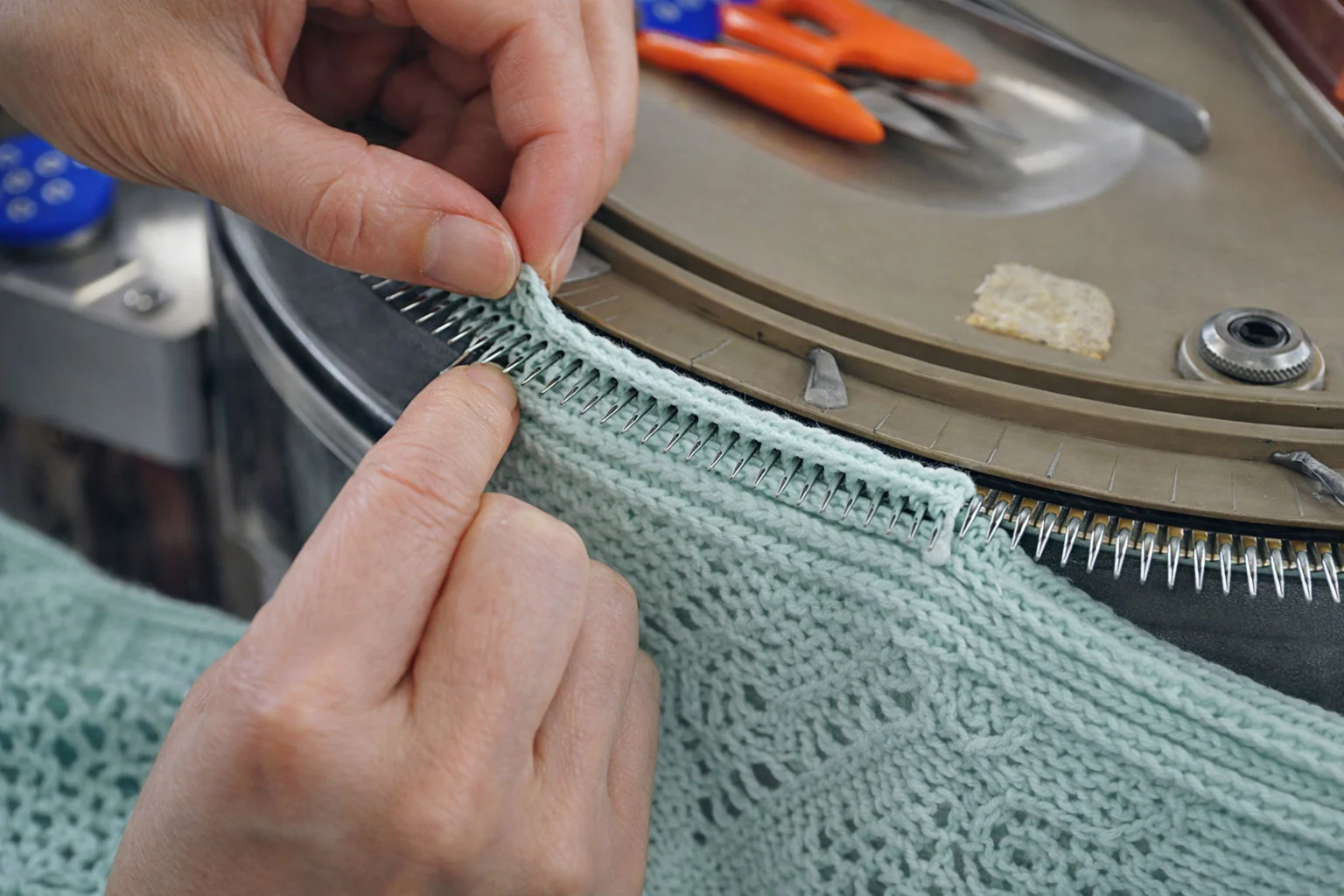
02 — Linking and seaming: the skill most buyers overlook
After the panels come off the knitting machine, they are joined together. This is called linking, and it is one of the most skill-intensive parts of knitwear production. A poorly linked seam is visible, uncomfortable, and structurally weak. A well-executed link is nearly invisible — the garment feels like a single piece.
03 — The pattern studio: where your design becomes production-ready
Before any machine runs for a new style, the design passes through the pattern studio. Our pattern masters analyse the brief — whether it arrives as a sketch, a reference garment, or a technical spec — and translate it into precise production instructions.
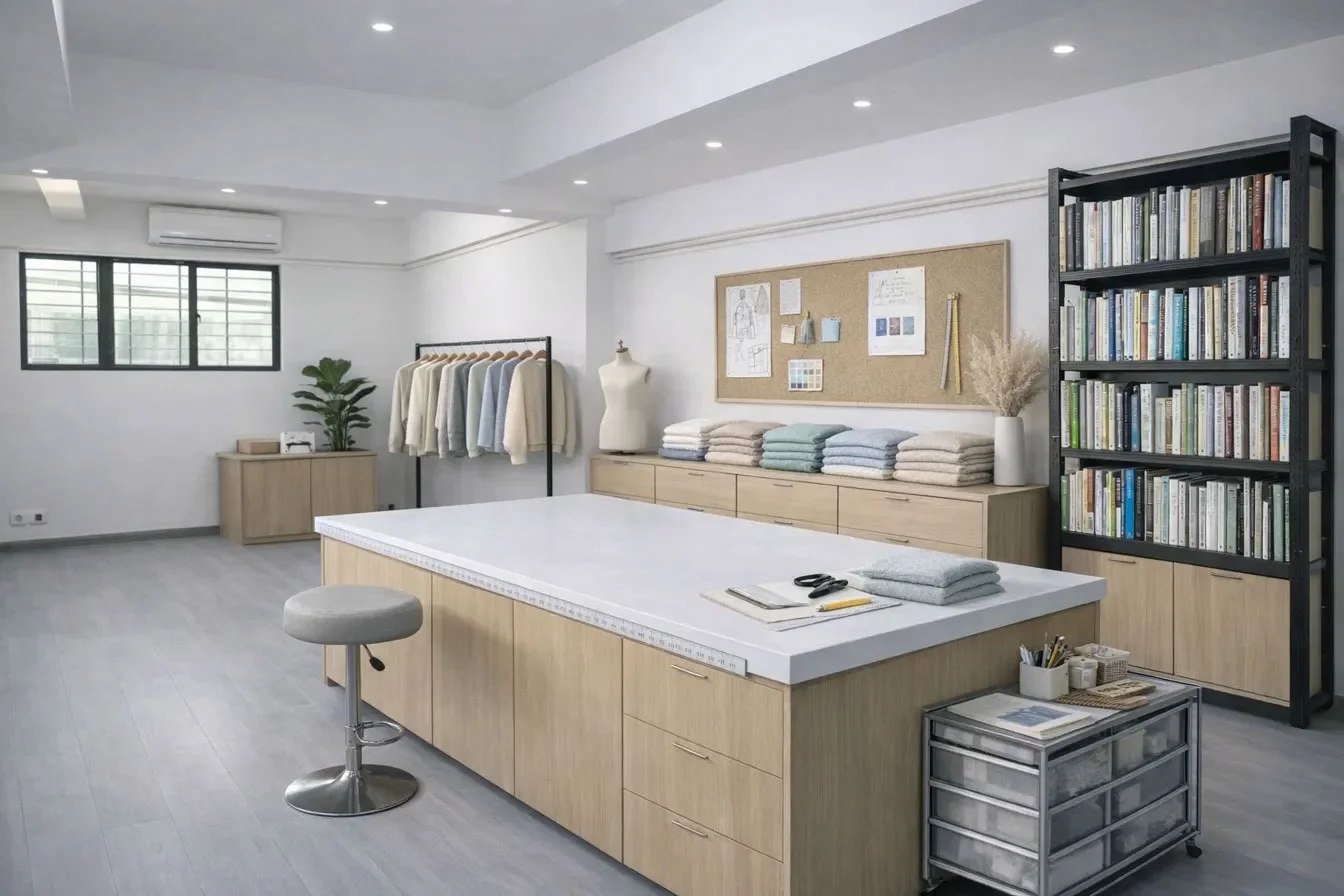
Most knitwear factories outsource pattern work or use generic templates. We keep it in-house. Our pattern masters have an average of over ten years of experience each. The result: fewer revision rounds, better fit from the first sample, and a technical spec file archived for precise reorders.
04 — The yarn library: 200+ options and the knowledge to choose correctly
The yarn you choose determines how your finished garment looks, feels, performs, and is priced. It is one of the most consequential decisions in knitwear development — and one most frequently underestimated by first-time buyers.
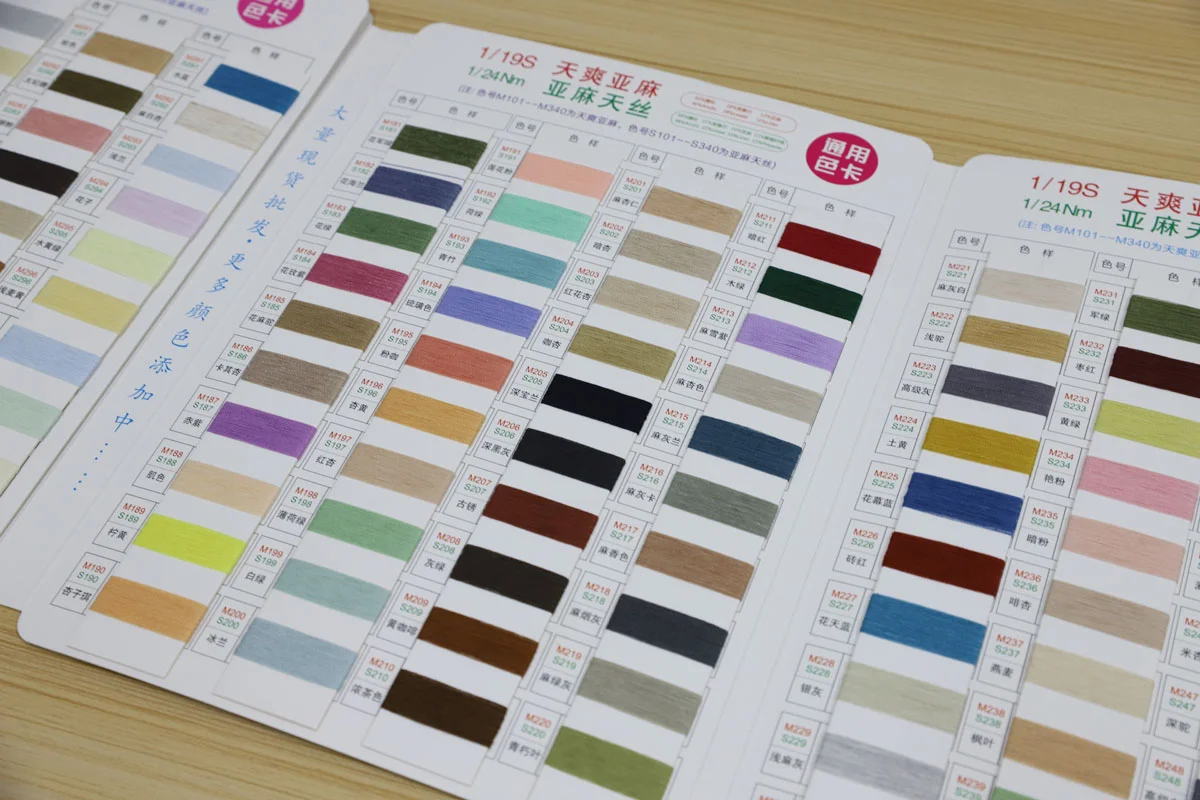
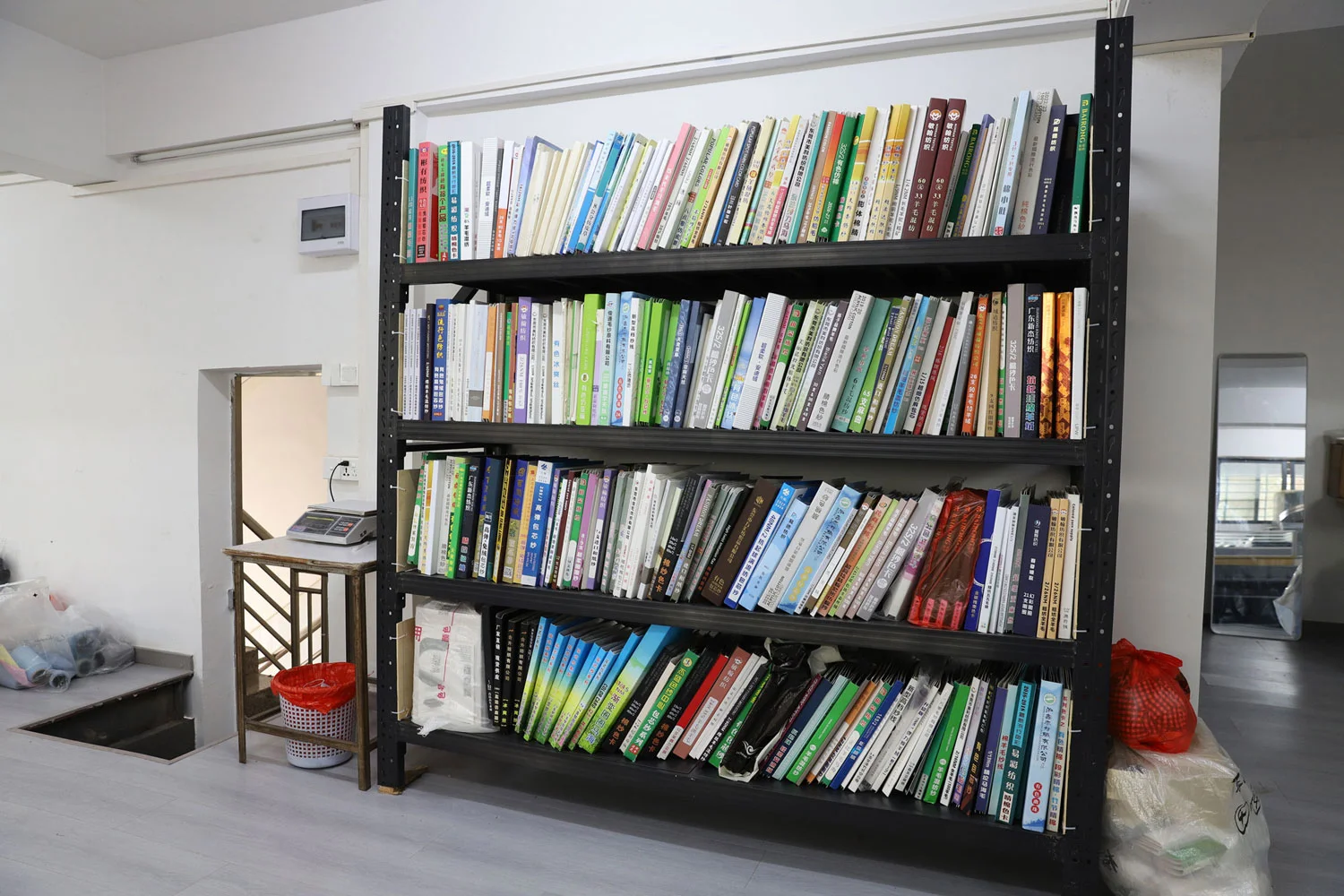
We carry swatches for merino wool, cashmere, cotton, acrylic, wool blends, and cotton-acrylic blends. When a buyer sends a colour reference — Pantone code, physical swatch, or photo — we match it against our library before committing to production. Buyers unsure about yarn choice can send us their target retail price and we recommend the right fibre for the application.
05 — Quality control: three checkpoints, zero tolerance
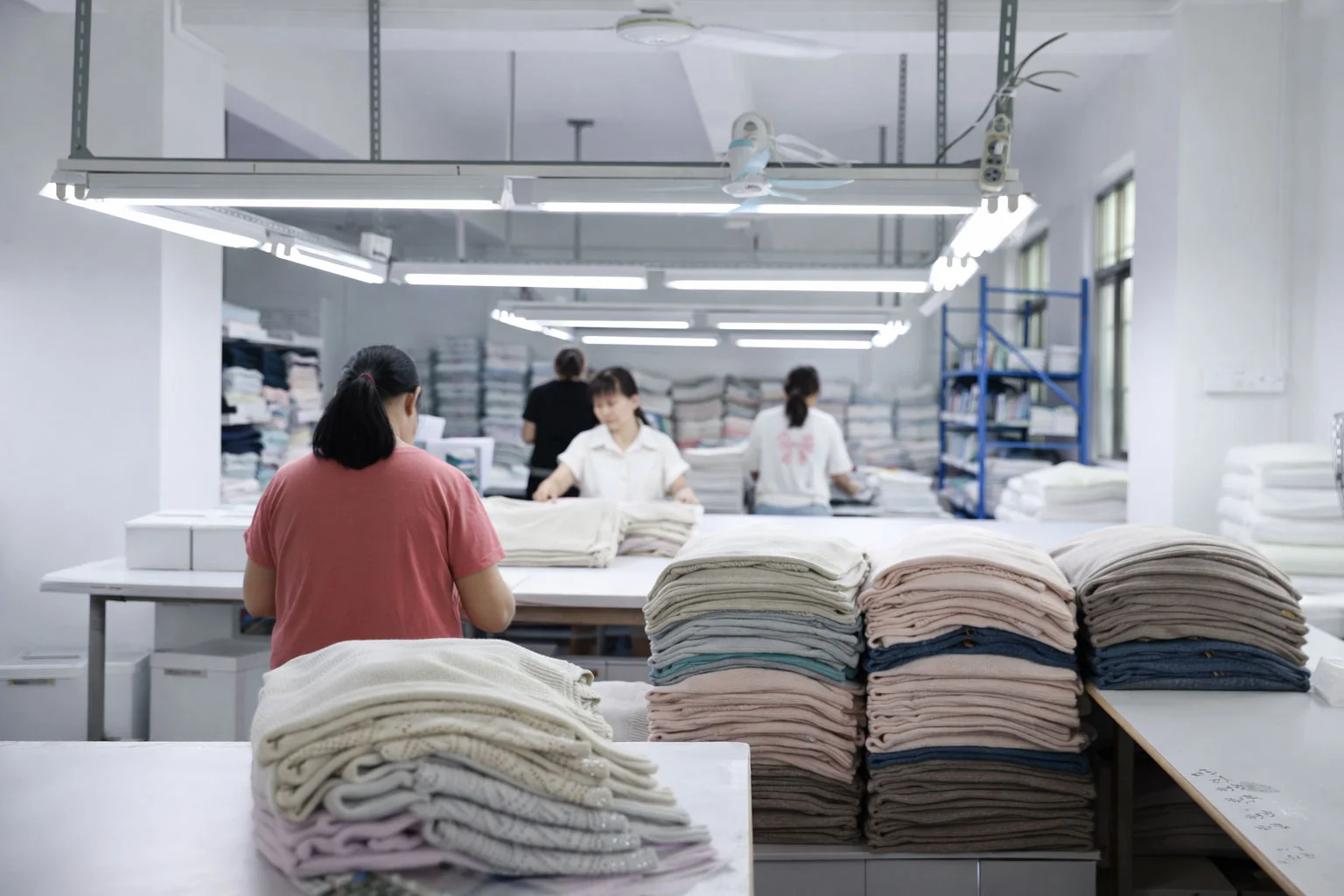
Quality control at Lin Sweater runs in three stages. Most factories inspect at the end — by which point defective production has already consumed time, labour, and materials. We inspect at intake, during production, and at final outgoing.
- IQC (Incoming): Every yarn lot checked for fibre content, weight, and colour before entering production. Lots that fail are returned to the supplier.
- IPQC (In-process): QC staff check stitch density, seam quality, and measurements throughout every production run. Problems caught here cost minutes to fix.
- OQC (Outgoing): Every finished garment inspected against the approved PP sample. Pieces that fail go back for rework — not into your carton.
06 — Finishing and labelling: the final steps that define presentation
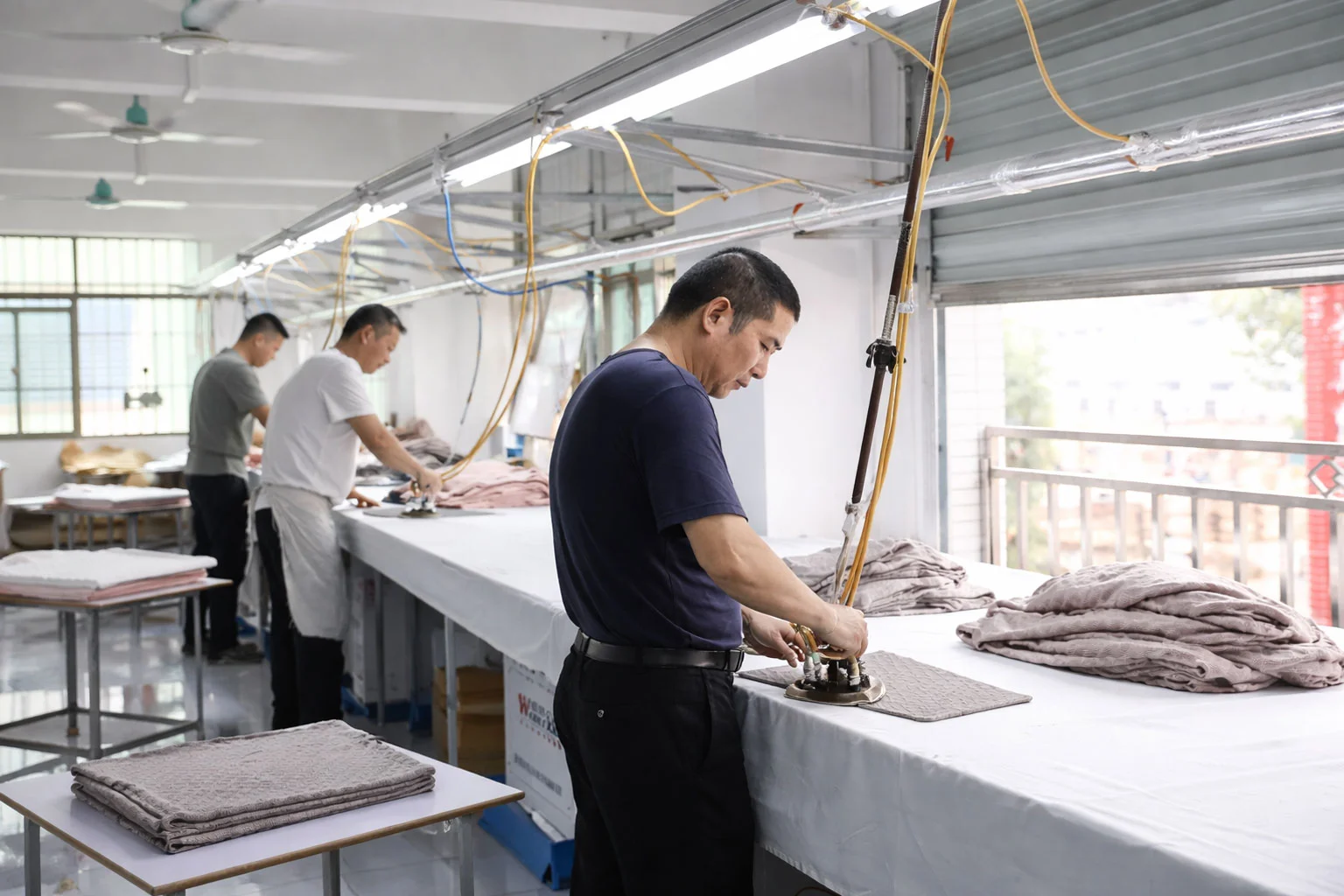
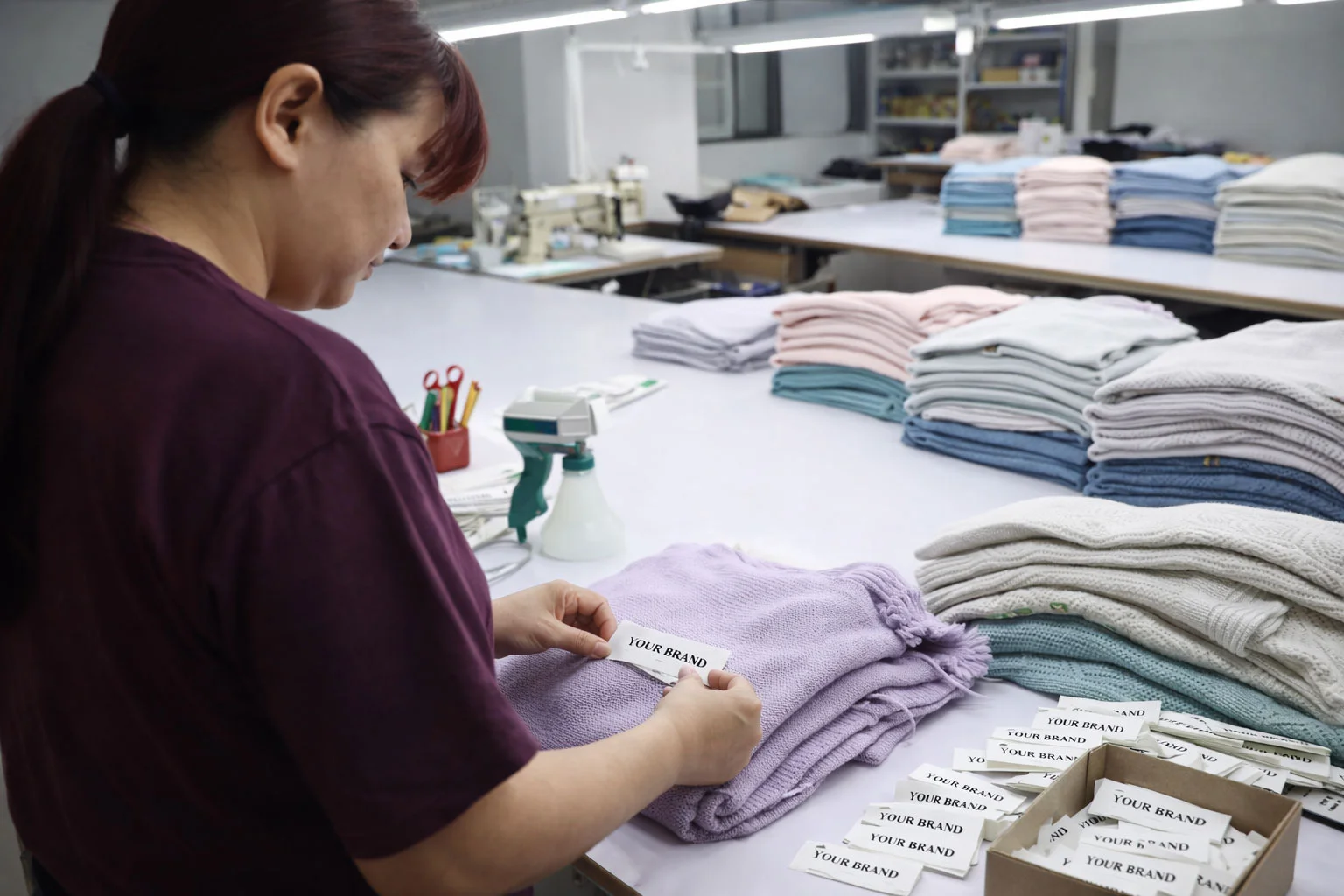
A well-knitted, well-linked sweater can still arrive looking unprofessional if finishing is rushed. Steaming and pressing set the final shape — straightening the hem, defining the shoulders, removing packing creases. Your private labels, care labels, and hang tags are attached at this stage.
07 — Packing: export-ready from day one
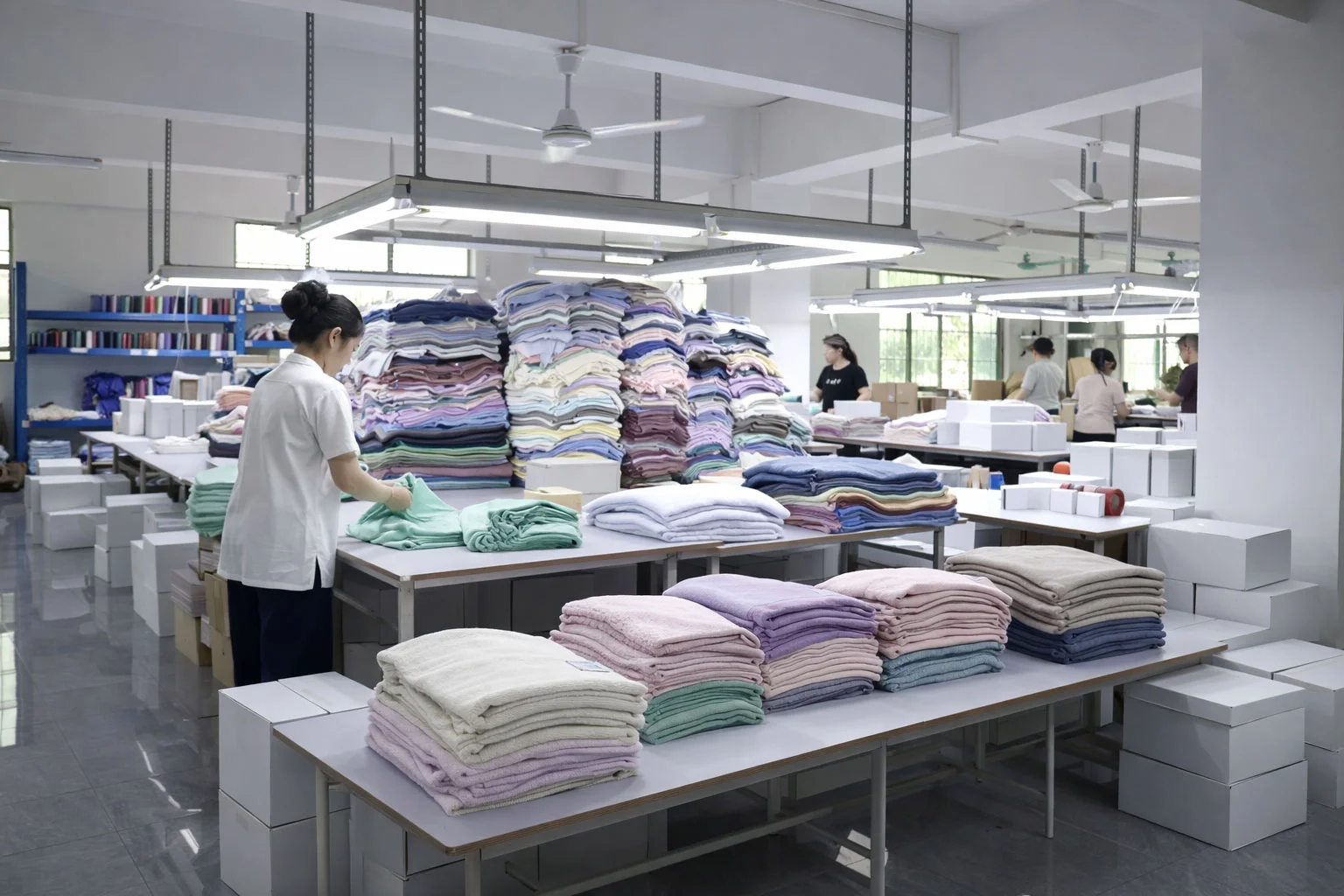
Once garments have passed final QC, they move to packing. Carton counts, packing lists, and shipping marks are prepared here. We handle full export documentation — commercial invoice, packing list, and any required test reports or certificates — before your shipment leaves the factory.
08 — The sample room: where buyers start their collections
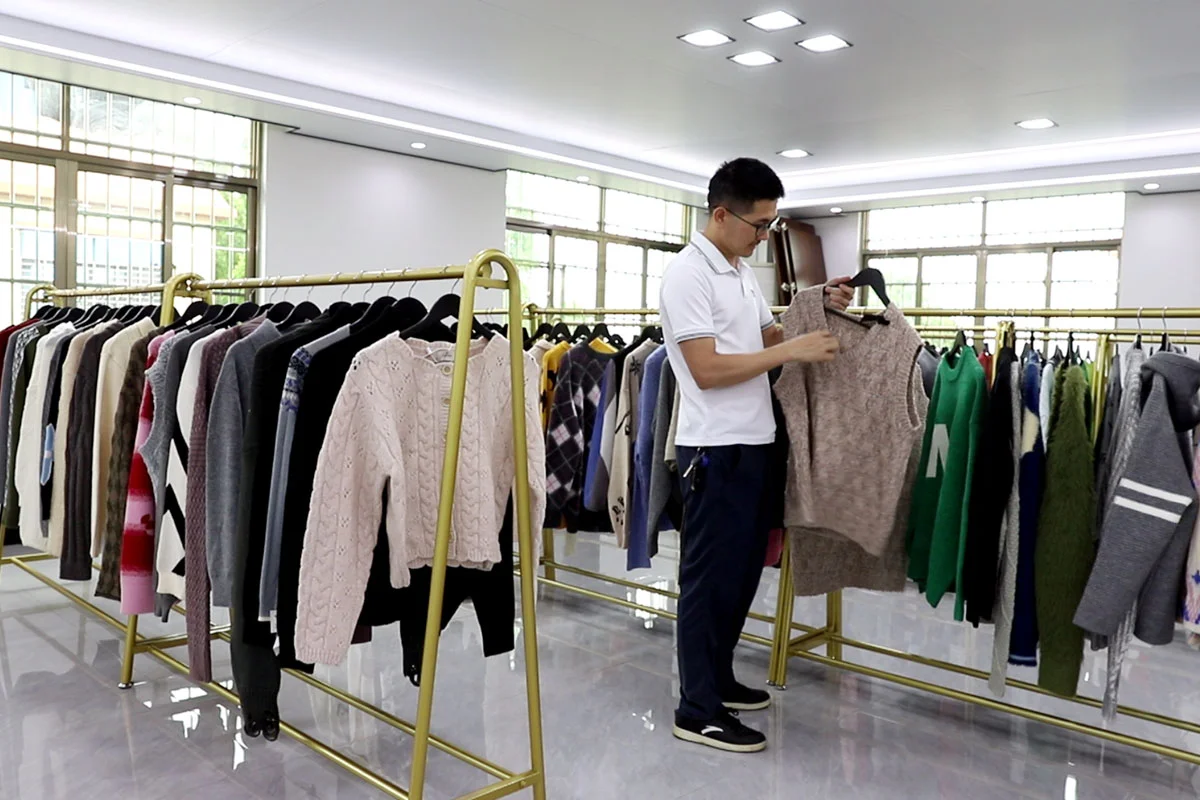
Our sample room holds finished knitwear across every category we produce — women's and men's crew necks, cardigans, turtlenecks, jacquard pieces, cashmere, merino, and kids' knitwear. When buyers visit, this is where meetings usually start. You can hold the garments, check construction, feel the yarn weight, and compare gauges side by side.
Any piece in the room can serve as a starting point for your OEM order — same construction, your colours, your yarn, your labels. If you cannot visit in person, we send physical samples on request. Most buyers receive a selection of relevant styles within 7–10 working days.
What this means for you as a buyer
The gap between a sweater that sells well and one that generates returns is almost entirely determined by decisions made inside a factory — decisions about yarn, tension, construction, seaming, and finishing that most buyers never see.
Visiting a factory before placing your first significant order is one of the highest-return investments you can make. If you cannot visit, a video call tour is the next best option. A factory with nothing to hide will always say yes.
We have been manufacturing knitwear in Dalang since 1996. The factory is real. The people are real. If you want to see it for yourself — the door is open.
Want to visit or start a project?
We arrange airport pickup from Shenzhen (60 min) or Guangzhou (90 min). Or send us your brief and we reply within 24 hours.