Finding a factory is easy. Finding one you can trust with your brand, your money, and your reputation is a different challenge entirely. After 26 years of manufacturing knitwear in Dalang, Dongguan, we have seen every type of buyer mistake — and most of them come down to not asking the right questions before committing.
This checklist is designed to give you those questions. Work through it in three stages — remote screening before you visit, an on-site assessment, and post-sample evaluation. A factory that passes all three is worth working with. One that fails at the first stage should be eliminated immediately, regardless of how attractive their price looks.
Stage 1: Remote screening — before you visit or order
You can eliminate 80% of unsuitable factories before spending a single penny. These checks take less than an hour per factory and will save you from the most common and costly sourcing mistakes.
✓ Verify they are a manufacturer, not a trading company
Trading companies buy from factories and add a margin. They cannot control quality, cannot modify production processes, and cannot solve problems quickly because they are one step removed from the factory floor. Ask for their business licence (营业执照). A manufacturer's licence will list manufacturing (生产/制造) as the registered business scope. A trading company's will not.
On Alibaba, check the business type listed under the supplier profile. "Manufacturer" is what you want. "Trading Company" or "Agent" means move on. This single check eliminates a large percentage of the suppliers on any B2B platform.
✓ Check how long they have been operating
Factories with fewer than three years of operation carry higher risk. The knitwear industry has a meaningful failure rate among new entrants — the combination of capital requirements, seasonal cash flow, and technical complexity weeds out operations that are not properly funded or managed. Look for factories established before 2020 at minimum. Factories in Dalang that have operated for ten or more years have survived multiple economic cycles, currency fluctuations, and the disruptions of 2020–2022. That longevity is a meaningful signal of stability.
✓ Request a live video call walkthrough of the production floor
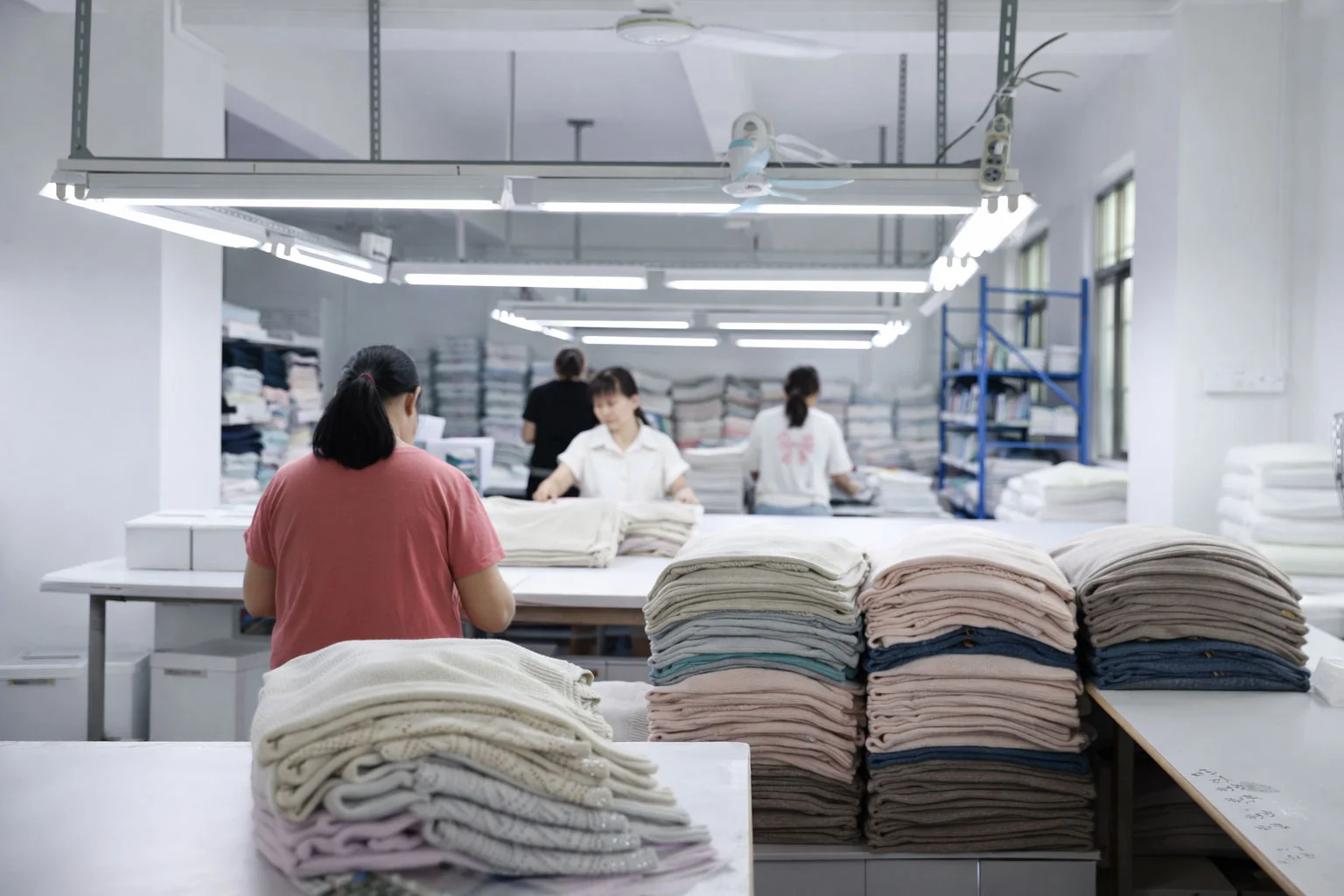
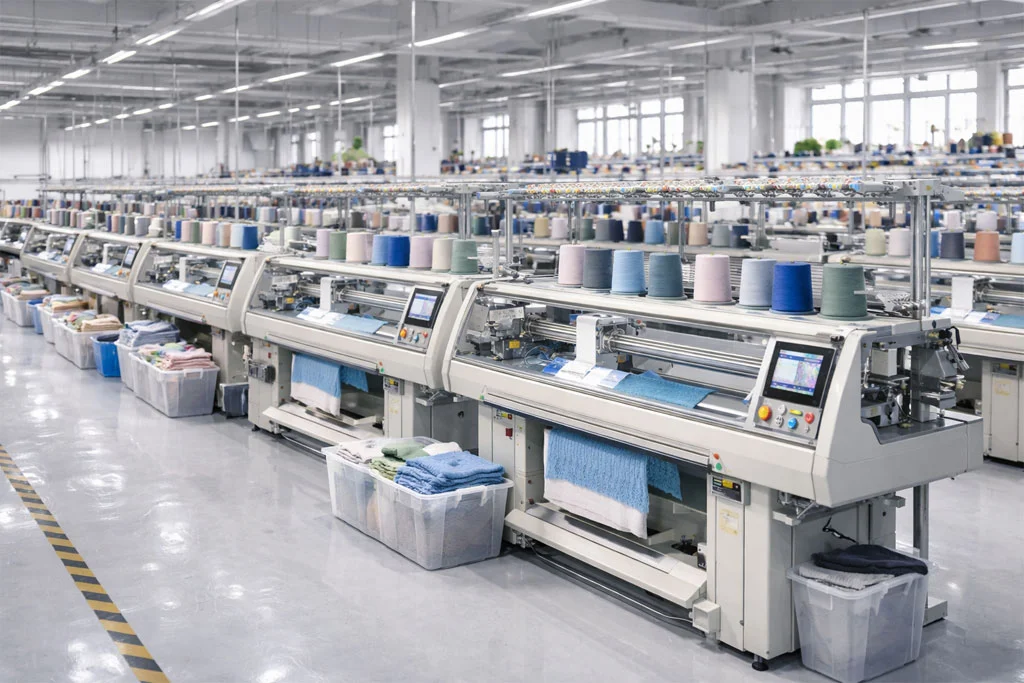
Any legitimate factory will agree to a video call showing the production floor in real time. Ask them to show you the flat-knitting machine floor, the linking and sewing section, the finishing and QC area, and the yarn storage. Watch carefully: Are machines running? Is the floor organised? How many workers are present? Are there products in progress that match their claimed speciality?
Factories that refuse, make excuses, or offer pre-recorded videos instead of live tours are hiding something — lack of capacity, outsourced production, or no actual factory at all. This is a hard disqualifier. Read our full factory floor visual guide to know exactly what a legitimate production environment looks like.
✓ Ask about their gauge range and machine inventory
A factory's machine configuration determines what it can actually produce. Ask specifically: "What gauges do you carry? How many machines per gauge?" Understanding gauge numbers will help you assess whether their machines match your product requirements. A factory with only 7G machines cannot produce fine-gauge spring knits. A factory with only 3G–5G machines cannot produce fitted merino cardigans or office knitwear. A mismatch here means the factory will struggle with your product regardless of how willing they are.
✓ Confirm they have in-house pattern masters
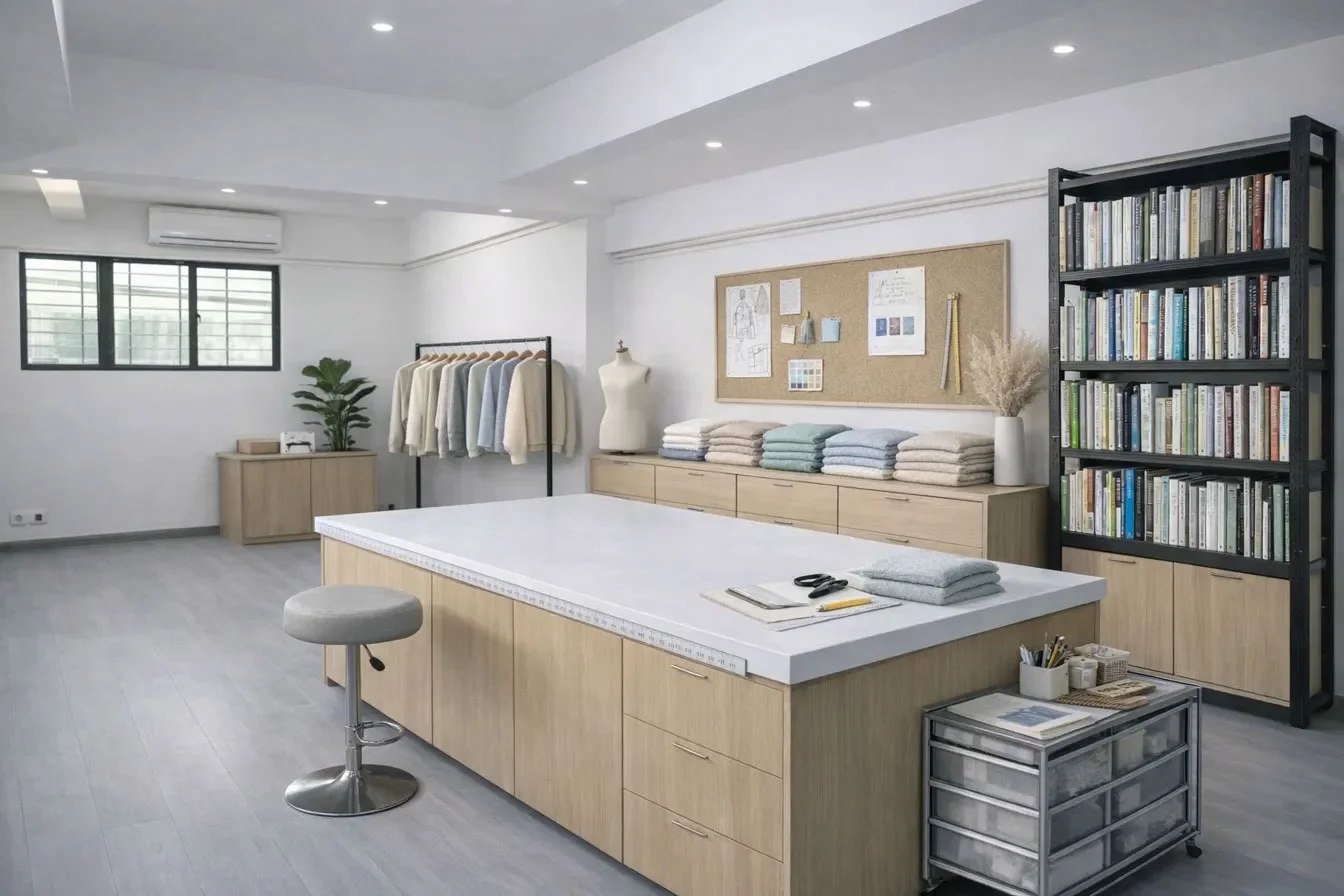
This is the single most important capability question in knitwear sourcing. Factories without in-house pattern masters outsource sampling — which means slower revisions, less control over fit, and a much higher risk of sampling delays that cascade into late delivery. Ask directly: "How many pattern masters do you have on staff? Are they employees or freelancers?"
A factory with three or more dedicated pattern masters as permanent employees is well-configured. A factory that says "we handle it when needed" or "our production team does sampling" is telling you that pattern development is an afterthought — and your samples will reflect that.
✓ Ask for references from current buyers
Not testimonials on their website — actual contact details for buyers you can reach directly. Legitimate factories are proud of their client relationships and will share two or three references without hesitation. Factories that decline should be viewed with suspicion.
When you contact references, ask three specific questions: Did the bulk match the approved sample in colour, construction, and measurement? Were deliveries on time? And — most revealing — how did the factory handle any quality issues that arose? The last question separates factories with a service culture from those that disappear after problems emerge.
Stage 2: On-site factory visit
For any order above 300 pieces, or any supply relationship you intend to build on, an on-site visit is non-negotiable. A visit reveals things that no amount of video calling, documentation, or sample exchange can tell you. Plan at least two hours per factory — thirty-minute tours show you nothing useful.
✓ Assess production floor organisation and cleanliness
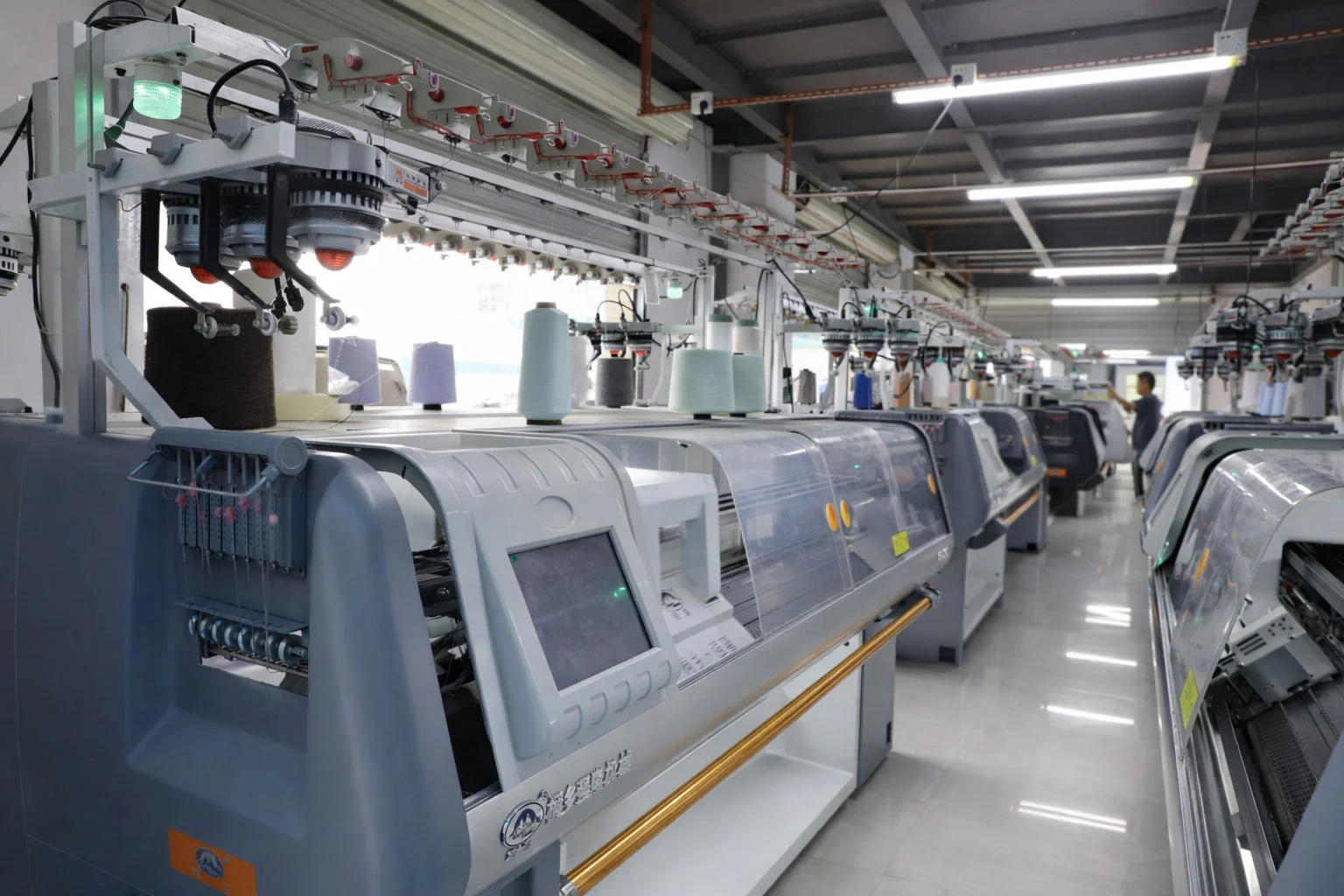
A well-managed production floor is not necessarily spotless — active production generates waste — but it must be organised. Yarn should be stored by colour and lot number. Work in progress should be labelled by order. Machines should be clean and maintained. An obviously chaotic floor with mixed orders, unlabelled materials, and broken machines reflects the management culture of that factory. That culture will show up in your product quality, your delivery reliability, and your communication experience.
✓ Check machine condition and maintenance records
Look at the machines closely. Are needles visibly worn or damaged? Is there yarn dust and fibre build-up around the needle beds? Ask when the last major service was carried out and whether they have maintenance records. Well-maintained machines produce consistent fabric density across a production run. Neglected machines produce inconsistency that is very difficult to diagnose and correct once bulk production has started.
✓ Look carefully at the QC area
Ask to see the quality control station. There should be measurement tables with spec sheets in use, garments being checked against standards, and a clear system for separating passed and failed pieces. If QC appears to happen informally — "the supervisor checks as they go" — that is not a quality control system. Ask directly: "What is your typical defect rate on bulk production?" A factory that answers "zero" is not being honest. A factory that says "two to three percent, and here is how we handle it" is giving you a real answer that reflects real process.
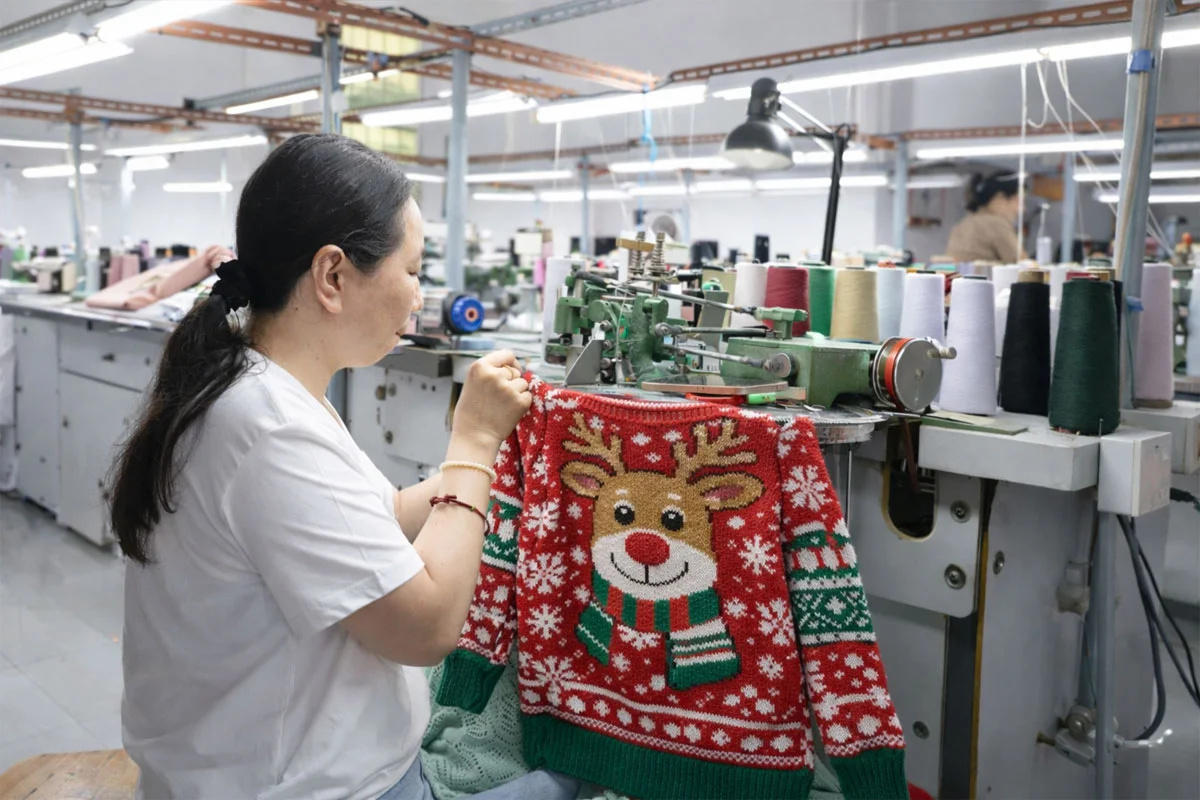
✓ Ask to see an active order in progress
Request to see fabric samples or garments currently in production for another client — names can be kept confidential, but the work should be visible. This is the most direct evidence of actual quality and capability. Look at stitch consistency, seam quality, and colour accuracy. A factory that cannot show you any active production, or that shows you only finished samples from months ago, is not giving you real evidence of current capability.
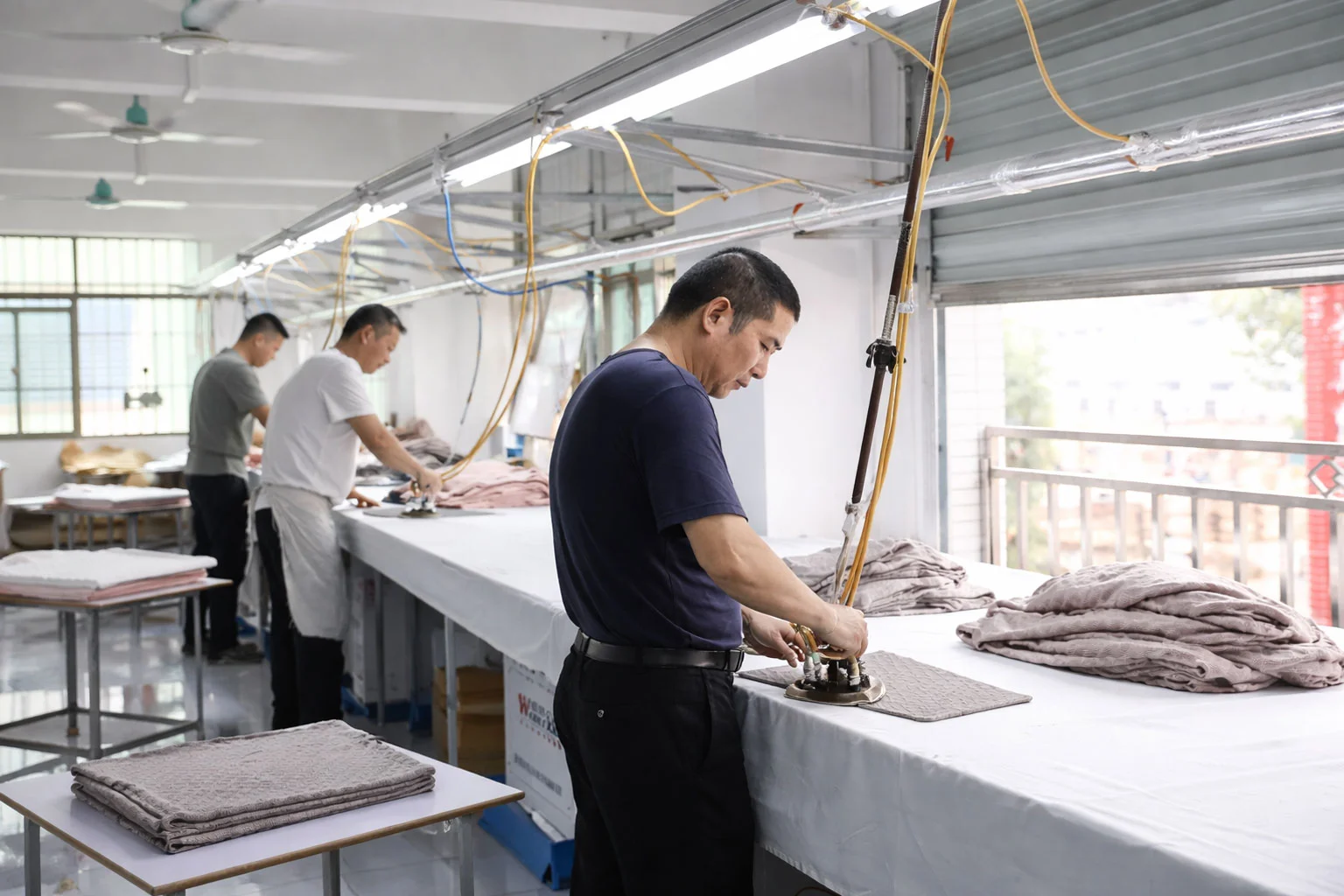
✓ Assess the finishing and post-processing area
Knitwear finishing — steaming, washing, pressing, trimming — is where much of the quality difference between factories is made or lost. Look for: steam-setting machines in good working condition, washing machines with calibrated temperature control, adequate pressing tables with skilled operators. A factory with strong knitting but weak finishing will produce garments that look acceptable straight off the machine but deteriorate rapidly after washing. Read our guide on why knitwear orders go wrong for more detail on the specific finishing failures to watch for.
✓ Meet the person who will actually manage your order
In many factories, you will be shown around by a salesperson who will not be your day-to-day contact once the order is placed. Ask to meet the production manager or the merchandiser who will handle your account. Assess their communication directly: Do they ask questions about your product and requirements, or do they nod at everything? Do they understand the technical specifications you are describing? Do they raise any realistic concerns about your brief, or do they accept everything without pushback? A contact who asks good questions at this stage will manage your order well. One who promises everything is telling you what you want to hear.
Stage 3: Post-sample assessment
Once you have received a first sample, the factory's behaviour during sampling tells you a great deal about what bulk production will be like. Sampling is the most attentive phase of the relationship — if communication and quality are already poor here, do not expect them to improve.
✓ Was the sample brief followed accurately?
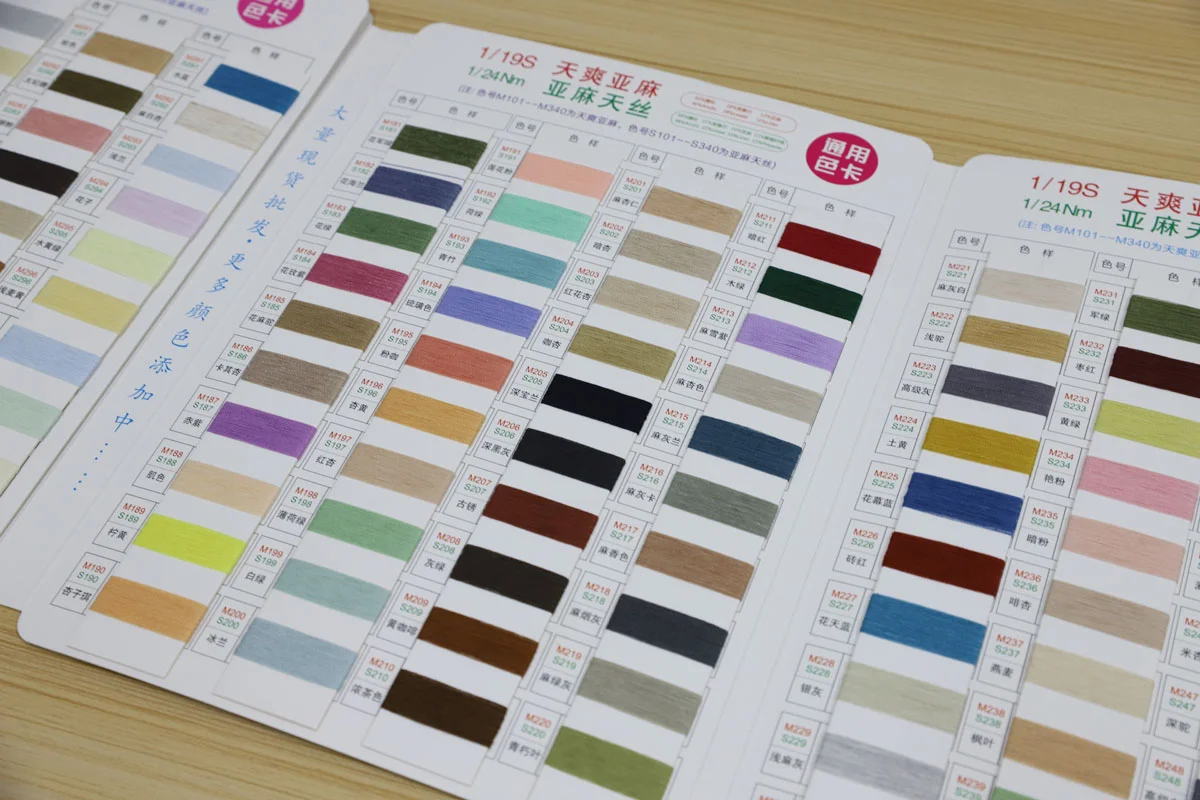
Compare the sample to your spec sheet point by point. Measure every key dimension. Check the yarn content, gauge, construction method, and finishing against what you requested. A factory that follows the brief accurately on the first sample demonstrates technical competence and genuine attention to detail. One that makes multiple undisclosed substitutions — "we used a similar yarn because yours was out of stock" — demonstrates a culture of guessing and improvising rather than communicating and confirming. This habit does not improve in bulk production.
✓ How did they communicate during sampling?
Did they proactively update you on progress without being chased? Did they flag any technical difficulties or material availability issues before the sample was sent — or did problems only emerge when the sample arrived? Did they respond to your messages within one business day? The sampling phase is where a factory invests its best communication effort. If they are already slow or unclear at this stage, expect it to get worse once your deposit is paid and they are managing multiple bulk orders simultaneously.
✓ How did they handle revision requests?
When you requested changes to the sample, did the factory ask clarifying questions to fully understand what you wanted before reworking? Or did they say "OK" and send another sample that still missed the point? Factories with experienced pattern masters ask specific, technical questions before committing to a revision — because they understand that "make it softer" or "fix the fit" can mean many different things depending on the product. Factories without competent pattern teams accept all feedback without probing, then produce revisions that are different but still wrong. This is one of the primary sources of sampling delays.
The complete red flag list
Any one of the following should make you pause. Two or more, and you should walk away regardless of how compelling the price or the promise.
| Red flag | What it likely means |
|---|---|
| Refuses a live video call of the production floor | No real factory, or production is outsourced |
| Price is 30%+ below other comparable quotes | Will substitute cheaper yarn or skip QC steps in bulk |
| Promises bulk delivery in under 20 days | Impossible timeline — will be late, or will rush and skip QC |
| Requests 100% payment before production | Financial instability or bad faith |
| Agrees to every request without any questions | Not reading your brief — will proceed on guesswork |
| Cannot name their primary yarn suppliers | No supply chain transparency or control |
| No references from current buyers available | No track record, or active relationship problems |
| Sample uses different yarn than specified | Will substitute without disclosure in bulk production |
| "We never have quality problems" | No honest QC culture — problems exist but are hidden |
| No written spec sheet or production order issued | Managed by memory and experience — inconsistent output |
| Sampling takes more than 15 days with no updates | Pattern capability is weak, or your order is low priority |
| Production address differs from registered address | Possible subcontracting without disclosure |
The factory that asks the best questions
After 26 years on the factory side of this industry, the single most reliable indicator of a good manufacturing partner is this: they ask better questions than you expected. A factory that asks about your target customer, your retail price point, your seasonal deadlines, and your reorder patterns is thinking about your long-term success, not just the immediate transaction.
Use this checklist to narrow your list to two or three serious candidates, then let sampling do the final selection. Start with a small trial order, verify quality against the sample, and scale only after that verification. It is a slower approach than simply accepting the lowest quote — but it is the approach that builds supply relationships that last.
For more detail on what to look for when you visit, read our visual tour of a knitwear factory in Dalang. For guidance on timing your orders correctly, see our seasonal production timeline guide. And if you want to understand the most common ways orders go wrong even after a factory passes vetting, read why knitwear orders fail — and how to prevent it.
Want to see how Lin Sweater measures up?
We welcome factory visits, video call tours, and reference checks. We have been manufacturing in Dalang since 1996 — we have nothing to hide.