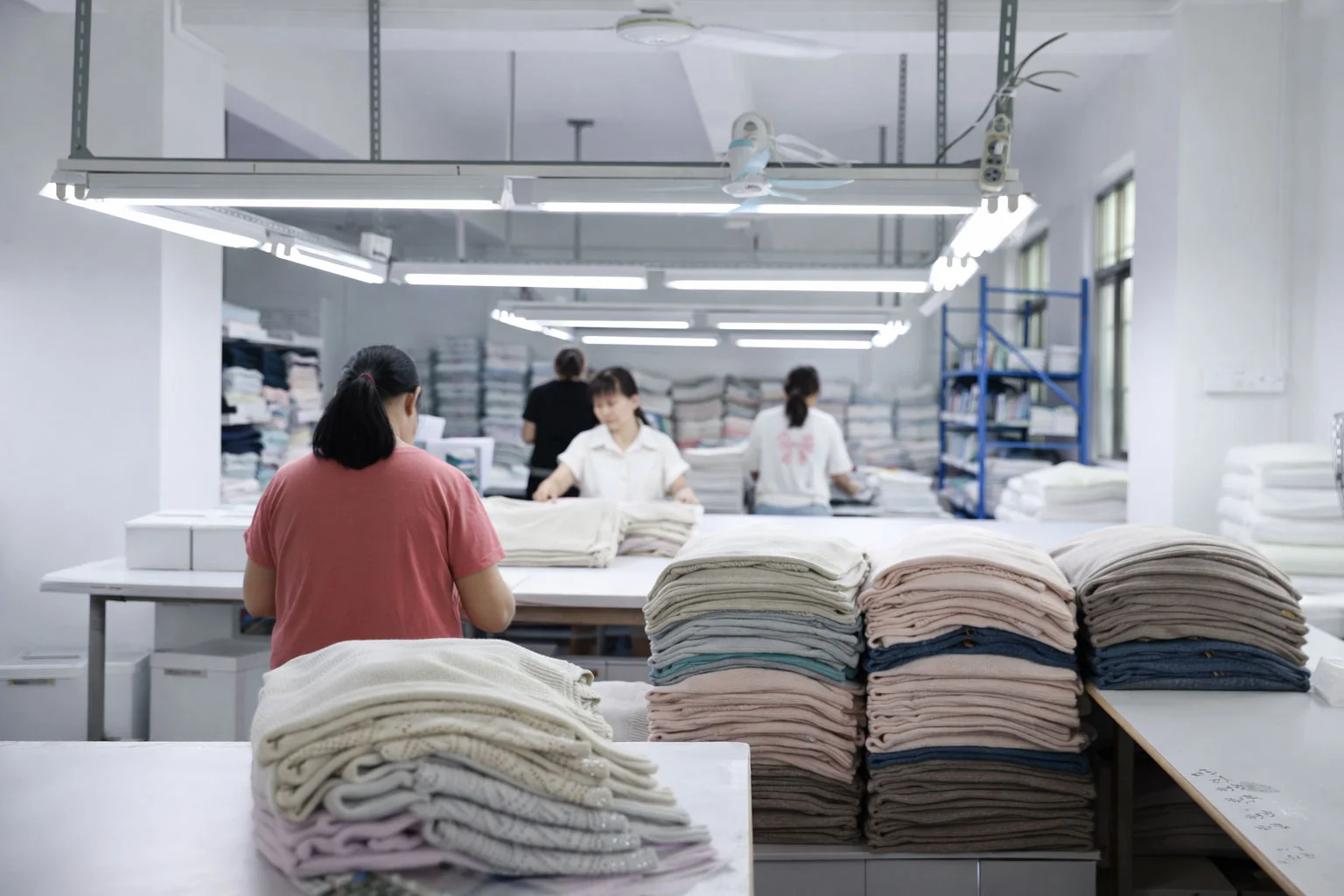
You placed an order with a factory that seemed reliable. Samples looked good. Price was acceptable. Communication was fine. Then the bulk arrived — and something was wrong. The colour was off. The seams were pulling. The garments shrank after one wash. Or they arrived three weeks late, missed your buying window, and had to be discounted to clear.
This is not a rare experience. After 26 years of manufacturing knitwear in Dalang, Dongguan, we have heard every version of this story — sometimes from buyers who came to us after a bad experience elsewhere. The problems are almost always the same, and almost always preventable.
Here are the seven most common reasons knitwear orders go wrong, and exactly what to do about each one.
01 — The colour is wrong
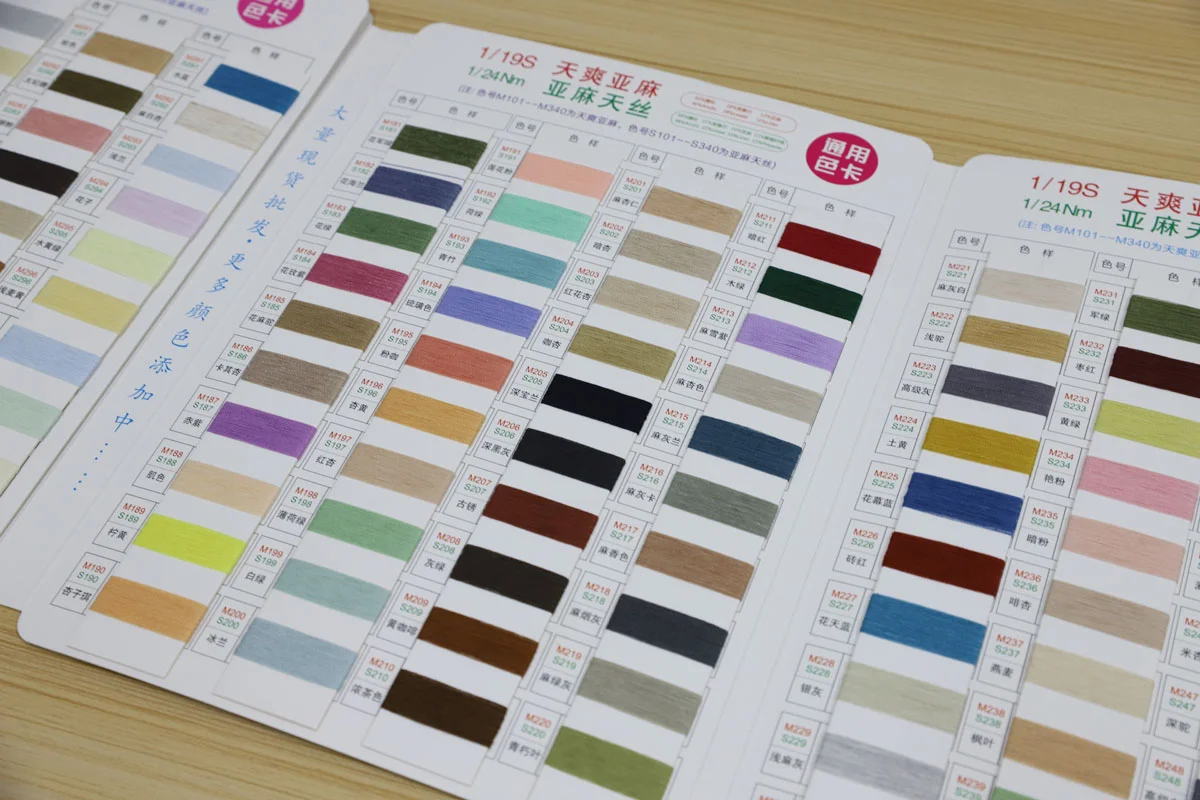
Colour discrepancy is the most common complaint in knitwear. The bulk arrives looking noticeably different from the approved sample — lighter, darker, greener, or simply "off" in a way that is hard to describe but immediately visible on a retail hanger.
Why it happens: Colour in knitwear is determined by the yarn dye lot. Even with a precise Pantone reference, different yarn batches from the same supplier can vary slightly. If the factory does not match the production yarn against the approved sample before knitting begins, that variation becomes locked into several thousand garments.
How to prevent it:
- Always request a yarn swatch approval before bulk production starts — not just a knitted sample. The swatch confirms the actual production yarn, not a sample lot.
- Specify your colour with a Pantone TCX code (the textile version, not graphic) rather than a photo or description. Photos shift under different lighting. Pantone codes do not.
- Ask the factory to send you the production yarn swatch for approval before machines run. This adds two to three days. It can save an entire order.
02 — The seams are pulling, visible, or coming apart
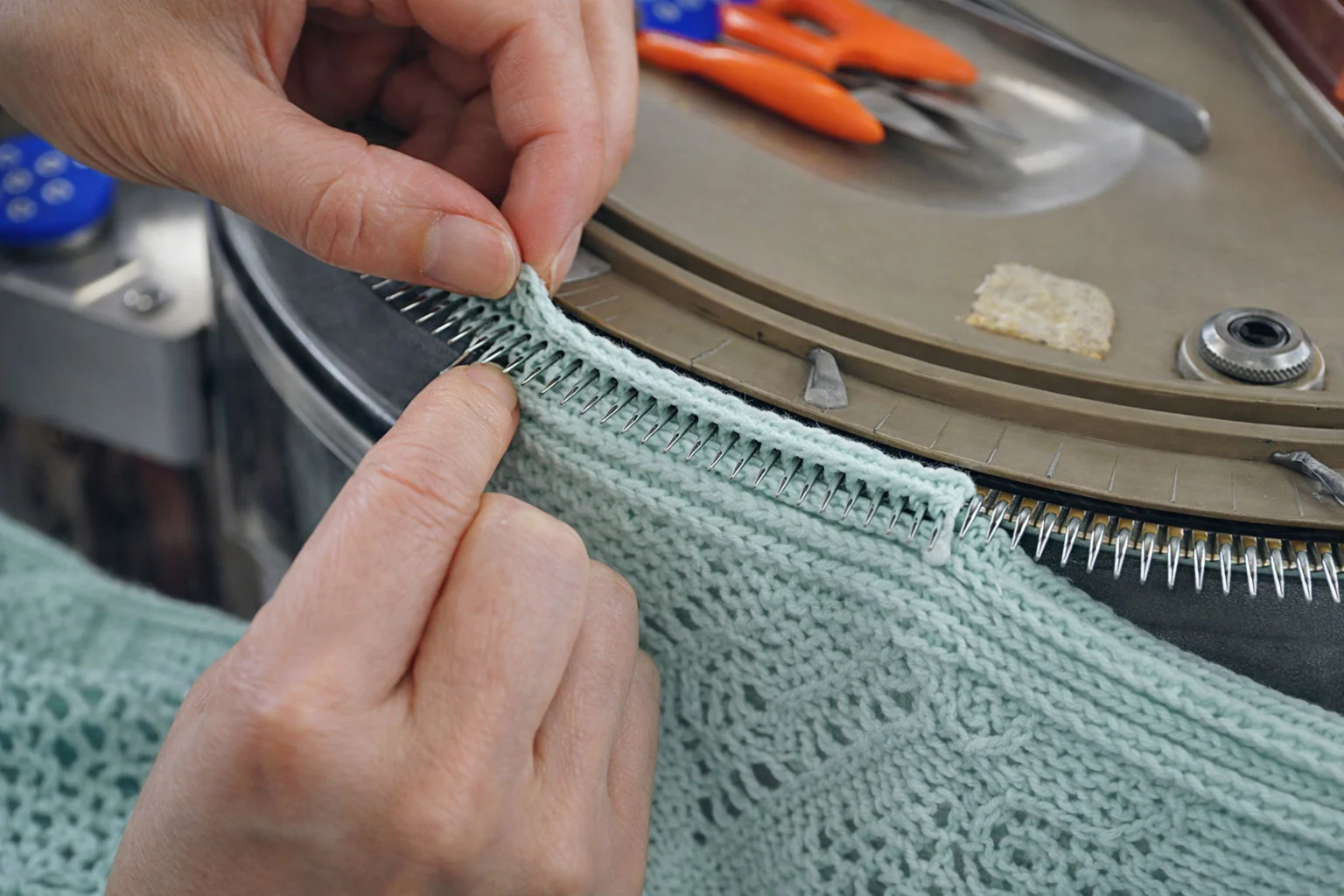
You pick up the garment and the shoulder seam is clearly visible on the outside, or it feels rigid and uncomfortable, or after two washes it starts to separate. This is a linking quality problem — and it is one of the most reliable indicators of a factory's overall production standard.
Why it happens: Linking — the process of joining knitted panels together — is one of the most skill-dependent operations in knitwear manufacturing. Factories that cut costs often have under-trained linkers operating at speed. The seam looks acceptable on a rushed inspection but fails under normal wear.
How to prevent it:
- When you receive your pre-production (PP) sample, turn it inside out. Check every seam. Pull gently at shoulder and side seams. If anything moves or looks rough, reject the sample before bulk begins.
- When visiting or auditing a factory, ask to see the linking floor in operation. The quality of a factory's linking team tells you more about their standards than their showroom samples ever will.
- Request a wash test on your PP sample before signing off on bulk. Wash it three times at the recommended temperature and check the seams after each wash.
03 — The garments shrank after washing
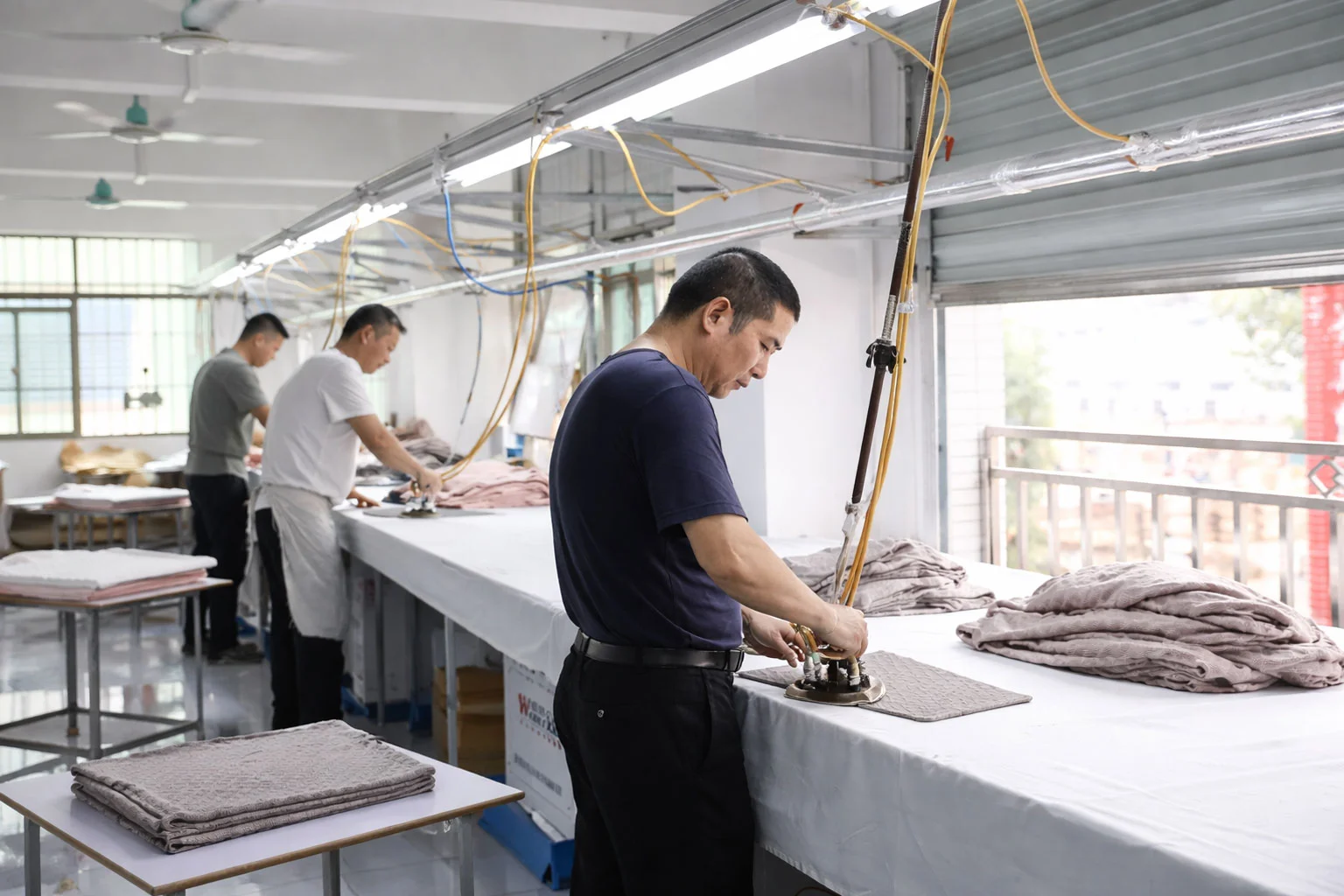
Your customer washes the sweater once and it comes back noticeably smaller. Returns flood in. Your reviews take a hit. This is a finishing problem — specifically, a failure to properly pre-shrink and steam-set the garments before packing.
Why it happens: Natural fibres — wool, merino, cashmere — have memory. When knitted and left unfinished, they will continue to relax and contract with moisture and heat. A factory that skips or rushes the steam-setting stage ships garments that have not completed this process. The customer's washing machine finishes it for them, usually with dramatic results.
How to prevent it:
- Specify your wash and care requirements to the factory before sampling. "Machine washable" is not a default — it must be built into the yarn choice and finishing process from the start. Read our guide on merino vs regular wool to understand which fibres hold up best to machine washing.
- Request a dimensional stability test on your PP sample. Wash it at the care label temperature and measure key dimensions before and after. If it changes by more than 3%, the finishing process needs adjustment.
- Check the care label wording carefully. A garment that requires dry cleaning should never be sold with a machine-wash claim.
04 — The yarn feels different from the sample
The sample felt soft and luxurious. The bulk feels coarser, scratchier, or simply cheaper. The factory used a different yarn — or a lower grade of the same fibre — without telling you.
Why it happens: Yarn costs fluctuate. If a factory is under price pressure — or if they gave you an optimistic quote to win the order — substituting a cheaper yarn in bulk production is a tempting shortcut. Unless you specified the exact yarn by fibre content, supplier, and grade, you may not have a clear basis to reject it.
How to prevent it:
- Ask the factory to specify the exact yarn used in your sample — fibre content, yarn count (e.g. 2/28Nm), and supplier name. Get this in writing on your order confirmation.
- For premium orders — cashmere, merino, or fine wool — request a fibre content test report from an accredited lab on the bulk yarn before production begins. Understand cashmere grades before placing any cashmere order.
- Keep a physical yarn swatch from your approved sample. When bulk arrives, compare by hand. If something feels different, send a bulk sample for lab testing before accepting the shipment.
05 — The order arrived late
You needed the goods for October. They arrived in November. The seasonal window closed, you discounted to clear, and your cash flow took a hit. Late delivery is the order problem that hurts most — because by the time you know it is happening, there is usually nothing you can do.
Why it happens: Factories overcommit. They quote an optimistic timeline to win the order, then face competing priorities when production season peaks. Buyers who did not lock in a production slot, did not confirm their PP sample on time, or are working with a factory operating at capacity are most vulnerable. Read our full guide on why sweater sampling takes longer than expected to understand where delays accumulate.
How to prevent it:
- Get a written production schedule at order confirmation — not just a delivery date. It should include: sample approval date, bulk start date, bulk completion date, and ex-factory date. Each milestone is a checkpoint.
- Understand seasonal order timing. Autumn/winter knitwear needs to be ordered by March at the latest to guarantee October delivery. Buyers who approach factories in June are already competing for the last available production slots.
- Build two weeks of buffer into every deadline you give the factory. If you need goods by October 1, tell the factory September 15. Factories that hit every deadline do not need the buffer. Factories that slip will use it.
- Chase your PP sample approval actively. Every day you delay approving a sample is a day added to your delivery date.
06 — Sizes are inconsistent across the order
Small runs true to size. Medium runs large. XL is almost the same as Large. Your size chart becomes useless and your online return rate climbs. Sizing inconsistency is a measurement control problem — and it is entirely preventable with the right systems in place.
Why it happens: In knitwear, finished measurements depend on machine tension, stitch density, and steam-setting conditions. These can drift during a long production run, especially if the factory is running multiple styles simultaneously and adjusting machine settings between them. Without in-process measurement checks, a garment cut at the beginning of a run may measure differently from one cut at the end.
How to prevent it:
- Provide a detailed measurement spec sheet with your order — not just a size label. Specify chest width, body length, sleeve length, and shoulder width with tolerance ranges (typically ±1.5cm for knitwear).
- Ask the factory about their in-process QC process. A factory with a proper three-stage quality control system will be measuring garments throughout the production run, not just at the end.
- When your bulk arrives, measure a sample from each size before accepting the shipment. Pick pieces from different cartons — not just the top of one box.
07 — The factory was not who you thought they were
You thought you were working with a factory. You were actually working with a trading company — or a factory that subcontracted your order to a third party you never approved. The quality controls you discussed? They applied to someone else's production floor.
Why it happens: Trading companies presenting themselves as factories is common on platforms like Alibaba. Even genuine factories sometimes subcontract during peak periods. Unless you verify who is actually making your goods, you cannot control the standards being applied to them.
How to prevent it:
- Visit the factory before placing a significant order. A factory visit is the single most reliable way to verify that a manufacturer is who they say they are. Our guide to vetting a knitwear factory in China gives you a complete checklist for what to look for on-site.
- Ask for the factory's business licence and verify the registered address matches the production address.
- Request a video call tour of the production floor before ordering. Any factory with nothing to hide will agree immediately. A factory that hesitates or offers excuses is showing you something important.
- Use referrals from other buyers when possible. A factory that has been working with a buyer you trust is a factory that has already been vetted.
One final thought
None of these problems require extraordinary effort to prevent. They require clarity — about what you want, what you have agreed, and what checkpoints you have built in before the factory locks you out of the process.
A good factory will welcome this level of specification. They will answer your questions directly, show you their QC process without hesitation, and push back if your timeline is unrealistic rather than take your deposit and disappear into a queue. That willingness to be specific, honest, and transparent is the most reliable indicator that you are working with a factory you can trust.
We have been manufacturing knitwear in Dalang since 1996. In 26 years, we have seen every one of these problems — from both sides of the relationship. The buyers who never experience them are not lucky. They are prepared.
Want to place an order you can trust?
Tell us your project — product type, quantity, target price. We reply within 24 hours with a full quote and honest timeline. No commitment until you approve your sample.