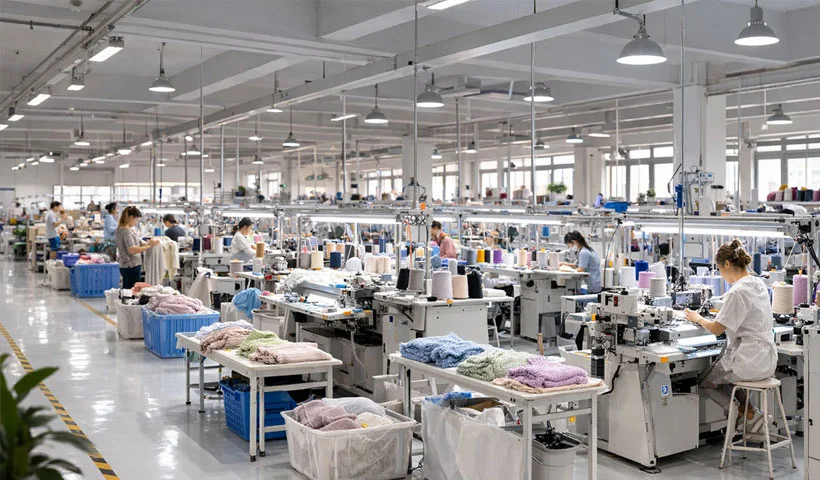
China produces over 60% of the world's knitwear. That means there are thousands of factories to choose from — and hundreds of ways to get it wrong. After 26 years of manufacturing in Dalang, Dongguan, we've seen every mistake buyers make when sourcing from China. This guide is our honest attempt to help you avoid them.
Step 1: Define what you actually need
Before you contact a single factory, be clear on these four things:
- Product type — crew neck, cardigan, chunky knit, fine-gauge spring knit? Different factories specialise in different styles.
- Quantity — how many pieces per style? Factories with certain machine configurations have different minimum order requirements. Most reputable factories start from 300 pcs per style.
- Yarn — merino wool, cashmere blend, acrylic, cotton? Your yarn choice affects which factories can actually do the job. Read our guide on merino vs regular wool to understand the differences.
- Service type — OEM or ODM? If you have a design, you need OEM. If you need the factory to develop styles for you, you need ODM.
Step 2: Where to find factories
There are three main channels, each with different trade-offs:
| Channel | Pros | Cons |
|---|---|---|
| Alibaba / Made-in-China | Easy to search, many options | Many trading companies, hard to verify |
| Trade shows (Canton Fair, Intertextile) | Meet factories face to face | Time and travel cost |
| Referral from other buyers | Pre-vetted, trusted | Hard to find if you're new |
Our recommendation: use Alibaba to build a longlist, then filter aggressively. Look for factories (not trading companies), verified suppliers with trade assurance, and at least 3 years on the platform.
Step 3: The five questions that reveal everything
When you contact a factory, ask these five questions before anything else. The answers — and how quickly they answer — tell you almost everything you need to know.
- "Do you have in-house pattern masters?" — Factories without pattern masters outsource sampling, which means slower turnaround and less control. Our guide on why sampling takes longer than expected explains why this matters.
- "What is your minimum order quantity per style?" — Be specific. Some factories quote a low MOQ but then add conditions (one colour only, standard sizes only).
- "Can I visit your factory?" — Any factory worth working with will say yes immediately. Hesitation is a red flag.
- "Can you share references from current customers?" — Not testimonials on their website — actual contact details for buyers you can call.
- "What happens if there is a quality problem after delivery?" — Listen carefully to how they answer. A good factory explains its QC process and after-sales policy clearly. A bad one deflects.
Step 4: Red flags to watch for
- They can't show you a real production floor on video call
- They promise unrealistically short lead times (less than 25 days for bulk)
- They push you to pay 100% upfront
- They have no clear sampling fee policy
- They agree to everything without asking clarifying questions
Step 5: Start small, then scale
No matter how good a factory looks on paper, your first order should always be a small test batch. This is not about distrust — it's standard practice. A test order of 300 pieces lets you verify quality, lead time, communication, and packing before you commit to large volumes.
If the factory pushes back on test orders, that itself is a signal. Established factories are comfortable with buyers starting small because they know their quality will earn the repeat business.
Once you've confirmed quality on the first order, you can discuss better pricing, preferential scheduling, and long-term supply agreements. Read more about planning your production calendar to make the most of your factory relationship.
What to include in your first enquiry
When you're ready to reach out, send a clear brief that includes:
- Reference photos or sketches of what you want to make
- Your target quantity and size breakdown
- Yarn preference or target price per piece
- Desired delivery date
- Whether you need OEM (your design) or ODM (factory design)
The more specific your brief, the more accurate the quote. Factories that receive a clear brief respond faster and take the enquiry more seriously.
Looking for a factory you can trust?
Lin Sweater has been manufacturing knitwear in Dalang since 1996. MOQ from 300 pcs. We reply to all enquiries within 24 hours.