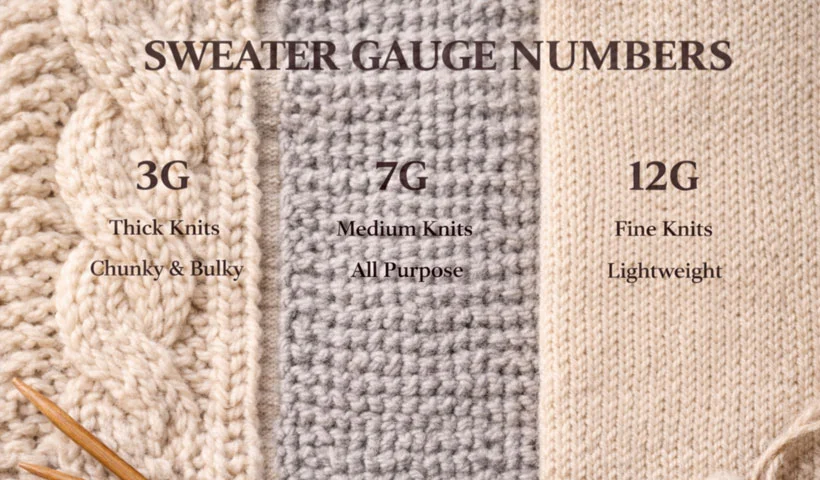
If you've looked at a factory's machine list or a yarn supplier's catalogue, you've probably seen numbers like 3G, 7G, 12G, or 14G. These are gauge numbers — and understanding them is one of the most useful things a knitwear buyer can learn. This guide explains what gauge means and how to use it when briefing a factory.
The gauge scale
| Gauge | Character | Typical yarn | Best for | Season |
|---|---|---|---|---|
| 3G – 5G | Very chunky, open knit | Bulky yarn 200–400g/100m | Oversized knits, statement pieces | Autumn/Winter |
| 7G | Standard weight, classic sweater feel | Worsted weight 100–200g/100m | Crew necks, cardigans, most knitwear | All seasons |
| 10G – 12G | Medium-fine, smooth surface | Sport/DK weight | Smart-casual, layering pieces | Spring/Autumn |
| 14G – 16G | Fine, close-knit | Fingering/lace weight | Spring tops, fine merino products | Spring/Summer |
Why gauge matters for your brief
When you send a reference image to a factory, the first thing they look at is the gauge. It determines which machines to use, which yarns are compatible, and roughly what the sample will cost. If you don't specify gauge and the factory guesses wrong, your sample will look nothing like your reference. For how to document gauge and other specs properly, see our tech pack guide.
If you're not sure what gauge your reference is, the easiest way to find out is to count the stitches per inch in the photo (count horizontal stitches across 1 inch of fabric). That number is approximately the gauge.
Gauge and yarn weight relationship
Each gauge is optimised for a specific yarn weight range. Putting the wrong yarn on the wrong gauge produces poor results — fabric that's too loose, too tight, or won't knit properly. This is why sampling delays often happen when a buyer requests an unusual combination: the factory has to test compatibility before committing to the sample.
Gauge and factory capability
Not all factories have machines across all gauge ranges. When evaluating a factory, ask specifically about their gauge range. A factory that only has 7G machines cannot produce fine-gauge spring knits. A factory with only 3G–7G cannot produce a fitted merino cardigan in 14G. Make sure the factory's machine inventory matches your product range before you commit.
In Dalang, Dongguan, most established mid-size factories cover 5G through 14G. This is one of the reasons the cluster is so capable — you can source almost any gauge from factories within a few kilometres of each other.
Ready to start your knitwear project?
Lin Sweater Factory — Dalang, Dongguan. MOQ from 300 pcs. Reply within 24 hours.