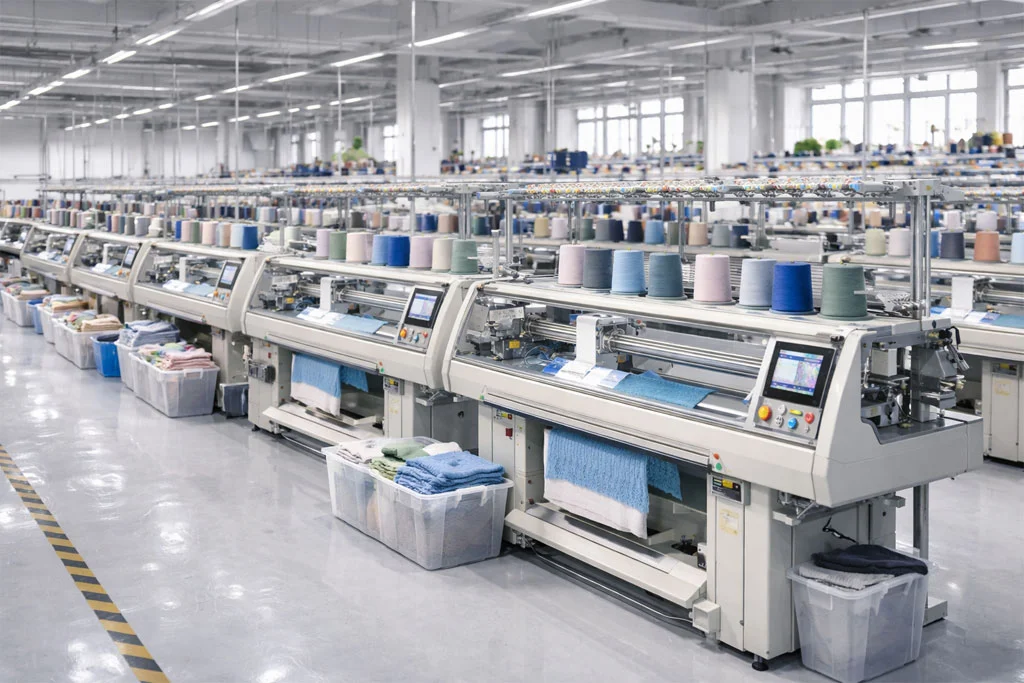
One of the most common sourcing mistakes in knitwear is assuming that every supplier with a polished website, fast replies and a competitive quotation is a real factory. In China, many suppliers are actually trading companies or sales intermediaries. Some are honest about that. Some are not. If you are buying sweaters, cardigans or other knitwear for your brand, this distinction matters far more than most first-time buyers expect.
A real knitwear factory in Dalang controls machines, pattern development, yarn planning, linking, finishing and quality control. A trading company controls none of those things directly. That difference affects how accurately your sample is made, how quickly problems are solved, how flexible your MOQ can be, and whether the final bulk order really matches what you approved. If you are still comparing suppliers, this guide will help you tell the difference.
Why this difference matters to buyers
Many buyers only discover the supplier type after something goes wrong. The quotation looked fine, the sample photos looked acceptable, and communication felt smooth at first. Then sampling ran late. Questions about gauge or yarn substitution were answered vaguely. The factory visit kept getting postponed. Bulk production started, but no one could explain exactly what happened on the floor. These are classic signs that the person selling the order is not the team making it.
That does not mean every trading company is bad. Some are experienced and can be useful if they manage several strong factories. But from the buyer's side, the main risk is loss of control. In knitwear, small technical details matter. Gauge changes the handfeel. A different yarn count changes weight and drape. A weak pattern team creates fit problems that show up only after the first sample. When your supplier sits outside the production line, each technical question takes longer to answer and each mistake costs more to correct. That is why we always suggest buyers learn how to vet a knitwear factory in China before they approve sampling.
The real difference between a trading company and a factory
A trading company mainly sells. A factory mainly produces. In practice, the distinction shows up in six areas.
| Area | Real knitwear factory | Trading company |
|---|---|---|
| Sampling control | Direct contact with pattern and sample team | Must relay requests to another factory |
| MOQ flexibility | Can decide based on machine time and workload | Depends on third-party factory acceptance |
| Technical feedback | Usually specific and production-based | Often slower or less detailed |
| Quality issues | Can check and correct on the floor directly | Needs to negotiate with actual producer |
| Factory visit | Easy to arrange if legitimate | May avoid, delay or redirect visit |
| Pricing | Closer to production cost | Usually includes an extra margin layer |
For buyers developing private label knitwear at low MOQ, direct production control matters even more. Small orders are harder to manage profitably. If a trading company is involved, it often has to persuade a separate factory to accept the job, which can reduce flexibility or encourage shortcuts later.
How to tell before you pay for a sample
There are several signals buyers can check before paying a sample fee.
1. Ask for the business licence and business scope
A legitimate Chinese company should be able to show its business licence. What matters is the business scope. If the company is a manufacturer, the registered scope should include production or manufacturing-related wording. If it mainly describes trade, import-export or sales, that is a sign you may be dealing with a trading company. This one document does not tell you everything, but it is one of the fastest first checks.
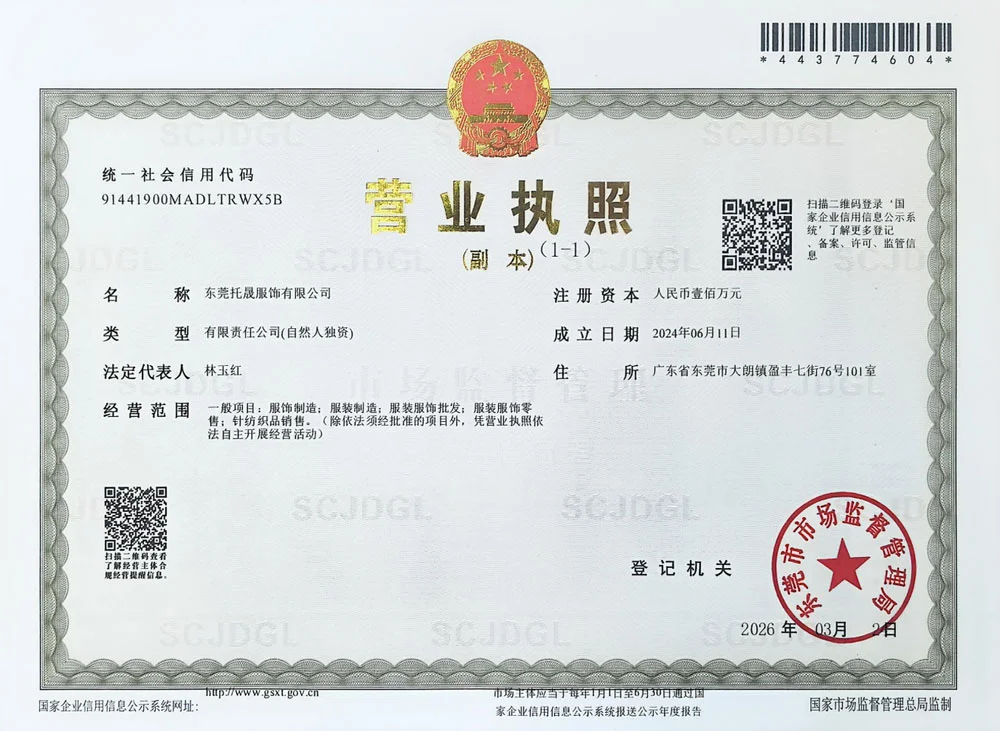
2. Request a live video tour, not just photos
Photos can be borrowed. Videos can be edited. A live walk-through is much harder to fake. Ask the supplier to show the knitting floor, linking area, finishing section, sample room and yarn storage in one continuous call. Ask them to pan slowly and answer questions in real time. If they hesitate, show only a showroom, or promise a video later without doing the live call, be cautious.
Buyers who are new to the industry often do not know what they should be looking at during that tour. Our article on what a real knitwear factory in Dalang looks like can help you understand the spaces, machines and workflow you should expect to see.
3. Ask technical questions, not only commercial ones
Sales teams are good at replying to price and lead time questions. A real factory becomes easier to identify when you ask technical questions such as:
- What gauges do you run most often for women's knitwear?
- Do you have in-house pattern masters?
- How do you handle shrinkage approval before bulk?
- How many days do you normally need for a cardigan sample?
- What happens if yarn booking is delayed after sample approval?
A real factory usually answers with more detail, and sometimes pushes back when the brief is unrealistic. That is actually a good sign. A supplier that says yes to everything without clarifying anything often understands the sales process better than the production process. This is also why our knitwear tech pack guide matters so much: weak suppliers rely on vague briefs because they cannot challenge them technically.
What sampling reveals very quickly
Sampling is where supplier type becomes visible. In knitwear, the sample phase tells you how the order will be managed later.
If you are working with a real factory, the sample comments usually come back with technical logic: yarn options, gauge constraints, shape corrections, measurement concerns, stitch suggestions, rib balance or placket behavior. If you are working with a trading company, feedback is often slower and more generic because the comments have passed through an extra layer. That may not seem serious at first, but it becomes costly if the first sample misses the target and your calendar is tight.
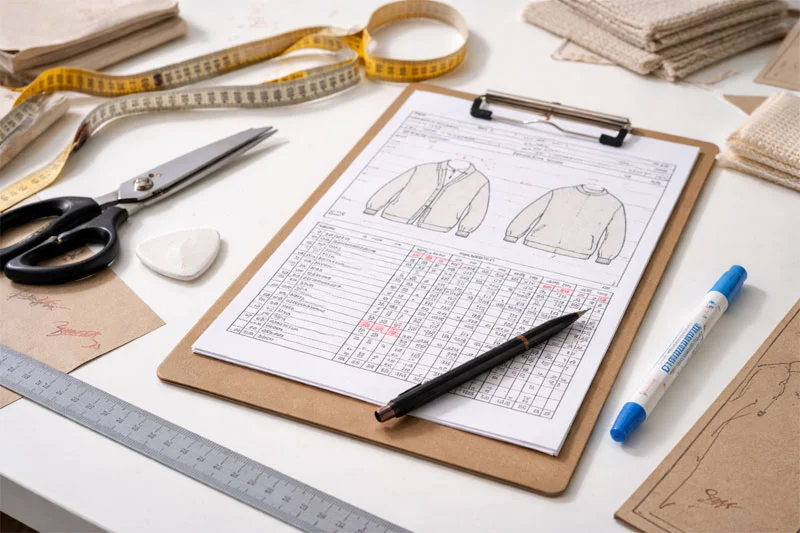
For example, if a buyer wants a soft fine-gauge women's cardigan but sends only reference photos, a real factory may ask about yarn count, target weight, front placket behavior and button spacing before knitting. A trading company may simply pass the reference onward and wait for whatever sample comes back. That difference affects fit, lead time and the number of revisions needed. It is closely connected to many of the problems described in our article on why sweater sampling takes longer than expected.
How MOQ, price and control are affected
Many buyers assume a trading company can always offer a lower MOQ because it can "search around." In reality, the opposite is often true. For small knitwear orders, the biggest challenge is not only finding a low price. It is finding a workshop willing to schedule the order properly, manage the yarn booking carefully and still respect quality control. A real factory that understands your program may decide that a 300-piece order is worth taking because it sees repeat potential. A trading company may not have the authority to make that call.
The same applies to pricing. A trading company often adds another layer of margin, but the larger cost is not always in the quotation itself. It appears later in the form of preventable revisions, vague communication, and decisions delayed because the person talking to you does not control the people making the garment. If you want a better understanding of what should and should not be inside a knitwear quotation, our sweater factory quote guide breaks that down in detail.
When a trading company can still work
To be fair, there are situations where a trading company may still be useful. If the buyer needs many product categories beyond knitwear, wants a broader consolidation partner, or lacks the internal capacity to communicate with several factories, a good intermediary can be helpful. But the buyer should know clearly what role that supplier plays.
The problem starts when a trading company presents itself as a factory without being transparent. In that situation, the buyer believes they have direct production access when they do not. That misunderstanding tends to surface only under pressure: delivery delays, quality claims, yarn substitutions or repeated sample corrections. For a brand focused on sweaters and knitwear only, direct factory cooperation is usually the safer structure.
Questions buyers should ask any supplier
If you are comparing several suppliers in China, these questions help reveal whether you are talking to a real factory or not:
- Can you show me your production floor live on video this week?
- Do you have in-house pattern masters and how many?
- What gauges and machine types do you run in-house?
- Can buyers visit the factory before bulk production?
- Who will manage my sample comments directly?
- What parts of production are done in-house and what parts are outsourced?
- Can you show an active order in progress, without revealing client names?
- What is your normal sample time and bulk time for low MOQ knitwear?
- How do you control yarn booking and color confirmation before production?
- How do you handle a quality issue after shipment?
A real factory may not answer every question perfectly, but it usually answers them directly. That directness is often more valuable than polished marketing language.
Why Dalang matters in this decision
Location matters in knitwear. A supplier based in Dalang, Dongguan is operating inside China's strongest knitwear cluster. That means easier access to yarn, pattern talent, machine support, linking workers and finishing resources. For buyers, this usually leads to faster sampling feedback and more realistic technical discussion. It does not automatically make every Dalang supplier a good one, but it increases the chance that the supplier is genuinely part of the knitwear ecosystem rather than simply brokering orders from outside it.
How we handle this at Lin Sweater
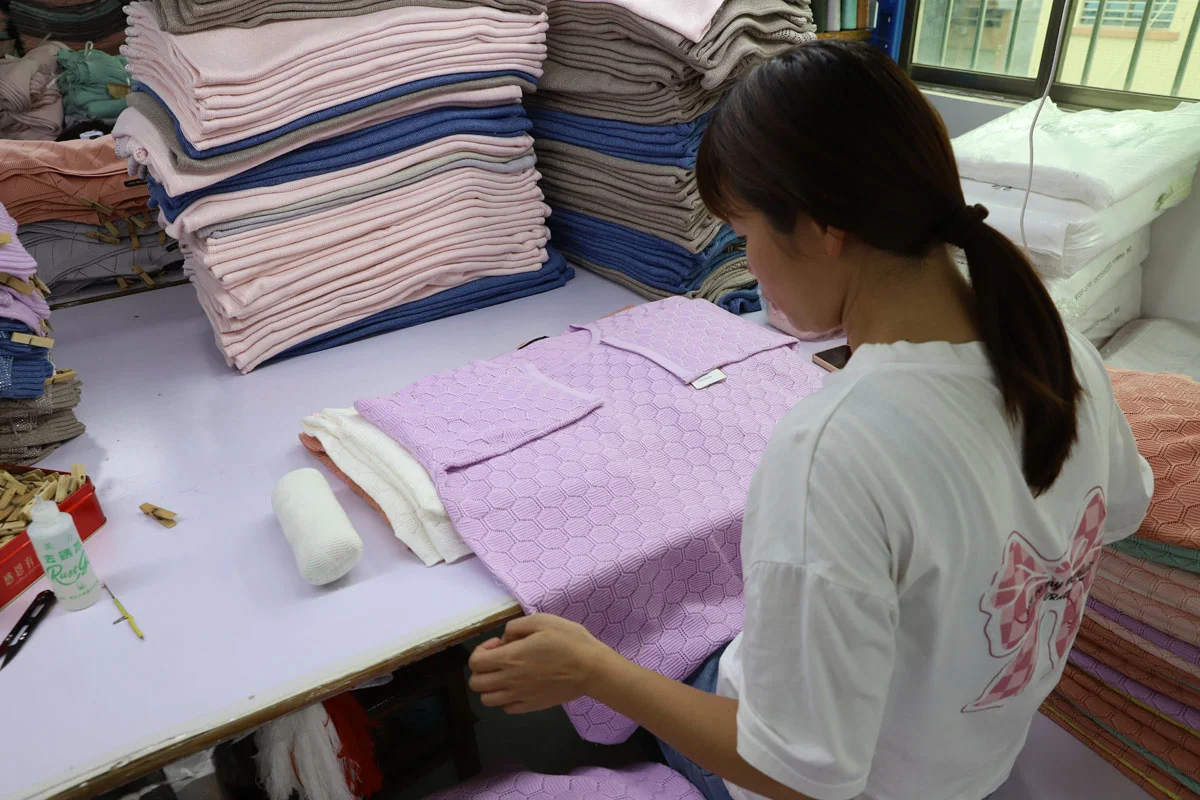
At Lin Sweater, we prefer buyers to verify us directly. We welcome factory visits, live walkthroughs and detailed technical questions. We do not believe serious buyers should rely only on marketing copy. If a buyer is comparing several suppliers, we would rather they understand how a real factory works than choose us blindly.
Our production base is in Dalang, and our approach is simple: discuss the product honestly, confirm what is realistic, clarify MOQ and timing early, and keep the path between buyer comments and factory execution as short as possible. If you want to understand how we move from enquiry to sampling and bulk, the best next step is our How We Work page. If you are already preparing a project, our contact page explains what information helps us quote more accurately.
Want to confirm you are talking to a real factory?
Send us your reference style, target quantity and timeline. We can review it from a factory perspective and show you how we handle sampling, MOQ and production in Dalang.