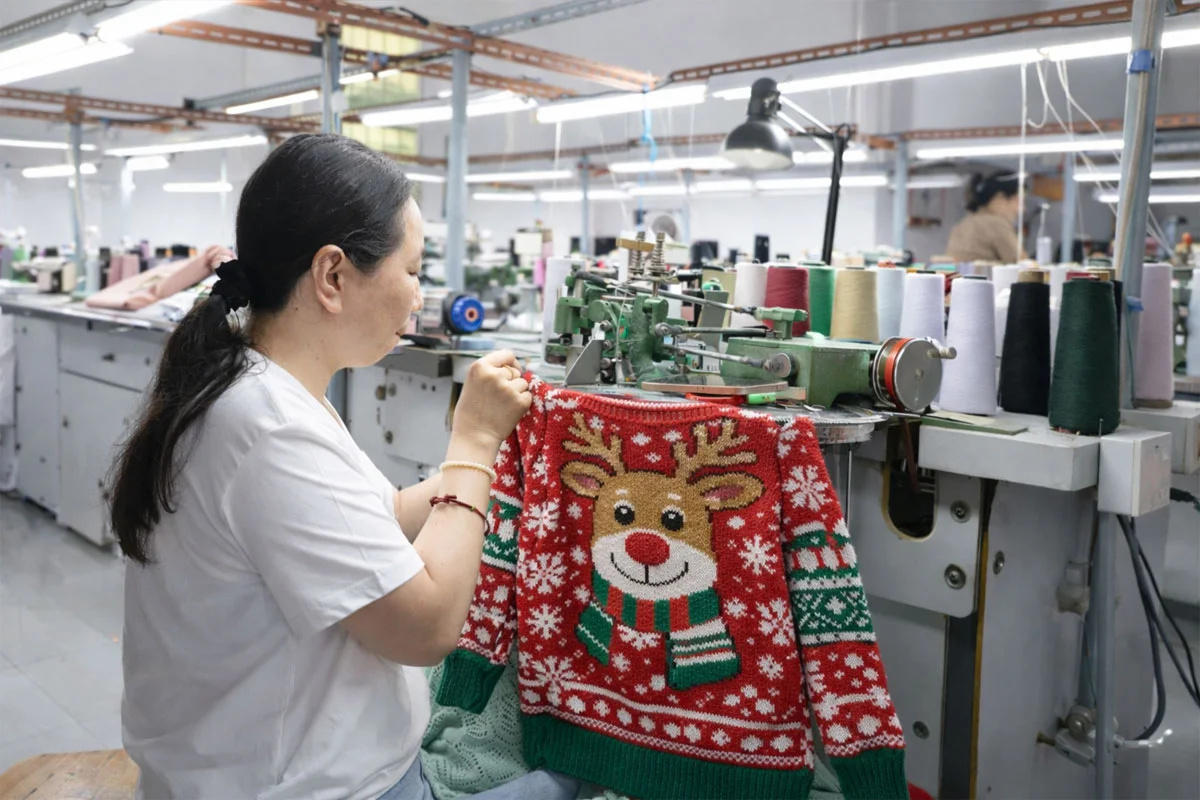
Many buyers compare sweater factory quotes by looking only at the final price per piece. That is understandable, but it is also where many sourcing mistakes begin. A quote that looks cheaper at first glance may be using a different yarn, a lower garment weight, a different gauge, a different size range, or fewer services than the quote beside it.
A sweater factory quote is not just a price. It is a summary of production assumptions. If those assumptions are not clear, buyers end up approving samples they did not really want, or paying extra later for labels, packing, yarn upgrades or size changes they assumed were already included.
This guide explains how to read a sweater factory quote from a real factory point of view: what the main cost lines mean, what is usually included, what is often excluded, and what you should confirm before paying the sample fee or deposit.
What a sweater factory quote is actually showing you
A factory quote is usually built around one specific version of your product: one style, one yarn direction, one gauge, one size run, one quantity level and one packaging standard. If any of those inputs change, the quote changes too.
For example, the difference between a 7G wool-acrylic crew neck and a 12G fine merino cardigan is not small. The yarn is different, the knitting time is different, the finishing requirements are different, and the risk of sampling revisions is different. So if two suppliers are quoting different assumptions, the numbers are not directly comparable.
This is one reason we encourage buyers to read our knitwear tech pack guide before asking for quotations. A better brief creates a more useful quote.
The main parts of a sweater factory quote
Most sweater quotations can be broken into these parts, even if the factory does not list them in a fully itemised way:
| Quote part | What it means | Why it changes |
|---|---|---|
| Yarn cost | The material cost based on fibre, count, blend, colour and weight. | Changes with fibre choice, dye lot, yarn quality and garment weight. |
| Knitting cost | Machine time and production efficiency for the garment panels. | Changes with gauge, stitch complexity, panel count and machine speed. |
| Linking and sewing | Joining panels, attaching trims, finishing seams and labels. | Changes with garment complexity, neckline, placket, pockets and trims. |
| Washing or steaming | Final finishing process before folding and packing. | Changes with fibre type, shape control and handfeel requirement. |
| Packing | Folding, polybag, sticker, carton mark and export-ready packing. | Changes with retail packing, barcode, hang tag and carton standard. |
Some factories provide one total number only. Others split sample fee, unit price, labels and packing into separate lines. Neither format is automatically better. What matters is whether the assumptions are clear enough for you to compare properly.
How yarn changes the quote more than buyers expect
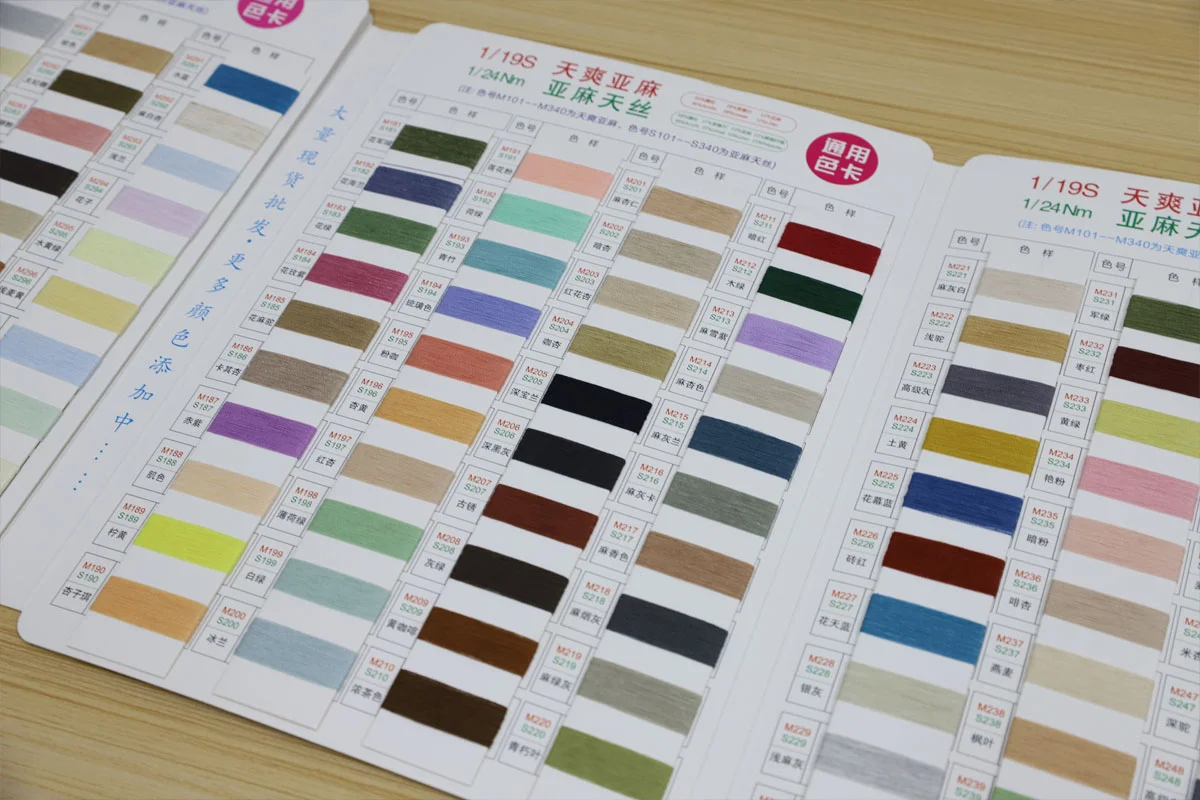
Yarn is usually the first thing that shifts the quote. A buyer might say "I want this same style, but can you also price it in merino?" That sounds like a small change. In factory terms, it is not. The yarn price changes, the handfeel changes, the steaming behavior changes, and often the most suitable gauge changes as well.
This is why a cheaper quote is not automatically a better quote. If one supplier priced 100% acrylic and another priced a wool blend, they are not pricing the same garment. Our article on acrylic vs wool explains this clearly from the buyer's side.
Acrylic
Usually lower cost, easier for price-sensitive programs, but may pill more and feel less premium depending on yarn grade.
Wool blend
Often the middle ground for warmth, handfeel and manageable ex-factory pricing.
Merino or cashmere
Higher yarn cost and higher expectation on finishing, fit and final retail positioning.
If you are comparing quotes, confirm whether the yarn assumptions are actually the same: fibre content, yarn count, weight per garment and whether the quote uses standard yarn shades or custom colour sourcing.
How gauge and construction change the price
Gauge is one of the most misunderstood parts of a sweater quote. Buyers often focus on silhouette, but factories also have to calculate how the garment will be knitted. A simple 7G crew neck and a fine 12G fitted cardigan may look close in a mood board, but they are different jobs on the production floor.
Gauge affects:
- Machine compatibility. Not every style runs efficiently on every machine.
- Knitting time. Some structures take significantly longer to produce.
- Yarn requirement. Finer gauge and different stitch structures change yarn usage.
- Sampling risk. Fine-gauge or highly structured styles often need more careful adjustment in the first sample.
If you are not fully comfortable with gauge terms, our guide to 3G, 7G and 12G sweater gauge numbers is useful before reviewing quotes.
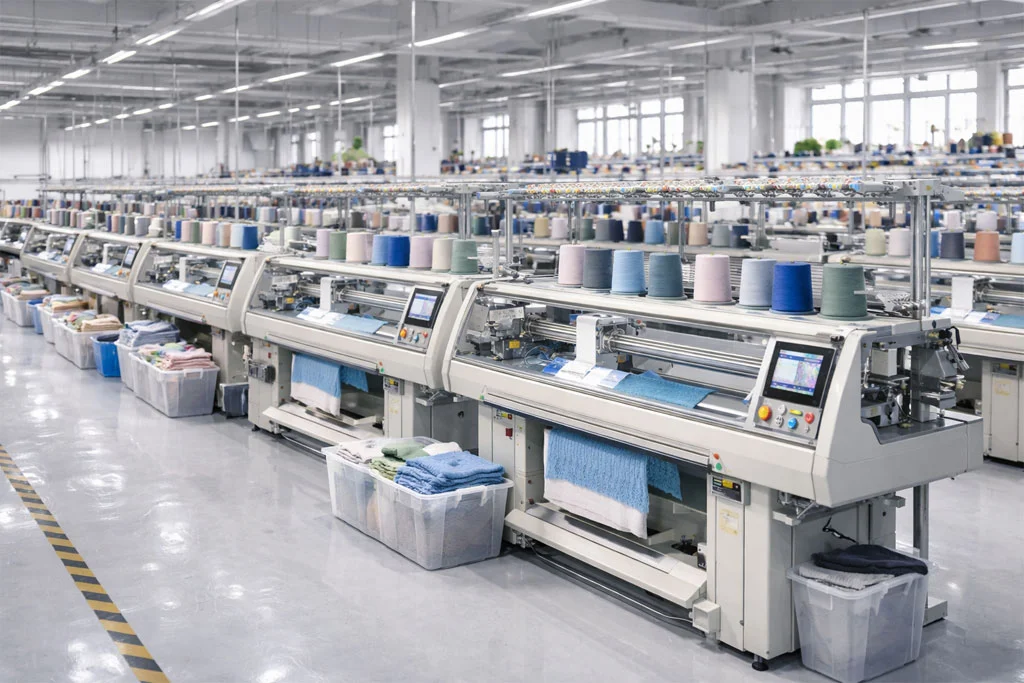
Construction also matters. Jacquard, intarsia, cable, embroidery, plackets, pockets and linked collars all add work. If one quote prices a plain version and another prices a more complex construction, the difference is justified. That is why buyers should always compare quotes against the same technical brief.
Why MOQ changes the unit price
Many buyers expect the unit price to scale neatly with quantity. In real knitwear production, it does not work that smoothly. Small quantities carry the same pattern, yarn sourcing and setup effort as larger quantities, but those costs are spread over fewer pieces.
That is why 300 pcs is usually more expensive per piece than 300 pcs, and 300 pcs is usually more expensive per piece than 300 pcs. Our small MOQ knitwear guide explains this in more detail, but the key point in quote reading is simple: if two factories quote different quantity levels, their unit prices are not directly comparable.
| Quantity level | Typical quote effect | Buyer meaning |
|---|---|---|
| 300 pcs | Highest unit cost | Good for testing, but setup cost is shared by fewer garments. |
| 300 pcs | Lower than 300 pcs | Often a practical middle ground for developing brands. |
| 300 pcs+ | More efficient unit cost | Better cost efficiency if the style is already commercially proven. |
Whenever you review a quote, confirm: is the MOQ per style, per colour, or per size? This is one of the most common misunderstandings in knitwear sourcing.
Why sample fees are usually separate
Buyers sometimes see a quote with a separate sample fee and feel the supplier is charging twice. In reality, the sample and the bulk order are different stages. The sample involves pattern setup, yarn preparation, machine testing and revision work that do not disappear just because the bulk order may come later.
A reasonable sample fee should cover the real development work. What matters more is whether the factory explains clearly:
- what the sample fee includes
- whether revisions are included or charged separately
- whether the fee is refundable or deductible from bulk
- how long the first sample should take
This is closely connected to our article on why sweater sampling takes longer than expected. A low sample fee does not help if the factory never makes the right sample.
What is usually included and excluded
This is where quote misunderstandings become expensive. Buyers often assume something is included because it feels "normal." Factories often assume it is excluded because it was never mentioned. Good communication solves this.
| Item | Often included | Often not included unless confirmed |
|---|---|---|
| Garment production | Yes | Special after-wash treatment, extra premium finish |
| Basic packing | Usually yes | Custom stickers, barcode system, branded cartons |
| Brand labels | Sometimes | Often quoted separately if artwork or sourcing is custom |
| Hang tags | Often no | Usually separate unless clearly listed |
| Shipping | Usually no | Sea, air, duty and customs charges |
If the quote says "EXW" or "ex-factory," that usually means the price stops at the factory gate. Freight, customs, duty and your local delivery are not included. Buyers should confirm the trade term directly if there is any doubt.
What to confirm before you pay the deposit
Before deposit, buyers should not only ask "what is the price?" They should confirm what that price is based on.
- Confirm the yarn specification Fibre content, blend, handfeel direction and whether the quote uses standard yarn or custom colour sourcing.
- Confirm the gauge and construction Especially important if the quote is based on a mood image rather than a detailed tech pack.
- Confirm the quantity logic Is MOQ per style, per colour, or total order quantity?
- Confirm labels and packing Neck label, care label, size label, hang tag, folding method and barcode requirements.
- Confirm timeline Sample lead time, revision lead time and bulk production lead time after approval.
If you skip these confirmations, the quote may still be honest, but the order may still go wrong. Our article on why knitwear orders go wrong shows how these misunderstandings grow into production disputes later.
Red flags in a sweater factory quote
Most bad quotes do not look bad on the surface. They look attractive. That is why buyers need a few warning signs in mind.
- The quote is much lower than everyone else without explanation. That often means lighter weight, cheaper yarn, missing trims or hidden exclusions.
- No yarn discussion at all. A factory cannot price knitwear properly without talking about yarn.
- No gauge or construction questions. This suggests the supplier is guessing, not quoting carefully.
- MOQ language is vague. If you do not know whether the quantity is per colour or total, the quote is not ready to approve.
- Labels and packing are ignored. Those details often create surprise costs later if not written down early.
Good quoting is usually a sign of good communication. A clear quote often comes from a factory that also handles sampling and production more reliably.
How we quote at Lin Sweater Factory
At Lin Sweater Factory, we try to quote the way we would want to receive a quote ourselves: clearly, realistically, and based on the actual garment we expect to make. That means we ask about yarn, gauge, quantity, size range, labels and timing before sending numbers.
We do not believe the cheapest-looking quote always wins. Many of our long-term clients came to us after a lower quote from somewhere else turned into higher real cost later through wrong samples, missing services, or quality problems. A practical quote should make production simpler, not more confusing.
If you already have a style in mind, our how we work page explains the path from inquiry to sample to bulk production, and our contact page is the best place to start the conversation.
Need help checking a sweater quote?
Send us your style image, target quantity and current quote assumptions. We can tell you which details should be confirmed before you move to sampling or deposit.