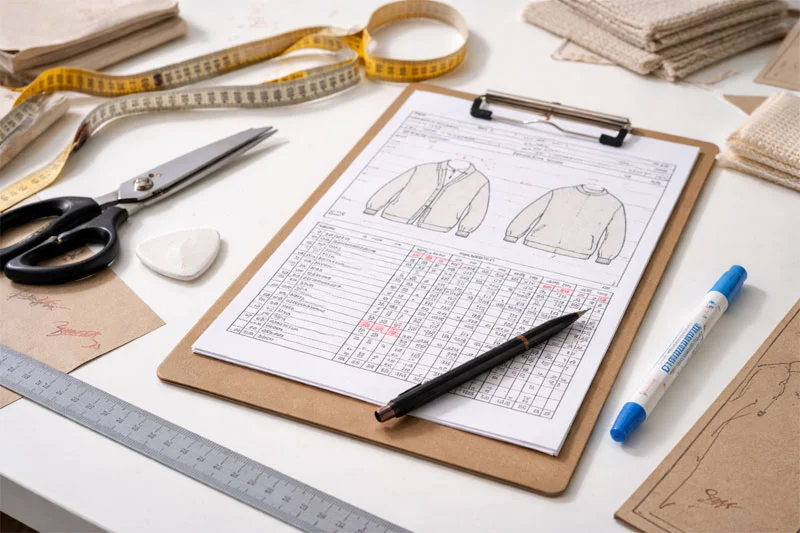
Most knitwear problems do not start during production. They start at the moment the deposit is paid — before production begins — because the buyer and factory had different understandings of what was agreed. The deposit triggers the factory to source yarn, programme machines, and schedule workers. Once that chain starts, changing anything is expensive, slow, and sometimes impossible.
This guide gives you a complete checklist of what to confirm with your knitwear factory before the deposit transfers. Not after. Not during. Before. It is written from the factory side — these are the gaps we see most often when buyers come to us with problems that started in the pre-deposit stage with a previous supplier.
1. Yarn specification
Yarn — the single most important item to confirm
Yarn is 40–60% of your garment cost and 100% of your fabric quality.
Two factories can quote the same style using different yarn specifications and both call it "wool blend." Until you confirm the exact specification, you do not know what you are buying. This is the item most commonly left vague at deposit stage — and the one that causes the most disputes after bulk production.
- Fibre content confirmed by percentage — e.g. 50% wool / 50% acrylic, not just "wool blend"
- Yarn count confirmed — e.g. 2/28Nm or 2/32Nm. A different count changes weight, drape and hand.
- Ply confirmed — single ply, 2-ply or 3-ply
- Colour confirmed against physical swatch — not just a screen reference. Knitted fabric reads differently from a Pantone card.
- Dye lot status confirmed — is this a stock colour or a custom dye? If custom, what is the minimum dye lot and does it affect unit cost?
- Yarn supplier confirmed or approval given — for premium fibres (merino, cashmere), confirm the grade and supplier before committing
If the factory cannot confirm yarn count before you pay the deposit, they have not sourced the yarn yet and are quoting from assumption. Ask them to confirm yarn sourcing before you proceed.
2. Approved sample status
Sample — what exactly is approved, and who holds the standard
Bulk production is matched against the approved sample. If there is ambiguity about which version was approved, there is no standard.
Before paying a deposit for bulk production, there must be a physically approved sample — not a photo approval, not a "looks good" message, but a sample the buyer has received, measured, and approved in writing. This is the PP sample — the pre-production standard that the bulk run is matched against.
- PP sample physically received and approved by buyer — not pending
- Approved sample measurements recorded — chest, length, sleeve, shoulder at minimum
- Factory retains a matched sealed sample — confirm they have kept a physical copy to match bulk against
- Any outstanding fit or colour revisions resolved — no "we'll fix it in bulk" agreements
- Approval in writing — a message confirming "we approve the sample dated [X] for bulk production"
"We can fix the shoulder in bulk" is one of the most common phrases that precedes a quality dispute. If a fit issue exists at sample stage, it must be resolved before deposit — not promised to be corrected during production.
3. Quantity and MOQ definition
Quantity — total pieces, colour breakdown, size ratio
What is being produced must be stated in exact numbers before any money moves.
The deposit triggers production of a specific quantity. That quantity should be agreed in full — not approximately — before the deposit is paid. Vague quantity agreements lead to production overruns, extra billing, or shortfalls on delivery.
- Total pieces per style confirmed
- Colour breakdown confirmed — e.g. 300 pcs black, 300 pcs sage green
- Size ratio confirmed — e.g. S:M:L:XL = 1:2:2:1 across the total run
- MOQ definition confirmed — per style total, per colour, or per colour per size? See our guide on splitting colours and sizes in a low MOQ order
- Any minimum yarn purchase implications confirmed — if your colour requires a dye lot minimum, confirm how any excess is handled
4. Lead time — from what point, to what point
Lead time — the most commonly misunderstood number in knitwear
"18–25 days production" does not mean goods ship in 25 days from today.
Lead time claims in knitwear are almost always quoted as production time only — they exclude yarn procurement, which can add 5–14 days at the start, and finishing, QC, and export documentation time at the end. Before paying a deposit, confirm the full timeline from payment to goods ready at port.
- Yarn lead time confirmed — is yarn in stock or does it need to be ordered? If ordered, how long?
- Production start date confirmed — when does knitting begin after deposit received?
- Production completion date confirmed — when will all pieces be off the machines?
- Finishing and QC time included — linking, washing, steaming, inspection, packing
- Goods-ready date confirmed — when are goods ready for collection or handover to freight forwarder?
- Any peak season risk flagged — Chinese New Year, Golden Week, and peak export months affect availability
If a factory quotes 25-day production but cannot confirm when yarn will arrive, the real lead time is unknown. Ask for the yarn arrival date before treating any production timeline as reliable. Our article on what increases knitwear cost also covers how timeline pressure drives up cost.
5. QC standards and inspection process
QC — what is checked, when, and what happens if it fails
A factory that does not discuss QC before production starts has no agreed standard to hold to.
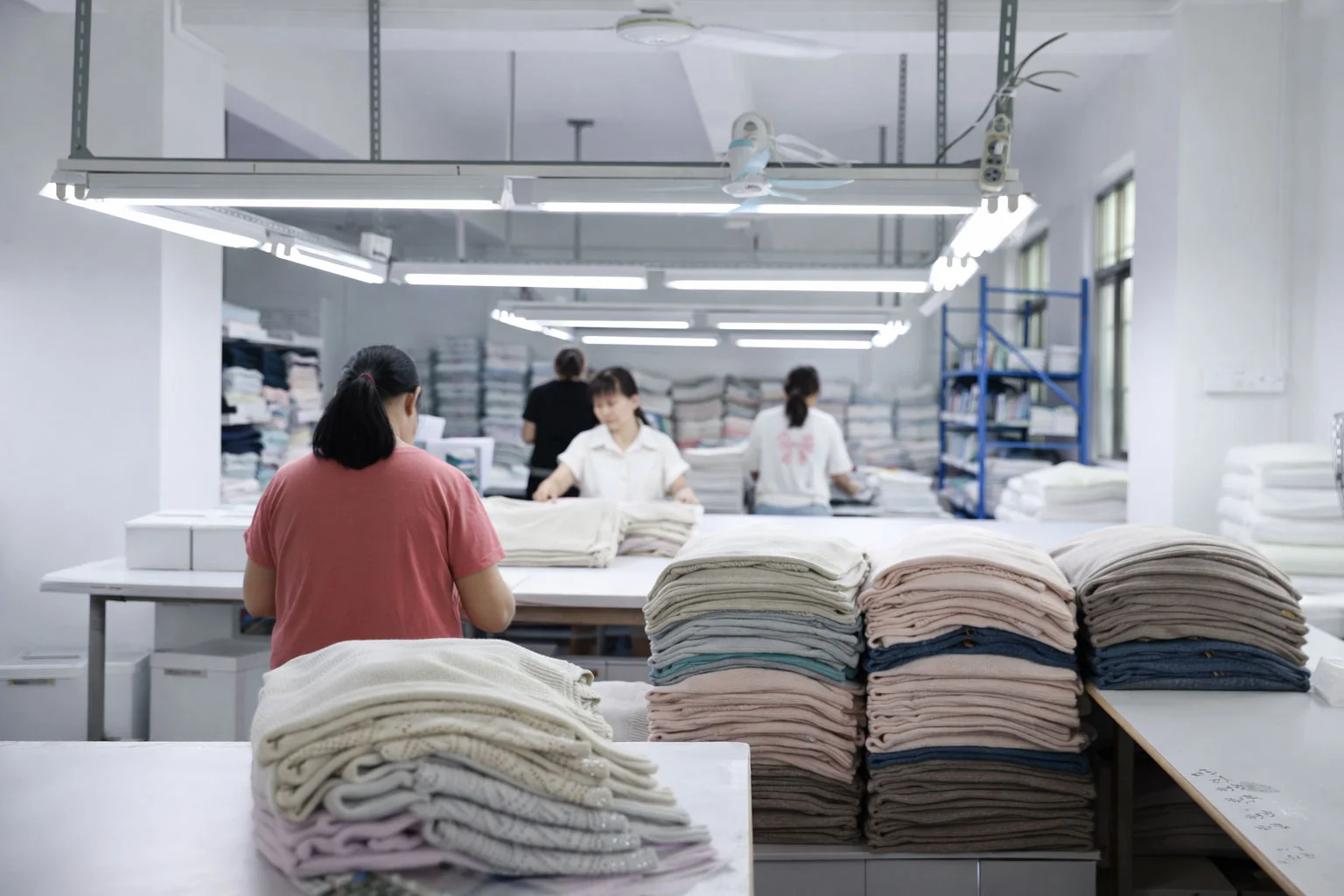
Quality control in knitwear is not a single check at the end — it should happen at yarn intake, during knitting, and at final inspection. Before you pay a deposit, confirm what the factory's QC process actually is for your order, not what it says on a website. For a full breakdown of what to check, read our guide on how buyers can test knitwear quality before bulk production.
- Measurement tolerance agreed — what is acceptable deviation from the approved sample? (industry standard is ±1–2cm at key points)
- Colour tolerance agreed — is a physical colour standard retained by the factory?
- Defect rate policy confirmed — what percentage of the order can be replaced or credited if defective pieces are found?
- Mid-production inspection option confirmed — can the buyer request photos or video during bulk production?
- Third-party inspection policy confirmed — does the factory accept third-party QC visits before shipment?
- Rejection and rework process agreed — if pieces fail final QC, what is the factory's process and timeline for rework?
6. Labels, hang tags and packing specification
Labels and packing — the details that determine whether goods are retail-ready
Missing or incorrect labels are one of the most common causes of delayed shipments and customs issues.
Label and packing requirements vary significantly by market. EU imports require specific care label wording and fibre content declarations. US imports have their own labelling standards. Amazon FBA has detailed packing requirements that differ from boutique retail. All of this must be confirmed before production — labels are attached during finishing, and corrections after the fact require rework time and cost.
- Brand label artwork file submitted and confirmed — woven label, printed label, or heat transfer
- Care label content confirmed — fibre %, wash symbols, country of origin, market-specific wording
- Size label system confirmed — XS/S/M/L/XL, numerical, or custom sizing
- Hang tag specification confirmed — design, paper weight, attachment method
- Barcode or price tag requirements confirmed — especially for retail or e-commerce platforms
- Folding and polybag standard confirmed — fold method, polybag size, any suffocation warning requirements
- Carton marking confirmed — style, colour, size, quantity per carton, any retailer-specific carton labels
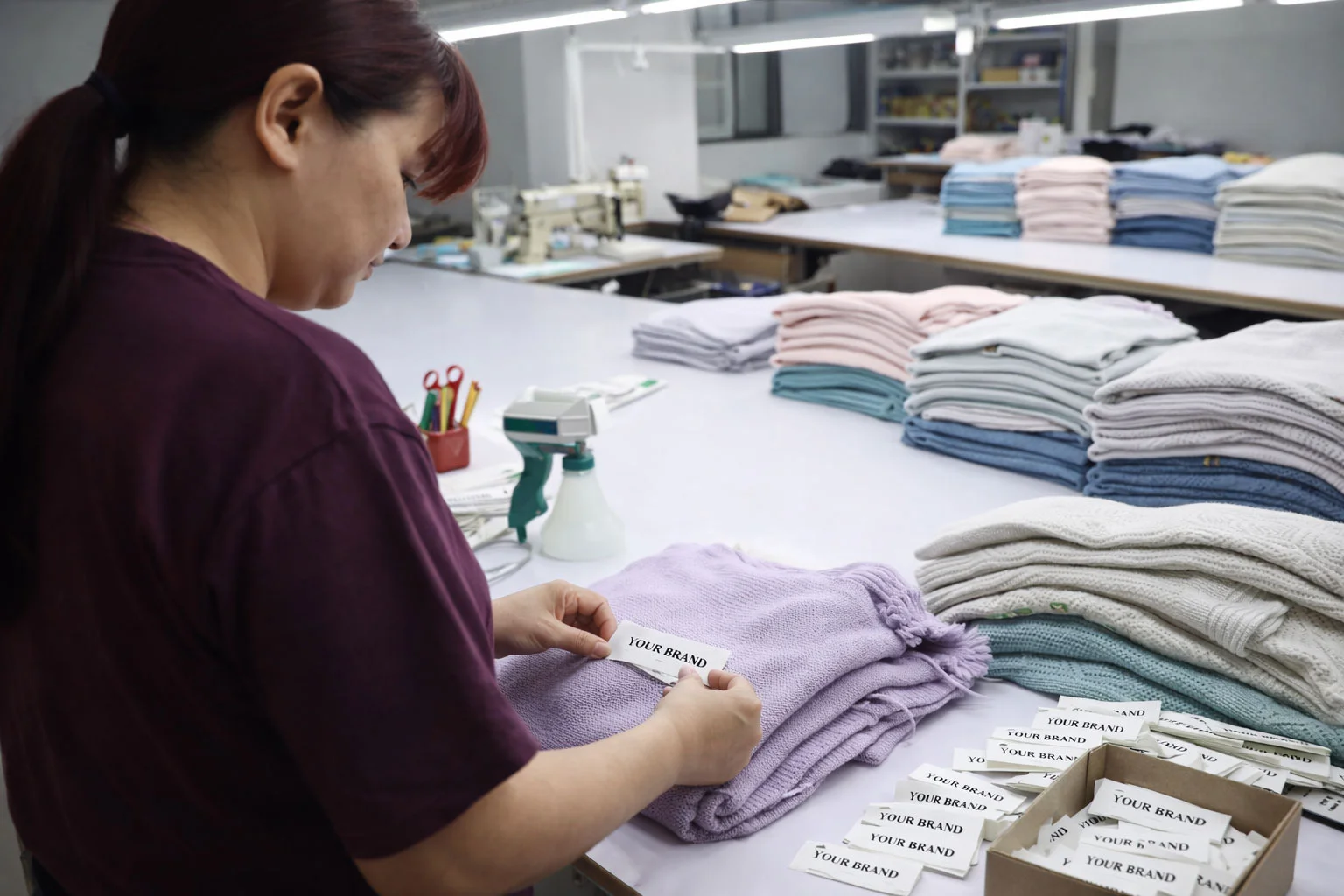
If you have not submitted your brand label artwork before paying the deposit, label production will run parallel to knitwear production — which is fine. But if artwork is delayed, it delays the entire shipment. Submit label files at the same time as the deposit, not after.
7. Payment terms and balance conditions
Payment — deposit percentage, balance timing, and what triggers each payment
Knowing when the balance is due prevents cash flow surprises and shipment holds.
Standard knitwear factory payment terms are 30–50% deposit before production, balance before shipment. But the trigger points matter — "before shipment" can mean before goods are packed, before they leave the factory, or before they are loaded at port. Confirm the exact sequence before paying anything.
- Deposit percentage confirmed — e.g. 30% or 50%
- Balance trigger confirmed — what event triggers the balance payment request? Goods ready? Photos sent? Before loading?
- Bank details verified independently — before any transfer, verify factory bank details through a separate channel (not just the details in the email — fraud via email interception is a real risk)
- Currency and exchange rate risk understood — USD or RMB? Who absorbs exchange fluctuation?
- Invoice format confirmed — commercial invoice format required for your customs clearance
Always verify bank account details by phone or video call before the first transfer to a new factory — not just by checking the details in an email or PDF. Payment fraud via email interception (where someone intercepts the factory's email and substitutes different bank details) is a known risk in international trade.
8. Shipping terms and export documentation
Shipping — who is responsible for what, and from where
EXW and FOB are not the same. Confirming which applies determines who pays inland freight and who books the vessel.
Shipping terms define exactly where the factory's responsibility ends and the buyer's begins. This affects cost, insurance, and who is liable if something goes wrong in transit. The terms should be written into the order confirmation — not assumed from the quotation, which may have changed.
- Incoterms confirmed — EXW (buyer collects from factory gate), FOB (factory delivers to port, buyer arranges vessel), CIF (factory arranges freight and insurance to destination port)
- Port of loading confirmed — typically Shenzhen or Guangzhou for Dalang-based factories
- Export documentation scope confirmed — commercial invoice, packing list, certificate of origin, any test reports required by your market
- OEKO-TEX or other certification requirements confirmed — if your buyer or retailer requires certification, confirm availability before deposit
- Freight forwarder introduction confirmed if needed — if you do not have a forwarder, ask the factory if they can recommend one
9. What to get in writing before the deposit transfers
You do not need a formal legal contract for a first knitwear order. But you do need written confirmation of the key terms — and a WhatsApp message exchange that both parties have agreed to is legally meaningful in most jurisdictions if it clearly documents the understanding.
At minimum, get the following confirmed in a single written document or message thread before the deposit:
| Item | What to confirm | Minimum standard |
|---|---|---|
| Style and spec | Style name/reference, gauge, construction, yarn spec with count and ply | Written confirmation |
| Sample approval | PP sample approved, date of approval, any outstanding notes | Written confirmation |
| Quantity | Total pcs, colour breakdown, size ratio | Written confirmation |
| Unit price | Price per piece at confirmed quantity, what is included | Written confirmation |
| Lead time | Yarn arrival date, production start, goods-ready date | Written confirmation |
| Labels and packing | Label types, artwork submitted, packing standard, carton marking | Artwork submitted before deposit |
| Payment terms | Deposit %, balance trigger, bank details verified | Written confirmation |
| Shipping terms | Incoterms, port of loading, export docs included | Written confirmation |
| QC standard | Measurement tolerance, defect policy, inspection access | Agreed before production |
How we handle this at Lin Sweater Factory
Before any deposit is received, we issue a written order confirmation that covers style, yarn specification, quantity, colour breakdown, size ratio, unit price, payment terms, lead time from yarn confirmation, and shipping basis. We ask the buyer to confirm this document in writing before we accept the deposit.
This is not bureaucracy — it is protection for both sides. A buyer who has confirmed all of the above in writing before paying has no ambiguity about what they ordered. A factory that has issued a clear order confirmation has no excuse to deliver something different.
If you have already gone through sampling and are ready to move to bulk, the next step is straightforward. Send us the final quantity and colour breakdown, confirm the shipping timeline you need, and we will issue the order confirmation for your review before you pay anything. You can reach us via WhatsApp or the contact page.
For buyers still at the earlier stages, our guides on comparing factory quotes, reducing sampling revisions, and testing quality before bulk cover the steps that lead up to this point.
Ready to confirm your order details?
Send us your quantity, colour breakdown and timeline. We will issue a written order confirmation covering all the items above within 24 hours — before any deposit is requested.