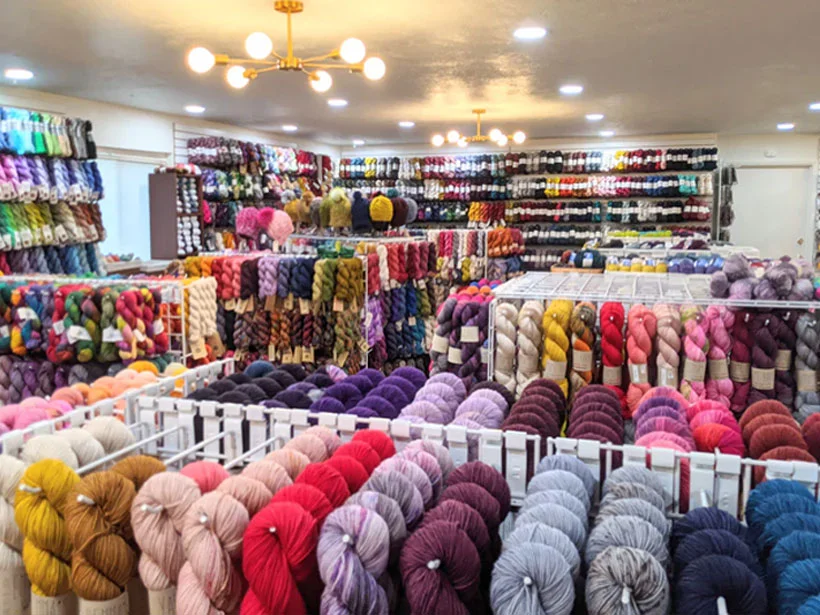
Every sourcing buyer eventually hits the same wall. The factory quote is higher than the target price. The retail margin is too thin. The instinct is to push the factory for a lower number, or to start cutting corners. But not all cost cuts are equal — some unlock real savings, others quietly destroy the product. This guide is written from inside a Dalang knitwear factory, after quoting thousands of projects. It explains the seven cost levers that work without losing quality, the four cuts that always backfire, and how to negotiate down the right way.
For background on how a sweater is priced, see our honest guide to sweater manufacturing cost in China and our breakdown of what increases knitwear cost the most.
Why "cheap and good" is mostly a myth
Knitwear cost is built from real materials, real machine time, and real labour hours. There is no factory in China — including ours — that can give you 30% off and keep the product the same. When a quote drops sharply, something physical changed: a thinner yarn, a different mill, a faster machine setting, fewer QC passes, or a different country of origin for the raw material.
Buyers who chase pure price often discover this six months later, when their bulk arrives different from the sample, when customer returns spike, or when the next factory refuses to match the price. The buyers who get the best long-term unit cost are the ones who treat cost reduction as a structured engineering problem, not a negotiation game.
The 7 cost levers that actually work
These are the moves we see successful buyers use repeatedly. Each one preserves the product the customer feels and sees.
| Lever | Typical saving | What changes | What stays the same |
|---|---|---|---|
| 1. Same fibre, different mill | 5-12% | Yarn supplier swapped | Composition, gauge, hand-feel (if mill is reputable) |
| 2. Reduce colour count | 8-15% | Fewer dye lots, simpler stock plan | Style, fit, construction |
| 3. Combine sizes into one bulk run | 5-10% | One PO instead of multiple | Product spec |
| 4. Higher MOQ per style (if you can sell it) | 15-25% | Volume per SKU goes up | Quality, materials |
| 5. Standard trims instead of custom | 3-7% | Generic buttons, woven labels | Knitwear body and finish |
| 6. Simpler stitch on hidden areas | 2-5% | Plain inner cuff or neck binding | Visible front, hand-feel |
| 7. Plan ahead — book yarn early | 3-8% | Lower yarn surcharge, less rush | Everything |
Used together, these seven levers compound. We have buyers who cut 18-22% from their first quote without any change to the finished sweater the customer sees.
The 4 cost cuts that always backfire
These are the moves we see buyers regret within one season. They look attractive on a quote sheet, but the hidden costs land later — in customer returns, in re-orders, in lost retailer trust.
1. Skipping QC stages
Saves 0.3-0.8 USD/pc but doubles defect rate. The cost shows up as customer returns three months later. Never trade away QC.
2. Downgrading the visible yarn
Switching to a cheaper-feeling yarn for the front body is the fastest way to lose repeat customers. They will notice on the first wear.
3. Cutting the PP sample step
Saves 1-2 weeks and one sample fee. Costs you the only objective standard the bulk can be checked against. Disputes become impossible to win.
4. Switching to an unknown factory mid-project
The new factory's lower quote will not include hidden setup costs, missed details, or rework risk. Total cost typically goes up 15-30%.
How yarn choice drives 40-50% of total cost
Yarn is the single largest line item on almost every sweater quote. It is also where buyers have the most leverage — and the most risk. The right yarn decision can drop cost meaningfully without the customer noticing. The wrong one shows up the moment the garment is touched.
Three structured ways to lower yarn cost without losing quality:
- Same fibre, different supplier. A 100% merino from Mill A may cost 18 USD/kg; a comparable 100% merino from Mill B may cost 14 USD/kg. The customer cannot tell the difference. Your factory should be able to source from 5-10 mills per fibre type.
- Same fibre, slightly different yarn count. Going from 2/26 to 2/28 changes weight by ~7% and cost by 4-6%. The garment looks and feels almost identical.
- Tighter colour palette. Each colour requires its own dye lot and minimum yarn order. Cutting from 8 colours to 4 can drop yarn cost 10-15% on small runs.
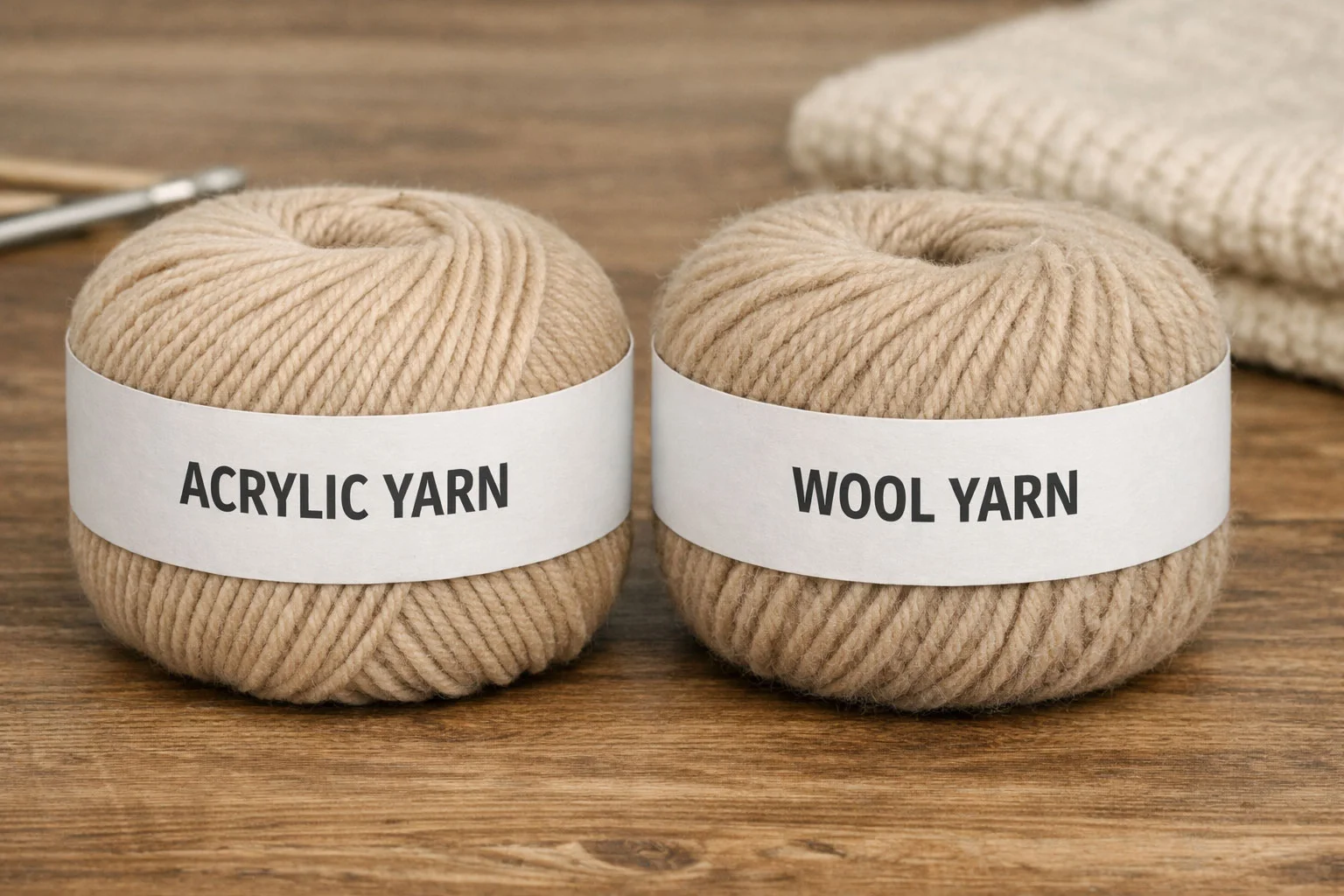
For a deeper view of how to choose between fibre tiers, see cotton vs merino vs cashmere for your brand and the acrylic vs wool knitwear guide.
Where labour savings actually live
Most buyers assume labour cost = cheap factory = lower price. That is rarely how it works. In knitwear, labour cost is mostly machine time + linking time + finishing time. The machines run at fixed speed regardless of which factory owns them. The real labour savings come from:
- Simpler construction. Set-in sleeve adds 15-20% more linking time than raglan. If your design tolerates raglan, that saves real money.
- Fewer hand-finishing details. Each hand-stitched detail adds 0.10-0.30 USD per piece. Over a 500 pc run, that is 300 USD.
- Single-piece flat construction where the design allows, instead of multi-panel cut-and-link.
- Standard gauge. A 7gg or 12gg sweater runs on equipment every Dalang factory has. A 3gg chunky knit needs specialty machines and quotes 30-50% higher.
Gauge selection alone is one of the most underrated cost levers. See our explainer on sweater gauge numbers for which gauges are commodity-priced and which are premium.
The MOQ trap that adds 15-30% hidden cost
Many startup brands try to start at the lowest possible MOQ — say 30 pcs per style. The factory accepts it, but the per-unit cost is 30-50% higher than at 200 pcs. Buyers then complain that "Chinese factories are too expensive." The reality is they ordered at the most expensive volume tier.
The honest MOQ math, from our quote book:
| Quantity per style + colour | Cost relative to 500 pc benchmark | What is happening |
|---|---|---|
| 30 pcs | +45-60% | Yarn minimums, machine setup not amortised |
| 300 pcs | +25-35% | Below efficient yarn lot size |
| 300 pcs | +12-18% | One yarn dye lot, partial machine efficiency |
| 200 pcs | +5-8% | Approaching full efficiency |
| 500 pcs | 0% (benchmark) | Full machine and yarn efficiency |
| 1,000+ pcs | −3-5% | Marginal additional savings |
If you can plausibly sell 500 pieces of a style, you save 20-30% per unit by ordering 500 instead of 300. The right move is not always to lower MOQ — sometimes it is to find a factory that lets you go higher per style without taking on impossible total commitment. See our guide to small MOQ knitwear manufacturers for the threshold logic.
How to negotiate cost down with your factory
"Can you give me a better price?" is the worst opening. The factory has no information to work with and will respond with a token 2-3% discount that does not really change the unit economics. Effective cost negotiation is structured:
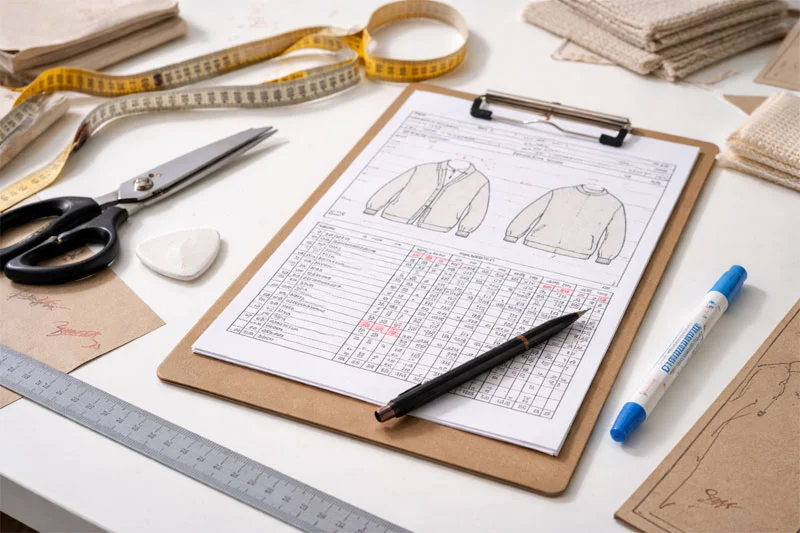
- Share your target price openly. "We need to land at 12 USD FOB to make our retail margin work. What can we change to get there?" Now the factory has a problem to solve.
- Ask for a line-item quote, not a single number. When you can see yarn cost, knitting cost, linking cost, finishing cost separately, you can attack the biggest line first.
- Offer something in return. Larger order, longer lead time, fewer colour changes, payment terms. Each of these has real value to the factory and unlocks reciprocal savings.
- Lock in the cost reduction in writing. If you negotiate yarn substitution, get the new yarn spec, mill name and colour standard in the PO. Otherwise the saving disappears between sample and bulk.
For the structured way to read a factory quote and spot where savings are possible, see how to read a sweater factory quote and how to compare two knitwear factory quotes.
What we tell buyers in our first quote review
When a buyer pushes back on our first quote, we do a structured cost review with them. It usually takes 30-45 minutes on a video call and finds 10-25% savings. The conversation follows a fixed pattern:
- Is the yarn fibre matched to the actual retail price tier, or are we over-specifying?
- Can we drop one or two colours from the colour plan?
- Is the gauge standard for our equipment, or specialty?
- Are there hand-finishing steps that the customer cannot see?
- Is the MOQ per style at an efficient volume tier?
- Are the trims (buttons, labels, hangtags) custom or standard?
- Is the lead time tight enough to incur a yarn rush surcharge?
- Are we using a complex construction where a simpler one would work?
Most quotes have 3-5 of these costing the buyer money for no perceived benefit. The buyer leaves the call with a revised brief and a lower quote — and the finished product is the same one their customer will love.
When the right answer is to walk away from the price
Sometimes the cost reduction conversation ends with: "this product cannot be made at your target price without changing what it is." That is a real answer. Forcing it through anyway is how brands end up with disappointing first orders, weak repeat sales, and a lasting belief that "China factories cut corners."
If your target retail price is 39 USD and you want 100% cashmere, the math does not work — not at our factory, not at any honest factory. The right move is either to raise retail price, switch fibre to merino blend, or pick a different product altogether. Honest factories will tell you this in the first call. Less honest ones will quote your number and quietly downgrade something later.
Want a structured cost review on your knitwear project?
Send us your tech pack, target price and quantity. We will reply within 24 hours with a line-item quote and three concrete cost-reduction options that do not hurt the product.