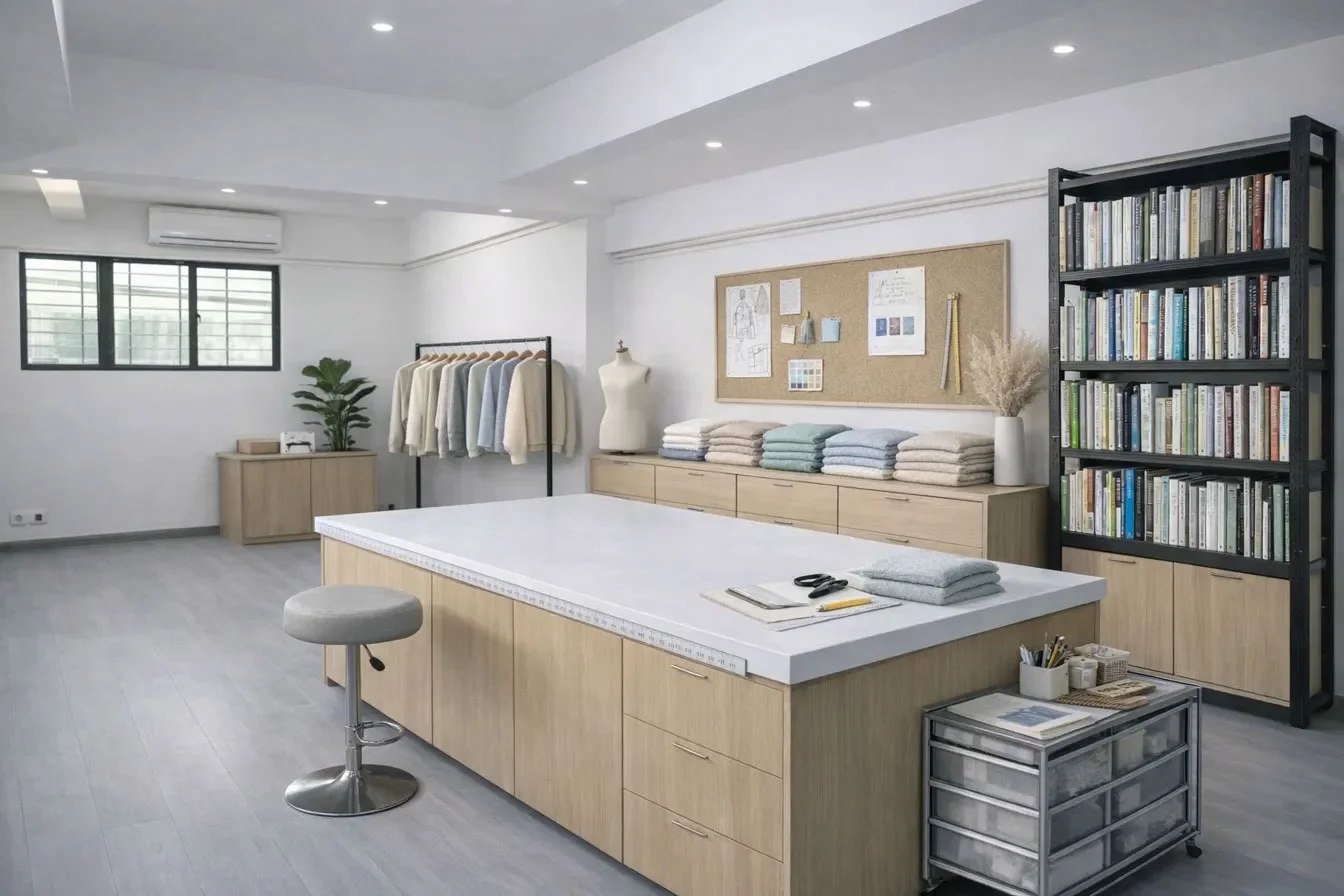
Every factory that makes women's sweaters is technically a women's knitwear manufacturer. That is not the same as being a specialist. The difference shows in the pattern quality, the fit accuracy, the silhouette judgement, and the ability to translate a design reference into a garment that a real woman will actually want to wear.
This article is our honest account of what 26 years of making women's knitwear in Dalang, Dongguan has taught us — what we are genuinely good at, what takes experience to get right, and what buyers should look for when choosing a factory for their women's collection.
We are not trying to claim we are the only factory that can do this well. We are trying to give you enough specific, honest information to evaluate whether we are the right fit for your product and your brand.
What women's knitwear specialisation actually means
In knitwear manufacturing, specialisation is not about equipment — most factories in Dalang run similar flatbed knitting machines. It is about the accumulated knowledge of the people operating them.
Women's knitwear is technically more demanding than men's for several reasons:
- Fit complexity. Women's silhouettes involve shaping — waist suppression, bust allowance, hip curve — that men's garments rarely require. Getting this right in knitwear, where the fabric stretches, requires pattern masters who understand how the knitted structure behaves on the body.
- Yarn sensitivity. Women's knitwear tends to use finer, more delicate yarns — viscose, modal, fine merino — that require tighter tension control than the heavier yarns common in men's styles. Tension variance that is invisible in a 5G wool piece becomes obvious in a 12G modal top.
- Neckline and detail precision. A V-neck that is 3mm too deep, a round neck rib that is 2mm too wide, a sleeve hem that flares instead of lying flat — these details affect whether a women's garment reads as well-made or cheap. They require pattern masters who have corrected these mistakes enough times to anticipate them.
- Seasonal volume and speed. Women's fashion moves faster than men's. Spring/summer collections arrive earlier, trend windows are shorter, and reorder cycles are tighter. A factory that mostly handles men's basics may not be equipped for this pace.
Pattern masters — the people behind the fit
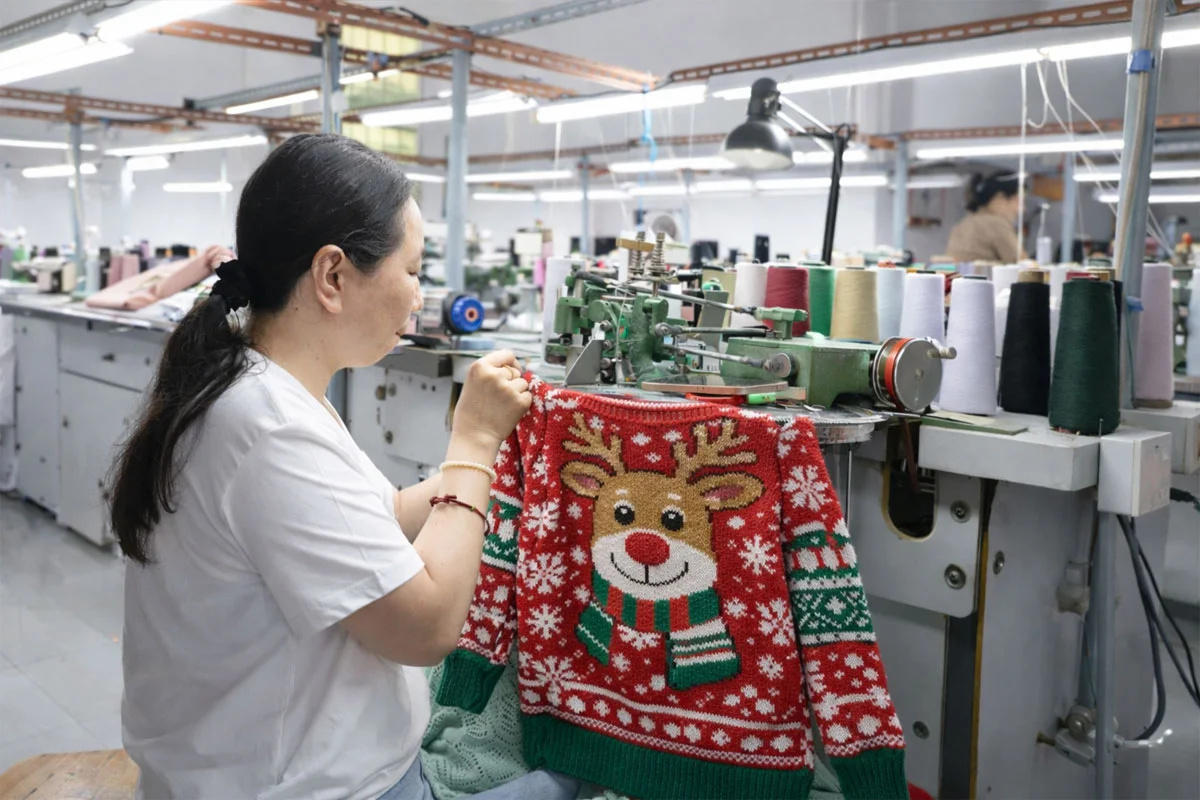
At Lin Sweater Factory, our pattern masters have been developing women's knitwear specifications for over two decades. This is not a claim we make casually — it is the reason our sampling revision rate is lower than industry average, and the reason clients who send us a reference image tend to get a first sample they can work with rather than one that misses the concept entirely.
What experience looks like in practice:
- Reading a reference correctly. A buyer sends a photo of a garment from a brand lookbook. An experienced pattern master can identify the gauge, estimate the yarn weight, recognise the construction technique, and flag any production challenges before sampling begins. An inexperienced one starts knitting and discovers the problems halfway through.
- Anticipating fit issues. Women's knitwear that fits well in the shoulder but pulls across the bust requires a specific panel shaping adjustment. Sleeves that are the right length on the pattern but too long on the finished garment — because the linking adds length at the join — need pre-compensation. These are learned adjustments, not theoretical ones.
- Yarn-to-silhouette matching. A relaxed oversized silhouette in a lightweight cotton-viscose needs a different tension setting than the same silhouette in a heavier wool blend. Choosing the wrong tension produces a garment that either bags or pulls — both wrong for different reasons.
Women's styles we specialise in
Our women's range covers all major silhouettes and construction types. The styles below represent what we develop and produce most frequently — where our pattern experience is deepest:
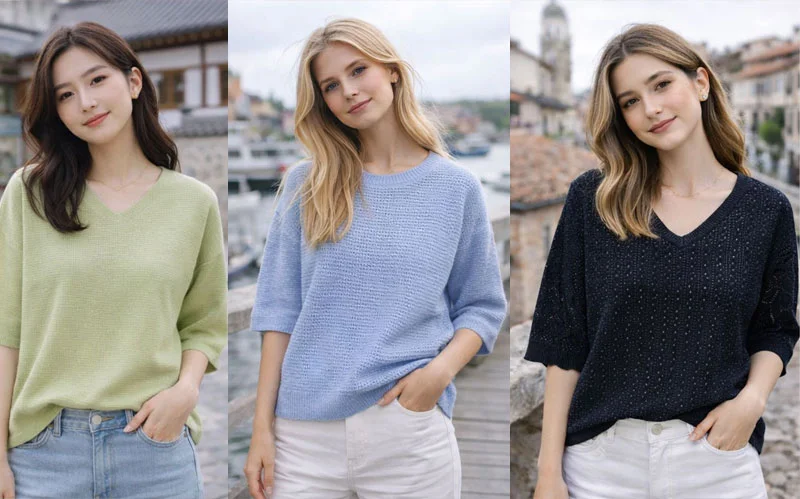
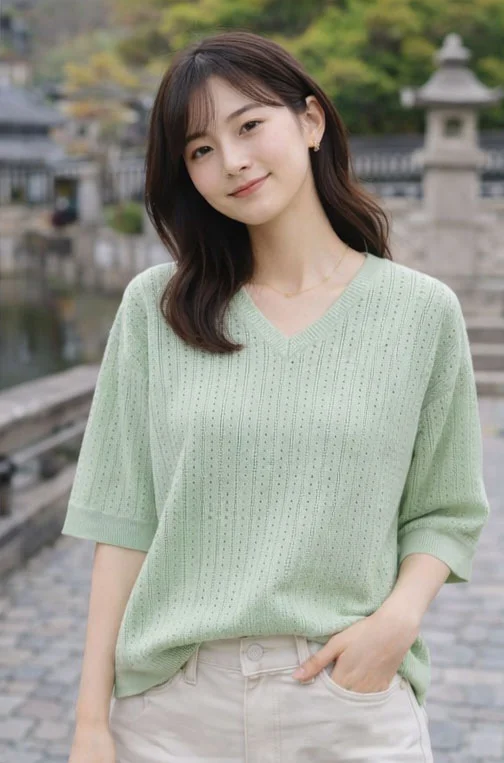
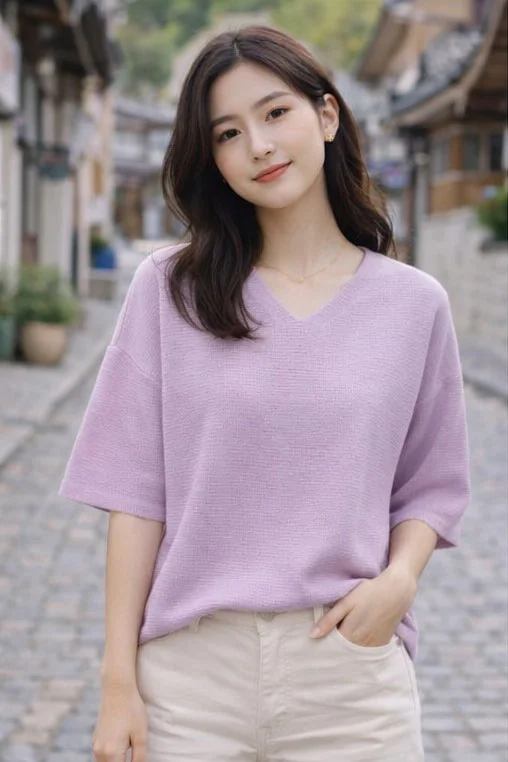
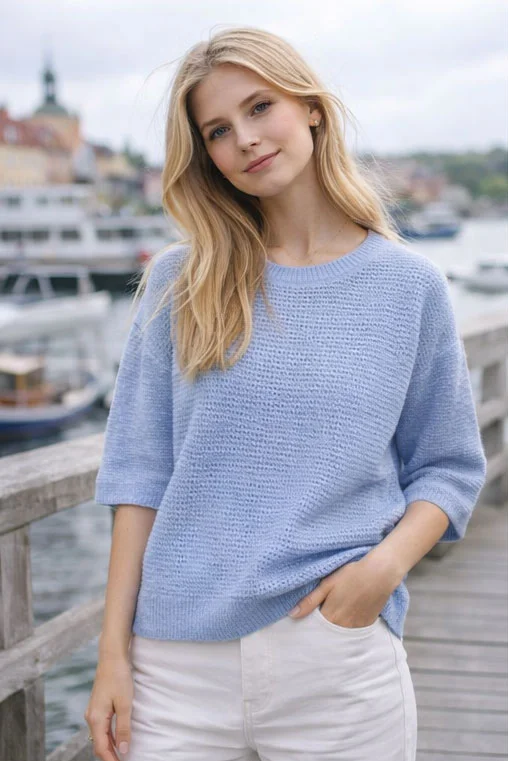
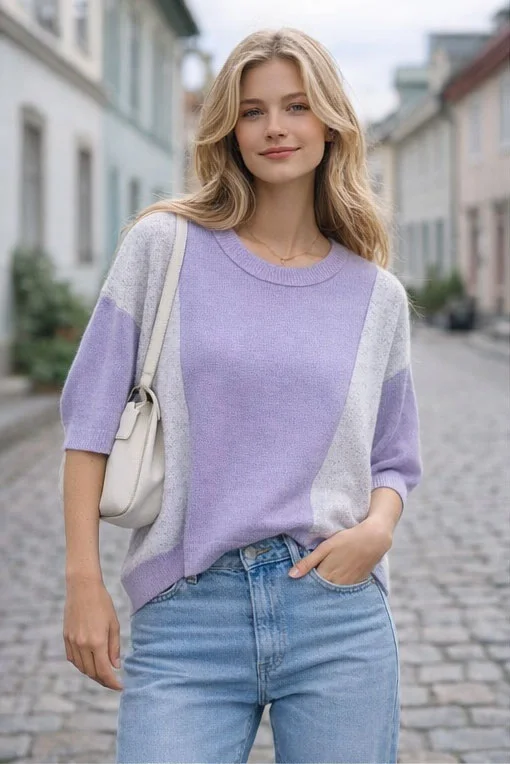
Beyond these spring/summer styles, we also produce women's knitwear across all gauges and yarn categories:
Fine gauge — 10G to 14G
Merino and modal turtlenecks, fitted crew necks, and layering pieces. The most technically demanding range — fine gauge reveals every tension inconsistency. Our strongest area.
Cardigans — open and button-front
Longline cardigans, edge-to-edge styles, and classic button-fronts. Drape and weight balance are critical here. We work exclusively with yarn weights suited to each silhouette length.
Jacquard pattern knitwear
Two to six colour jacquard — geometric, floral, Fair Isle, brand logo integration. Pattern is programmed at the knitting stage, not printed. Our in-house design team works from your artwork file. See our jacquard page for details.
Oversized and relaxed fits
The dropped shoulder, extended sleeve, and hip-length proportions that define contemporary women's knitwear. Getting these right requires specific panel shaping — not just knitting a larger size.
An honest assessment — strengths and limits
We would rather tell you what we are genuinely good at than claim we do everything equally well. Here is our honest assessment:
| Category | Our strength level | Notes |
|---|---|---|
| Women's V-neck and crew neck | ★★★★★ Core strength | Most frequently produced style. Pattern masters have refined this across hundreds of development rounds. |
| Cardigans — all lengths | ★★★★★ Core strength | Spring and winter weights. Open front and button. Drape and length proportions consistently accurate. |
| Fine gauge (10G–14G) | ★★★★☆ Strong | Requires careful tension management. We produce this well but it needs clear specification — gauge must be agreed before sampling. |
| Jacquard pattern | ★★★★☆ Strong | 2–6 colour. In-house programming. Complex all-over patterns (8+ colours) require longer development time — factor into your timeline. |
| Cashmere women's styles | ★★★★☆ Strong | Grade A and B available. See our cashmere grades guide to choose the right spec for your price point. |
| Hand-knit and artisanal techniques | ★★★☆☆ Limited | We are a machine-knitting factory. We can produce machine-knit styles that reference hand-knit aesthetics, but we are not a hand-knit specialist. |
| Woven/knit combination pieces | ★★★☆☆ Limited | Simple woven panels combined with knitwear are manageable. Complex garments that are primarily woven with knit details are better placed with a woven specialist. |
We include the limitations deliberately. A buyer who places the wrong order with us wastes their sample cost and their time. Being clear about what we are best at helps both sides make the right decision before committing.
Yarn selection for women's knitwear
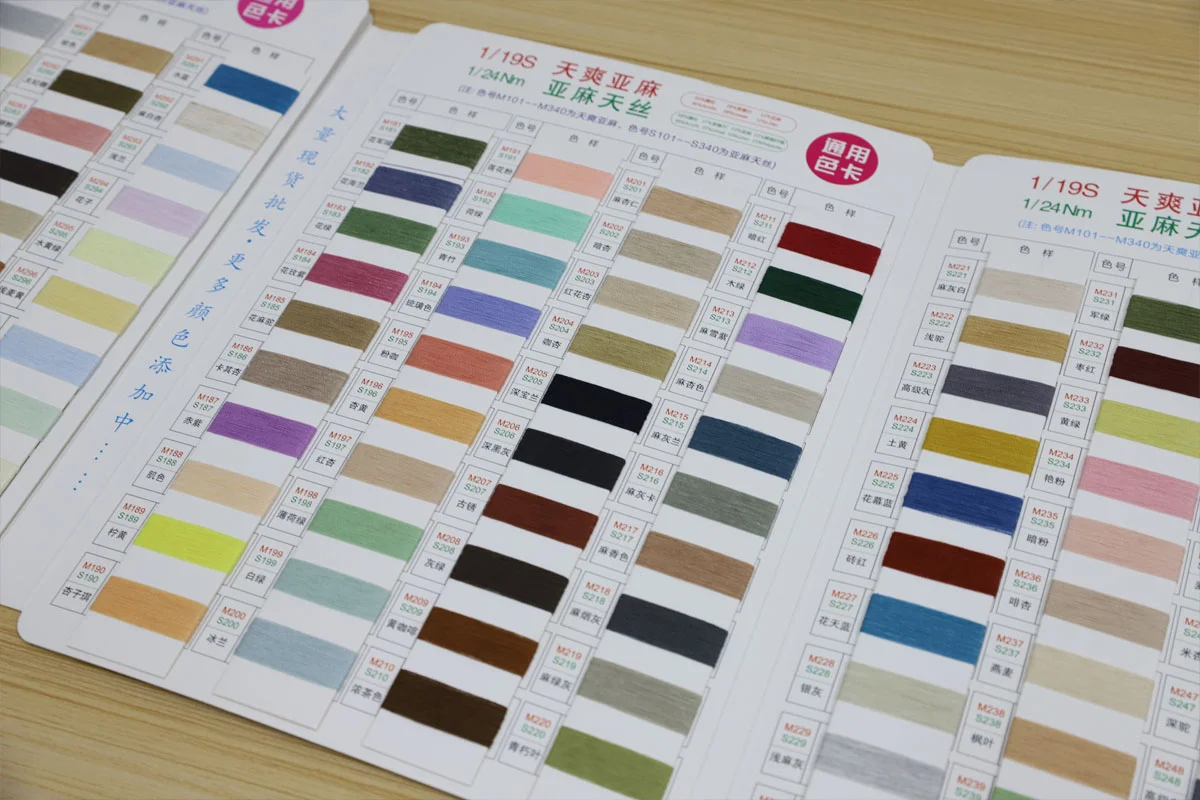
Yarn selection for women's knitwear is different from men's. Women's buyers generally prioritise softness, drape, and colour accuracy over durability and weight. This shapes which yarns we recommend for different end markets:
- Cotton-viscose blends for spring/summer basics — soft drape, good colour uptake, accessible price point. The most common choice for the half-sleeve styles in our spring 2026 collection.
- Merino wool for premium positioning — soft next-to-skin, good temperature regulation, slight sheen. Higher cost but strong retail justification. See our comparison of merino vs regular wool.
- Modal and modal blends for fine gauge — the smoothest hand of any affordable yarn at 10G–14G. Particularly effective for lavender, lilac, and soft pastel colourways where colour accuracy is critical.
- Cashmere for luxury positioning — Grade A for fine, ultra-soft pieces; Grade B for accessible luxury. Both available from 300 pcs. Details in our cashmere grades guide.
One practical note on colour and women's knitwear: pastel tones — sage, lilac, lavender, powder blue — are significantly harder to hold consistent across production lots than darker colours. We require a physical dyed-to-match swatch approval on all pastel women's styles before bulk production begins. This adds 3–5 days to the timeline but prevents the most common complaint in this category.
QC for women's knitwear — what we check and why
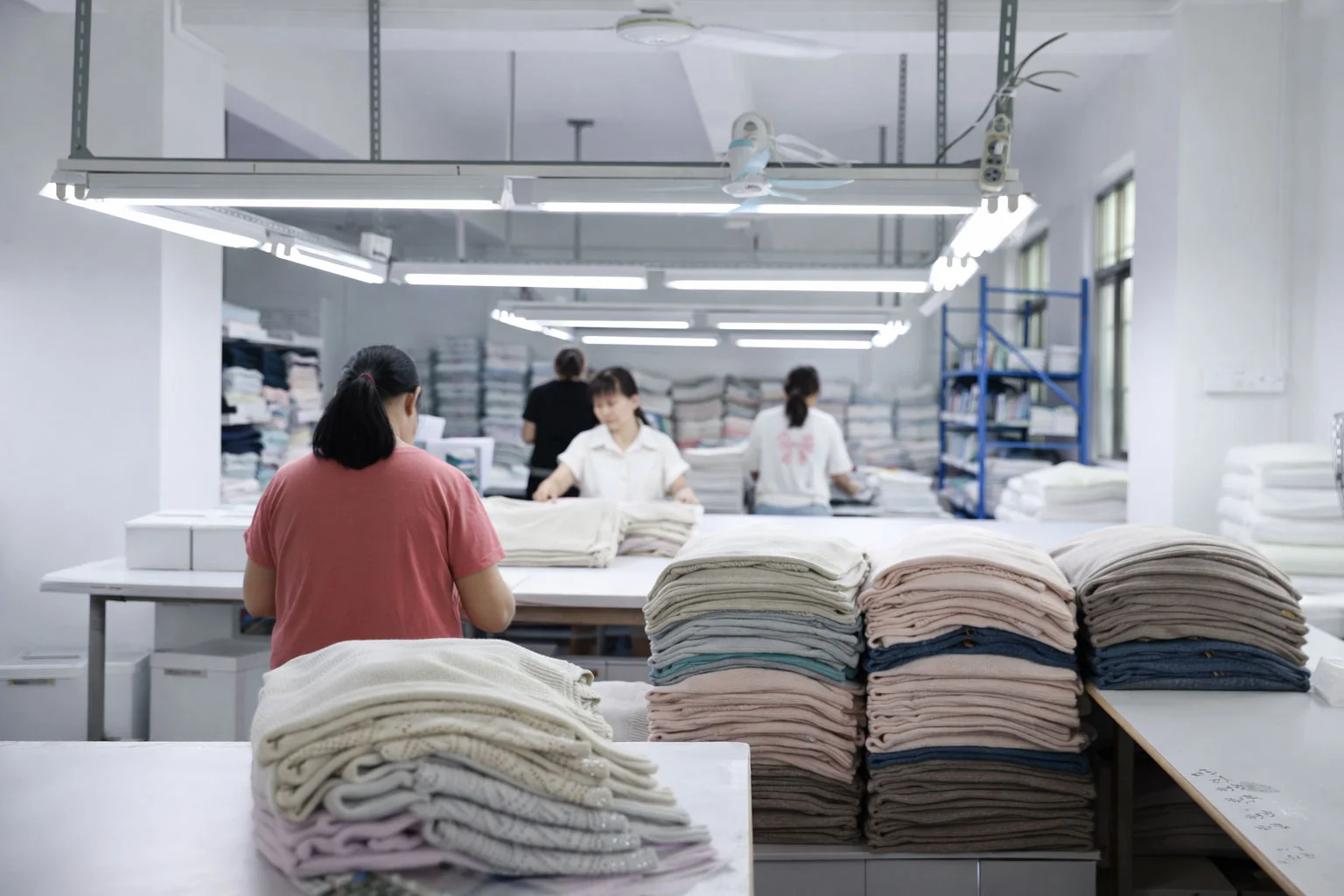
Our QC process for women's knitwear includes measurement checks that go beyond what is standard for men's basics. The reason is fit sensitivity — a 1cm deviation in a men's crew neck is usually invisible. In a women's fitted style, the same deviation affects the silhouette.
What we check on every women's production run:
- Five-point measurement. Chest width, body length, sleeve length, shoulder width, and neckline opening — measured at the half-garment against the approved sample specification.
- Neckline shape consistency. V-neck depth and angle checked across a minimum 10% sample of the production run. The most common deviation point in women's styles.
- Tension and hand. Visual and tactile check against the approved sample. Tension drift can occur mid-production when machines are not reset correctly after a maintenance break.
- Colour consistency. Each piece checked against the approved colour standard. Critical for pastels and mid-tones where batch variation is most visible.
- Label placement. Brand label, care label, and size label positioned exactly as specified. Placement errors on women's styles affect the finished look in ways they typically do not on men's basics.
For an overview of how our full QC process integrates with the production timeline, see our factory page and the three production videos filmed at our Dalang facility.
Sampling women's knitwear — what to expect
Women's knitwear typically requires more sampling rounds than men's basics. This is not a sign of poor factory performance — it reflects the higher fit sensitivity of the category. A buyer who expects to approve a women's style on the first sample round is usually either working with a very simple style, or has invested significant effort in a precise technical brief upfront.
Our standard sampling process:
- First sample (proto): 7–10 working days from confirmed brief. Shows construction, gauge, and approximate colour. Not intended for bulk approval — intended to confirm direction.
- Revision sample: 5–7 working days from your feedback. Addresses fit, proportion, and colour corrections from round one.
- Pre-production sample (PP): Final approved sample in bulk yarn. This is what the production run is matched against. Required before bulk begins.
The most effective way to reduce sampling rounds is a detailed brief at the start. Our guide on why sampling delays happen covers exactly what information eliminates the most common revision causes.
Reference image + target gauge + yarn preference + finished measurements at key points (chest, length, sleeve) + neckline depth specification + any detail notes (rib width, button spacing). Sending a physical reference garment with your own body measurements marked on a fit form is the single most effective brief format for women's styles.
Starting your women's collection — how to begin
We accept women's knitwear orders from 300 pcs per style. For a new brand or a buyer testing a new category, we recommend beginning with one or two styles rather than a full range — this limits your sampling investment and gives you a clear read on fit and quality before committing to a broader collection.
A typical first order from a new women's brand looks like:
- One or two silhouettes — often a crew neck and a V-neck, or a pullover and a cardigan
- Two to three colourways per style — a neutral, a season colour, and optionally a print or jacquard
- 300 pcs per style per colourway
- Standard size run: XS / S / M / L / XL or the equivalent for your market
For seasonal planning, our autumn/winter order timing guide covers the deadlines that matter — when to start sampling, when bulk must be confirmed, and when goods need to ship to hit your retail window.
Developing a women's collection?
Send us your references and target quantities. We reply within 24 hours with a capability assessment and quote — no commitment until you approve your sample.