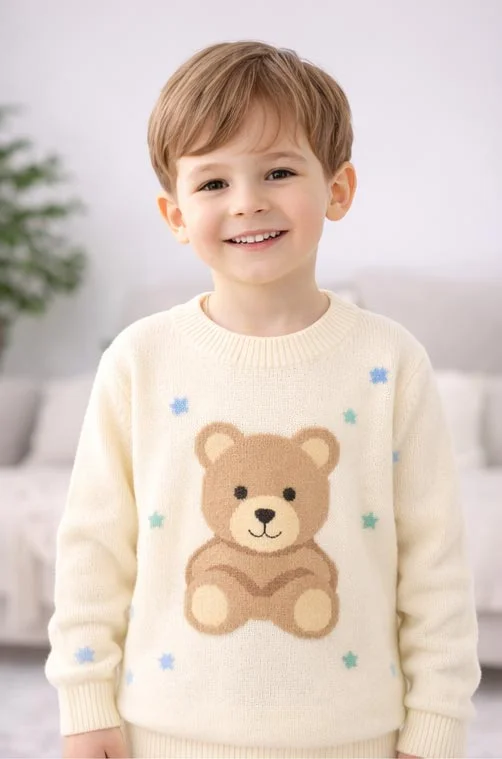
Buyers who are new to children's knitwear often focus first on color, cartoon graphics and commercial style. Those things matter, but from a factory point of view, kids knitwear starts with three other priorities: comfort, safety and consistency. If the yarn feels wrong, the neckline is awkward, the labeling is incomplete, or the size grading is unreliable, the product will struggle no matter how attractive the concept looks online.
This guide explains what buyers should look for in a kids knitwear manufacturer in China, how low MOQ works in children's programs, and which product directions are most practical for the first order.
What makes kids knitwear different from adult knitwear
Children's sweaters are usually lighter, softer and more size-sensitive than adult knitwear. The margin for fit error is smaller because parents notice discomfort quickly, and the buyer often has less room to hide technical inconsistency behind fashion language. From a factory side, kids knitwear also requires more attention to labeling and finishing.
The best children's styles for low MOQ
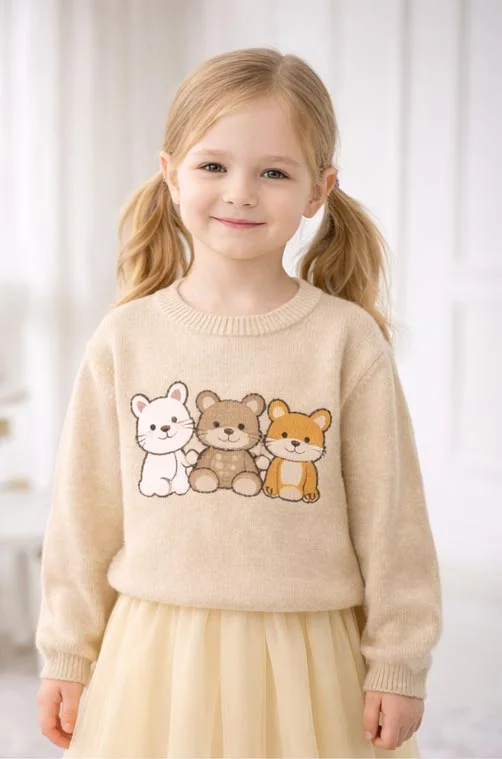
For a first low MOQ kids program, the safest styles are usually basic crew neck sweaters, simple cardigans, clean cartoon sweaters with controlled artwork, and soft cotton-blend or wool-blend autumn/winter styles. These work well because they allow the buyer to test sizing, comfort and sell-through without too many technical variables.
That is why we often point children's buyers toward kids' crew neck sweaters, kids' cardigans and kids' cartoon sweaters as strong starting points.
Yarn choice: comfort matters more than story
In kids knitwear, comfort and wash practicality usually matter more than fibre storytelling. Parents want the garment to feel soft, be easy to wear and make sense for regular use.
| Yarn direction | Why buyers choose it | Factory-side note |
|---|---|---|
| Cotton blend | Soft, lighter, practical for spring and layering | Good for early programs and lower price points |
| Wool blend | Warmer autumn/winter handfeel | Useful for seasonal programs with clearer knit identity |
| Acrylic blend | Affordable and color-flexible | Needs honest pilling expectations and good yarn grade |
Our acrylic vs wool guide and cotton vs merino vs cashmere article help explain these decisions more commercially.
Why size grading matters so much in children's knitwear
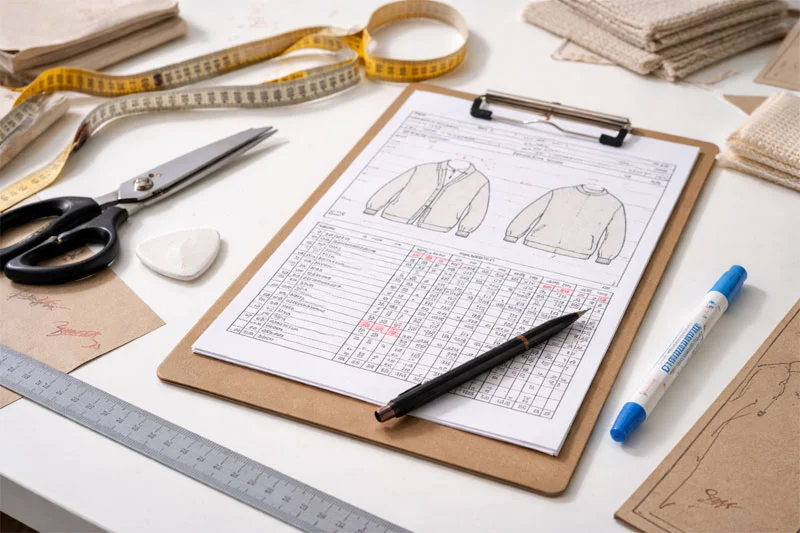
Many buyers approve the first sample and assume the rest of the size run will naturally work. That is not always true. Children's sizes change quickly across age groups, and if the grading is not handled carefully, the smaller sizes can feel too narrow while the larger sizes lose shape.
Labels, care information and packing
Children's products often create avoidable problems because buyers focus on the garment but overlook the retail details. Care labels, size marks and yarn feel become more important because the parent is buying with both comfort and practicality in mind. These details should be discussed in the sample and quote stage, not at the end.
How low MOQ works in kids' knitwear
Low MOQ is valuable in kids knitwear because it allows the buyer to test fit, color and sell-through before scaling. What matters is keeping the first run disciplined. One clear kids sweater style can tell the buyer much more than several unrelated concepts launched at once.
How we handle children's knitwear at Lin Sweater Factory
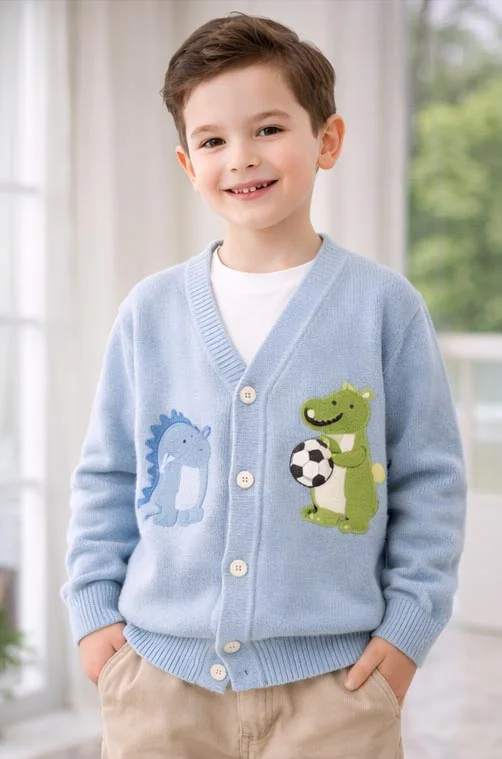
At Lin Sweater Factory, children's programs work well when buyers come with a clear retail goal and a realistic first assortment. We usually recommend simple silhouettes first, then add more novelty once the fit block and market response are proven. Because we work from low MOQ, we can help buyers test a category without forcing large first commitments.
Planning a kids knitwear program?
Send us your target age range, quantity and style direction. We can advise which children's styles make the most sense for a first low MOQ order.